
Hathor is the ancient Egyptian goddess of love, music, and joy, and she invites you to celebrate life’s pleasures. She embodies nurturing energy, symbolized by her cow-headed form and her connection to the sky and sun. Through ritual offerings of milk, honey, and sweet cakes, you can deepen your spiritual connection with her divine qualities. By understanding her symbolism, you’ll discover ways to bring happiness, love, and beauty into your everyday life—continue to explore her inspiring story.
Listen free for 30 days with Audible
Thousands of audiobooks and originals — cancel anytime.
As an affiliate, we earn on qualifying purchases.
Key Takeaways
- Hathor embodies love, joy, music, and artistic expression, inspiring celebration and happiness in ancient and spiritual traditions.
- She is depicted with a sistrum, symbolizing her role in dispelling negativity and fostering joyful energies.
- Hathor is a nurturing goddess linked to the sky and sun, representing warmth, nourishment, and divine love.
- Ritual offerings like milk, honey, and sweet cakes honor her and deepen spiritual connection and devotion.
- As the cosmic mother and protector of vitality, she inspires appreciation for life’s pleasures and divine beauty.
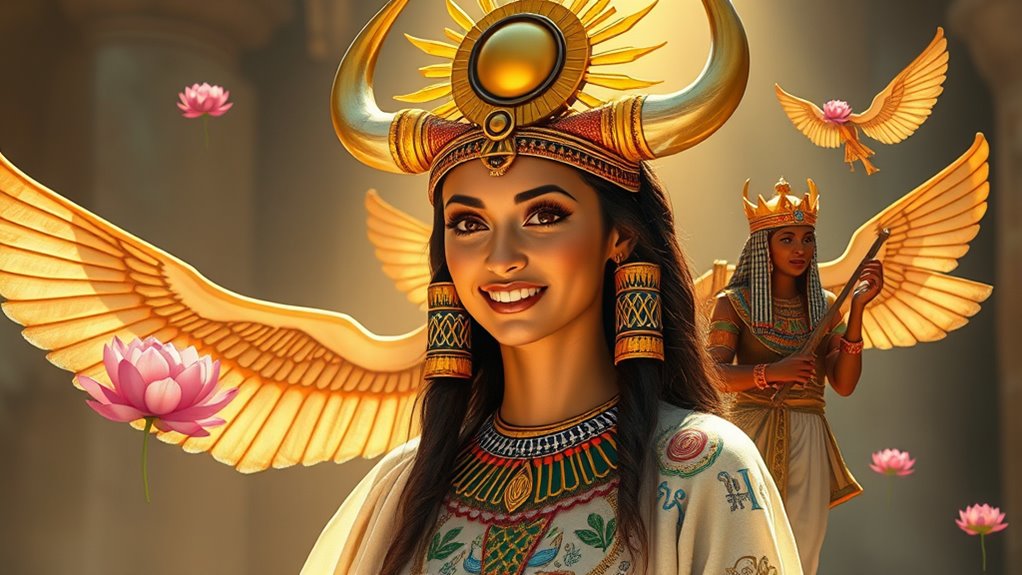
Goddess Hathor is one of the most revered deities in ancient Egyptian mythology, known as the goddess of love, joy, music, and motherhood. When you honor her, you often engage in ritualistic offerings that serve to connect you with her divine presence. These offerings, like milk, honey, and sweet cakes, are not just food but sacred tokens meant to please Hathor and invite her blessings. Such ritualistic offerings are deeply rooted in ancient traditions, symbolizing your devotion and desire for her favor. These acts of giving are believed to strengthen your bond with her and bring harmony into your life.
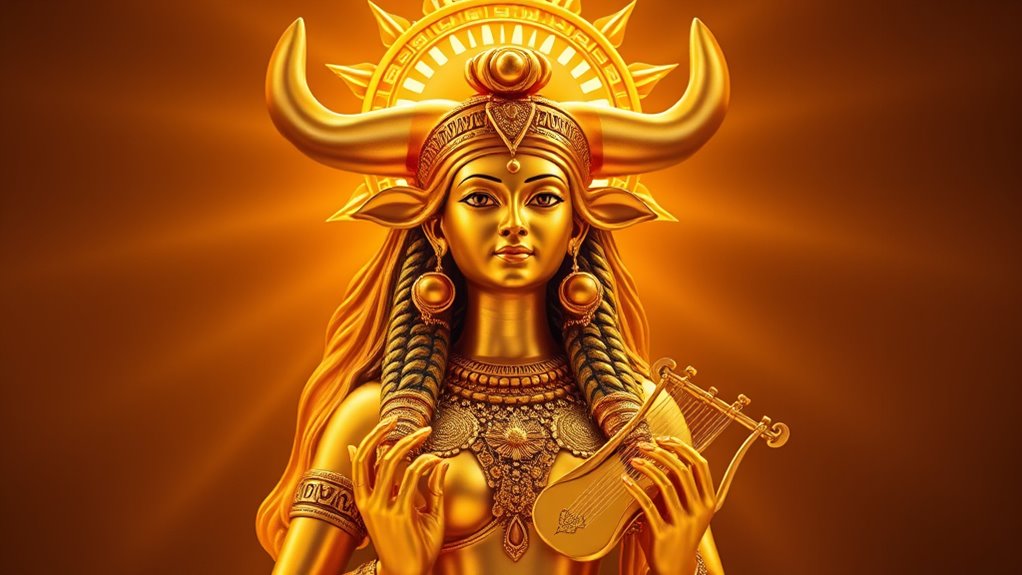
Hathor’s mythological symbolism is rich and layered. She embodies the nurturing qualities of motherhood but also the exuberance of joy and celebration. As the goddess of music, she’s often depicted with a sistrum, a musical instrument that produces sacred sounds believed to dispel negative energies. This symbolism highlights her role as a bringer of happiness and spiritual upliftment. Through her association with music and dance, you’re reminded of the importance of joy and artistic expression in connecting with divine energies. Hathor’s cow-headed form symbolizes fertility and nourishment, emphasizing her role as a maternal figure who sustains life. Additionally, her connection to the sky and the sun further signifies her role as a source of warmth, light, and life-giving energy.
When you invoke Hathor, her mythological symbolism becomes a guiding light. She’s linked to the sky and the sun, representing warmth, light, and life-giving energy. Her connection to the Milky Way, often called the “Celestial Cow,” underscores her nurturing aspect and her role as a cosmic mother watching over the universe. By understanding her mythological symbolism, you recognize that she’s not just a goddess of love but also a protector of life’s vitality and happiness. This symbolism invites you to see her as a source of comfort and joy, inspiring you to celebrate love and music as divine expressions.
Invoking Hathor connects you to her nurturing, sunlit energy as a cosmic mother and protector of life’s vitality and joy.
In your spiritual practice, honoring Hathor through ritualistic offerings and understanding her mythological symbolism deepens your connection. You begin to see her influence in everyday joys—music, dance, and moments of love. Her symbolism encourages you to embrace joy, nurture relationships, and find divine beauty in life’s simple pleasures. As you participate in her rituals, you’re reminded that her divine energy is always present, guiding you toward happiness, love, and spiritual fulfillment. Recognizing the symbolic significance of her attributes can help you cultivate a deeper appreciation for the divine in your daily life. Through her mythological symbols, Hathor continues to inspire generations to celebrate life’s pleasures and nurture the divine within themselves.
As an affiliate, we earn on qualifying purchases.
Frequently Asked Questions
What Symbols Are Associated With Hathor’s Worship?
When you explore Hathor’s worship, you’ll notice hieroglyphic symbols like the sistrum, an ancient musical instrument representing joy, and the cow’s head, symbolizing nurturing and motherhood. Sacred animals such as cows and lions are also associated with her, emphasizing her divine connection to fertility and protection. These symbols and animals are often depicted in temples and carvings, helping you recognize her presence and influence in ancient Egyptian culture.
How Did Hathor Influence Ancient Egyptian Music Practices?
You see, Hathor’s influence on ancient Egyptian music was profound. She inspired the use of musical symbolism and ritual instruments that celebrated her divine domain. As a goddess of love and joy, her worship incorporated harmonious melodies and sacred sounds, shaping musical practices. By blending symbolism with ritual instruments, her followers created a vibrant, spiritual soundscape that honored her divine presence and enriched their cultural and religious expressions.
Are There Any Modern Festivals Dedicated to Hathor?
Yes, you can find contemporary Hathor celebrations today. Modern festival traditions often honor her through art, music, and community gatherings, especially in Egypt and among those interested in ancient Egyptian culture. During these events, you might see offerings, dance, and storytelling that reflect her influence on love and joy. These celebrations help keep her spirit alive, connecting past and present through vibrant, spiritual festivities.
What Myths Explain Hathor’s Role in the Afterlife?
Hathor’s mythical origins reveal her as a nurturing guide through the afterlife, embodying love and joy even beyond death. You see, she’s seen as a protector who guarantees souls find peace, symbolizing rebirth and eternal harmony. Her role in the afterlife symbolism is rooted in stories where she assists Osiris, guiding spirits safely through the underworld. Her myths emphasize compassion, making her an eternal beacon of hope in the journey beyond life.
Was Hathor Worshiped Across All Regions of Egypt?
You’ll find that Hathor was widely worshiped across many regions of Egypt, but her prominence varied by location. Her temple locations, like Dendera and Philae, highlight regional worship practices where she was especially revered as a goddess of love, music, and joy. While her influence spread throughout Egypt, some areas focused more on her role in fertility and the afterlife, reflecting local traditions and beliefs.
Conclusion
As you imagine Hathor’s joyful presence, you realize her warmth surrounds you, filling your days with love and music. Some might think her joy is just myth, but her energy is real, dancing through ancient temples and your own heart. Feel her gentle touch, like a soft breeze on a sunny day, awakening happiness and harmony within you. Embrace her spirit, and let her joy brighten every moment you live.
NFL season / tailgating Picks
team gear
As an affiliate, we earn on qualifying purchases.