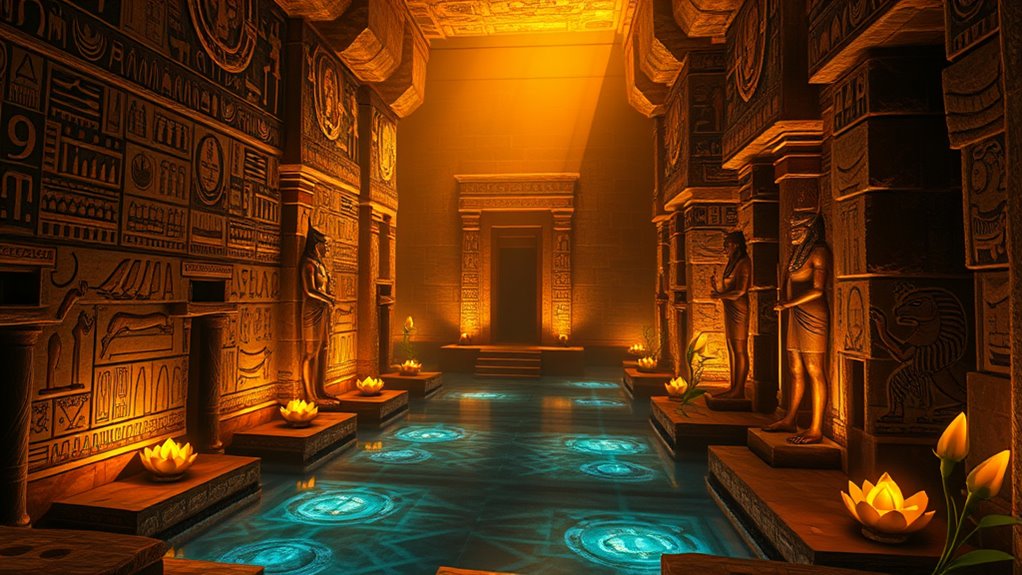
The Duat is the mysterious Egyptian underworld where your soul faces tests, encounters divine beings, and confronts mythical creatures like serpents and winged beasts. It’s not just dark and dangerous but a domain full of symbolism, magic, and divine protection. Rituals, spells, and magical objects help you navigate its challenges, ensuring your safe journey toward eternal life. If you keep exploring, you’ll uncover how these ancient beliefs shaped Egypt’s views on death and rebirth.
Open a free Amazon Business account
Business pricing, bulk buying and tax-exempt orders.
As an affiliate, we earn on qualifying purchases.
Key Takeaways
- The Duat is an ancient Egyptian underworld, a complex realm filled with divine beings, mythological creatures, and spiritual symbolism.
- It functions as a journey with tests, encounters, and obstacles, where the soul faces divine judgment and mythic challenges.
- Guardians and monsters, such as serpents and winged beasts, protect sacred pathways and challenge the deceased.
- Ritual spells, charms, and divine aid are essential for navigating the Duat safely and overcoming its dangers.
- Successful passage through the Duat leads to eternal life, while failure results in being lost or consumed in chaos.
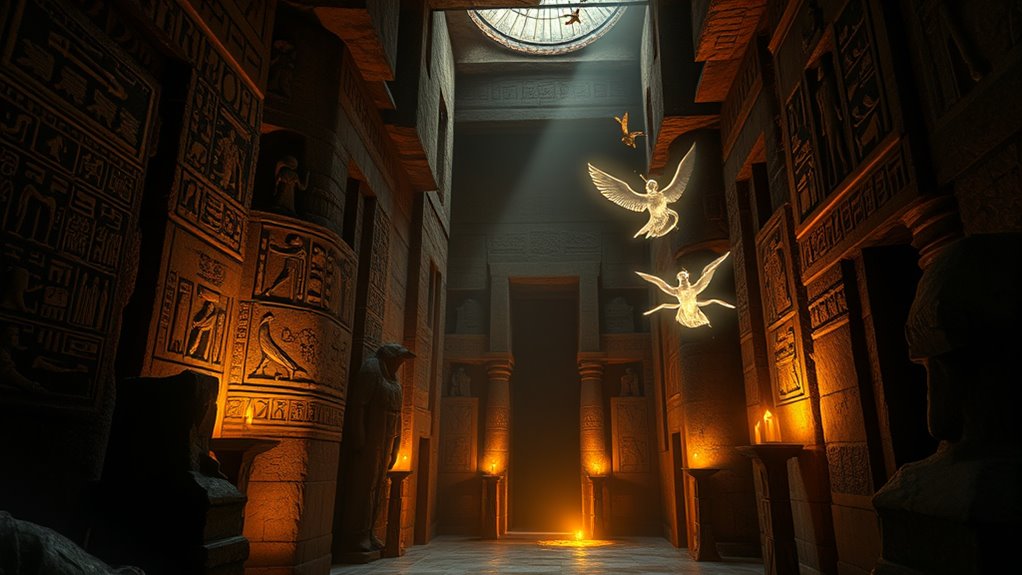
Have you ever wondered what lies beyond life in ancient Egyptian beliefs? If you’re curious about the mysterious domain called the Duat, you’re delving into a world filled with symbolism, myth, and spiritual significance. The Egyptians viewed the afterlife as a journey through this underworld, where your soul faced tests, encounters mythical creatures, and underwent rituals that determined your eternal fate. The Duat wasn’t just a dark, scary place; it was a complex landscape teeming with divine beings and supernatural entities, all playing roles in the journey of the deceased.
Within this universe, mythical creatures served both protective and threatening roles. You might encounter serpents symbolizing chaos or giant, winged beasts guarding sacred pathways. These creatures weren’t just figments of imagination; they represented forces of nature and cosmic principles. To navigate the Duat successfully, Egyptians believed you needed help from gods and magical spells, often inscribed in burial rituals. These rituals weren’t mere ceremonies—they were carefully crafted procedures aimed at safeguarding the soul, guiding it through dangerous terrains, and invoking divine protection. The Book of the Dead, for example, contained spells that helped you confront monsters and avoid dangers lurking in the underworld.
Mythical creatures guarded pathways and symbolized chaos, guiding and challenging souls through the perilous Duat.
Your journey through the Duat was deeply personal and spiritual, but it also relied heavily on the proper preparation of your burial rituals. When you were laid to rest, priests performed intricate rites, placing amulets and charms into your tomb to ward off evil spirits and mythical monsters. These charms often depicted animals, gods, or mythical beings believed to hold power over the underworld. The rituals emphasized purity and knowledge, ensuring your soul could pass through the various challenges with the aid of divine beings and magical protections. The careful preservation of the body and the inclusion of these ritual objects aimed to ensure your rebirth and eternal life. Additionally, the use of burial rituals was essential for the soul’s journey, as they provided the necessary protection and guidance through the perilous landscape of the Duat.
As you moved deeper into the Duat, you’d encounter scenes of judgment—where your heart was weighed against the feather of Ma’at, the goddess of truth and justice. Success meant entering the blissful fields of the afterlife, while failure meant being devoured or lost forever in chaos. All of this underscores how central the concepts of mythical creatures and burial rituals were to the Egyptian understanding of the afterlife. They believed that with the right spells, offerings, and divine assistance, you could overcome the perils of the Duat, transforming death from an end into a new beginning.
Egyptian amulet charms for protection
As an affiliate, we earn on qualifying purchases.
As an affiliate, we earn on qualifying purchases.
Frequently Asked Questions
How Did Ancient Egyptians Believe Souls Traveled Through the Duat?
You believe souls set out on a cosmic journey through the Duat, facing challenges and judgment. As you travel, you undergo spiritual transformation, shedding sins and gaining insight. Guardians and gods guide you, ensuring you stay on the right path. Your journey tests your worthiness for eternal life, emphasizing purity and righteousness. This spiritual transformation is essential for reaching the afterlife, making your voyage through the Duat a profound and sacred experience.
What Gods Governed Different Regions of the Duat?
Imagine stepping into a map of ancient Egypt’s sacred landscapes, where regional deities govern different parts of the Duat. You’d encounter gods like Osiris overseeing the afterlife, while others like Ammut guard the dangerous zones. Each region has its own divine ruler, guiding and judging souls. These gods symbolize the diverse powers controlling the journey, ensuring that your passage through the Duat follows divine order and cosmic balance.
Were There Any Dangers or Monsters in the Journey?
Yes, your journey through the Duat is filled with dangers and monsters. You encounter mythical creatures like serpents and demons that threaten your passage, but spiritual guardians stand watch to protect you. These guardians help you navigate past the monsters safely, ensuring your soul can reach the afterlife. Stay alert and respectful, as the Duat’s domain is full of perilous beings enthusiastic to hinder or deceive travelers like you.
How Was the Book of the Dead Used in the Afterlife?
You use the Book of the Dead as part of your ancient burial rituals to navigate the dangerous Egyptian underworld. These Egyptian funerary texts contain spells and charms that protect you from monsters and guide you through the Duat. By placing the scrolls in your tomb, you guarantee your soul can successfully face judgment, overcome obstacles, and reach the afterlife, reflecting their crucial role in ancient Egyptian beliefs.
Did Beliefs About the Duat Change Over Different Dynasties?
Like shifting sands in a desert wind, beliefs about the Duat evolved with each dynasty. As you trace the Pharaohs’ influence, you see a ritual evolution that shapes perceptions of the underworld’s domain. Over time, ideas became more complex, blending myth and theology, reflecting societal changes. These spiritual currents transformed how Egyptians envisioned the afterlife, making the Duat a dynamic landscape that responded to the ruling power and cultural shifts.
Conclusion
As you journey through the Duat, the Egyptian underworld, you realize it’s like stepping into a living, breathing myth. Every twist and turn reveals secrets of an ancient world that still whispers to us today. The Duat isn’t just a place; it’s a mirror reflecting your own journey through life and beyond. So, as you leave this domain behind, remember—you carry the stories of gods, ghosts, and eternity within you, forever illuminating your path forward.
Fall yard work Picks
leaf blowers
As an affiliate, we earn on qualifying purchases.