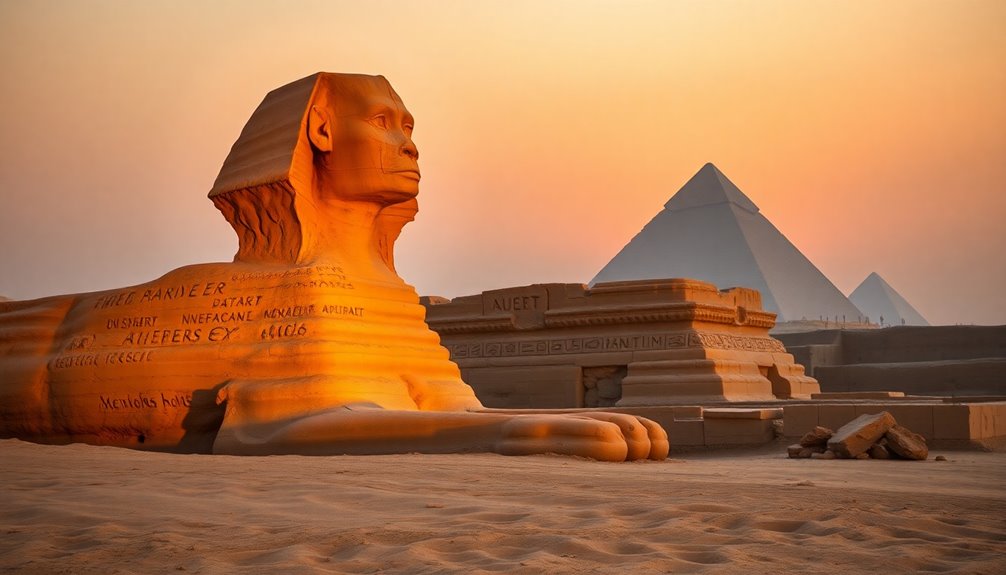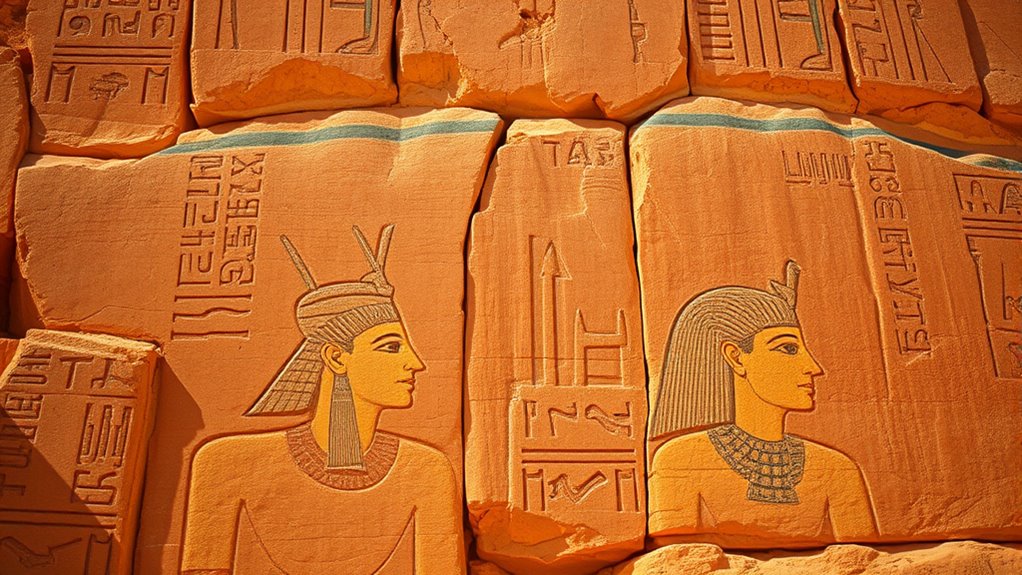

Rock art in Aswan offers vital clues about the origins of Egyptian kingship and their spiritual beliefs. The petroglyphs and carvings reveal early humans’ reverence for animals, nature, and divine forces, serving as a foundation for later concepts of divine authority and rulership. These ancient symbols show how societal hierarchy and spirituality developed, influencing Egyptian religion and kingship. If you continue exploring, you’ll uncover deeper connections between these early images and Egypt’s grand cultural legacy.
Key Takeaways
- Rock art in Aswan reveals early symbolic representations of authority and divine power influencing Egyptian kingship.
- Petroglyphs depict rulers alongside symbols of fertility and celestial forces, highlighting the origins of divine kingship.
- Early carvings reflect societal hierarchies and spiritual beliefs foundational to ancient Egyptian religion.
- Archaeological finds suggest complex social structures and rituals linked to the development of Egyptian monarchy.
- These rock art insights trace the evolution of symbolism from early communities to the grandeur of later Egyptian kingship.
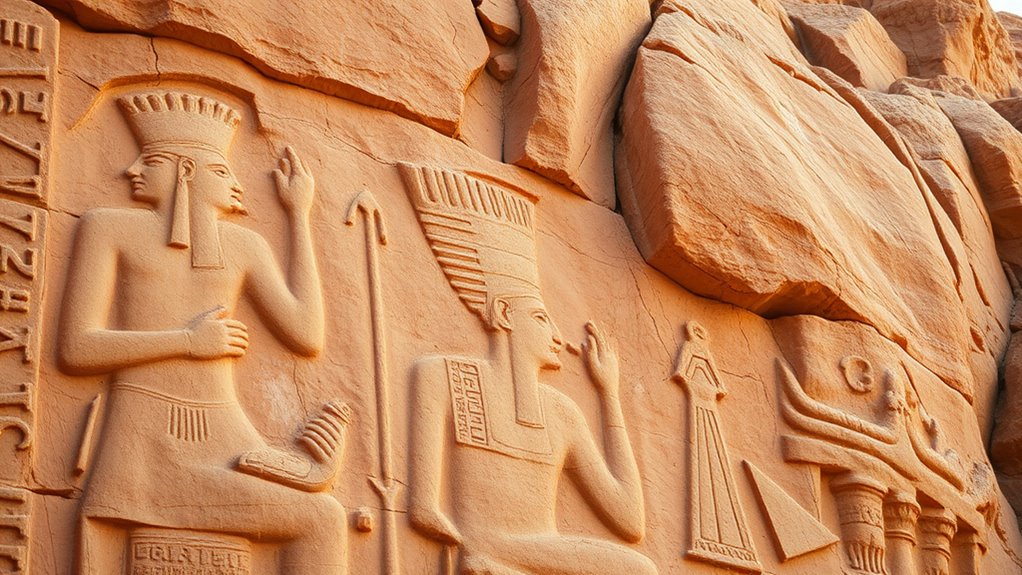
Have you ever wondered what makes Aswan a unique jewel of Egypt? This city isn’t just famous for its stunning Nile views or ancient temples; it’s also a key site for uncovering the roots of Egyptian civilization through its remarkable archaeological finds. Among these, rock art symbolism holds a special place. As you explore the rocky cliffs and ancient shelters around Aswan, you’ll notice that the petroglyphs and carvings tell stories that date back thousands of years. These images aren’t just primitive doodles; they’re rich with meaning, revealing insights into early human beliefs, rituals, and social structures. The symbolism embedded in these rock arts offers a glimpse into the spiritual world of those who created them, highlighting their reverence for animals, nature, and possibly divine forces. Such symbolism helps us understand how early societies interpreted their environment and laid the groundwork for later Egyptian religious concepts. Recognizing the significance of symbolic communication in these early artworks enhances our understanding of their cultural complexity and societal organization.
Aswan’s archaeological finds extend beyond just rock art. Excavations have unearthed artifacts that point to complex social and political structures forming long before the rise of the well-known Egyptian kingdoms. These finds include pottery, tools, and figurines that suggest a highly organized community with spiritual and cultural practices. When you walk through these sites, you’re walking through the origins of Egyptian kingship. The early symbolism seen in the rock art hints at the divine authority that would later define Egypt’s pharaohs. You can see the beginnings of this divine kingship in the way early peoples depicted rulers or authoritative figures alongside symbols of power and fertility. These early representations laid the foundation for the divine kingship that Egypt would become famous for, serving as visual stories of authority, spirituality, and societal hierarchy.
Understanding the role of rock art symbolism in Aswan also sheds light on how ancient Egyptians viewed their world and their place within it. The images carved into stone reflect their worldview—an intertwined relationship with nature, deities, and the cosmos. As you explore the Aswan archaeological finds, you begin to see how these early symbols evolved over centuries, influencing the grandeur of later Egyptian art and religion. They help connect you to a time when the seeds of Egyptian kingship were first planted, rooted in spiritual symbolism and community identity. Essentially, Aswan offers a crucial chapter in the story of Egypt’s origins, where rock art symbolism and archaeological discoveries reveal the earliest expressions of divine authority and societal order.
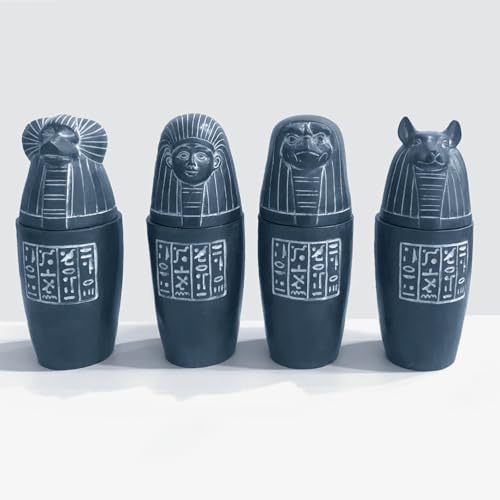
Will Art Museum 4pcs Ancient Egyptian Gods Canopic Jar Statue Resin Four Sons of Horus Egyptian Statue Ornaments Hand Painted Egypt Collectible Decor Sculpture Replica
- Material: High-quality, durable resin construction
- Design: Exquisitely handcrafted with hand-painted finish
- Decor Use: Suitable for home and office display
As an affiliate, we earn on qualifying purchases.
As an affiliate, we earn on qualifying purchases.
Frequently Asked Questions
How Does Rock Art Influence Modern Understanding of Egyptian History?
Rock art shapes your understanding of Egyptian history by revealing symbolic communication and cultural symbolism from ancient times. When you study these images, you see how early people expressed their beliefs, social structures, and rituals. This visual language helps you grasp the origins of Egyptian kingship and societal values, providing a deeper connection to Egypt’s rich cultural heritage and offering insights that written records alone might miss.
Are There Similar Rock Art Sites Linked to Other Ancient Civilizations?
You’ll find similar rock art sites across the globe, revealing fascinating parallels through comparative petroglyphs and ancient mural traditions. These sites, from North America’s petroglyphs to Australian Aboriginal rock art, hint at shared human expressions of spirituality and history. Uncovering these connections deepens your understanding of early civilizations, suggesting that despite geographical divides, ancient peoples communicated through enduring images, sparking curiosity about our collective prehistoric past.
What Tools or Techniques Were Used to Create the Rock Art at Aswan?
You use ancient engraving tools like chisels and stone tools to create the rock art at Aswan, carefully carving images into the rock surface. Paint application techniques involve natural pigments derived from minerals, which you apply with brushes made from plant fibers or animal hair. These methods allow you to produce detailed images, capturing scenes that reveal cultural significance and daily life of early Egyptian society.
How Do Scholars Date the Origins of the Rock Art in Aswan?
You can date the rock art in Aswan by using radiocarbon dating on organic pigments or nearby organic materials, which provides an approximate age. Scholars also perform stylistic analysis, comparing the art’s features with other known dated works to estimate its period. Combining these methods helps establish a more accurate timeline for the origins of the rock art, giving you a clearer understanding of its cultural and historical context.
What Role Did Natural Environment Play in the Creation of Aswan’s Rock Art?
Imagine the natural landscape as an artist’s blank canvas, shaping your story. The environment in Aswan influenced the creation of rock art by providing crucial resources like water, stone, and pigment sources. As you explore, you see how the availability of these resources dictated where and what art was made, reflecting a deep connection to nature. The environment’s role was essential, guiding the hands and hearts of early creators.
Conclusion
As you explore Aswan’s rock art, you realize it offers a remarkable glimpse into Egypt’s early kingship. Did you know that over 2,000 ancient carvings depict scenes linked to royal power? This suggests that the roots of Egyptian kingship stretch back thousands of years, deeply embedded in their cultural expression. Aswan’s ancient art not only tells a story of the past but also reshapes your understanding of Egypt’s origins, making history come alive before your eyes.