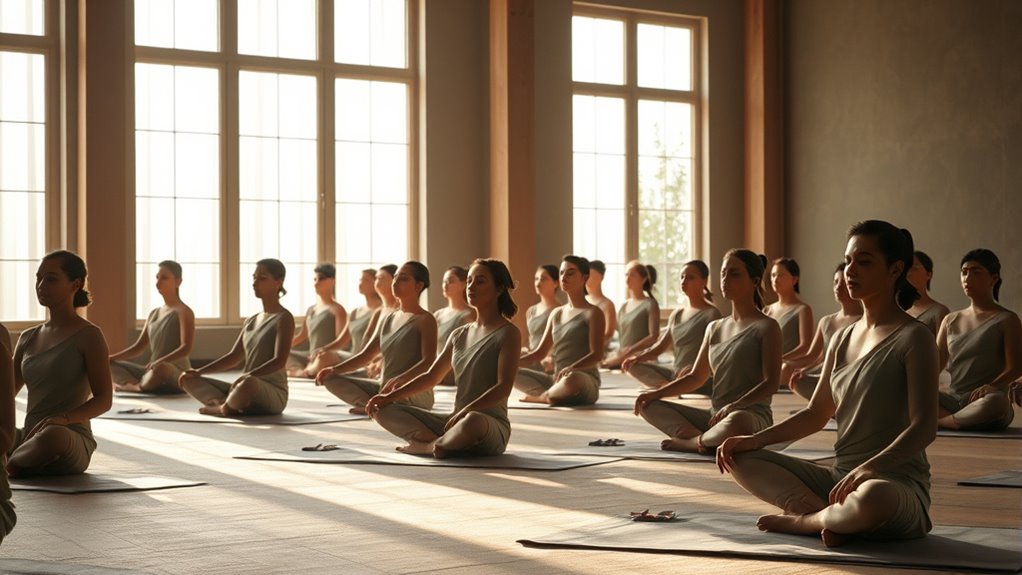

During a 10-day Vipassana retreat, silence and sensory deprivation help you focus inward, boosting internal awareness. Neuroscience shows it increases activity in brain areas like the insula, enhancing your perception of bodily sensations, while decreasing amygdala activity reduces emotional reactivity. This rewiring strengthens attention and emotion regulation pathways, leading to greater mental clarity and emotional resilience. If you’re curious about the brain’s remarkable ability to adapt through these practices, there’s more to uncover below.
Key Takeaways
- Sensory deprivation during Vipassana enhances internal awareness and activates brain regions like the insula, improving bodily sensation perception.
- Extended silence and meditation reduce amygdala activity, decreasing emotional reactivity and stress responses.
- Neural pathways related to attention and emotion regulation reorganize, supporting increased mental clarity and emotional resilience.
- Brain structural changes, including strengthened regions involved in mindfulness, are observed after 10-day retreats.
- Practicing Vipassana fosters calm awareness, improves focus, and promotes long-term emotional and mental well-being.
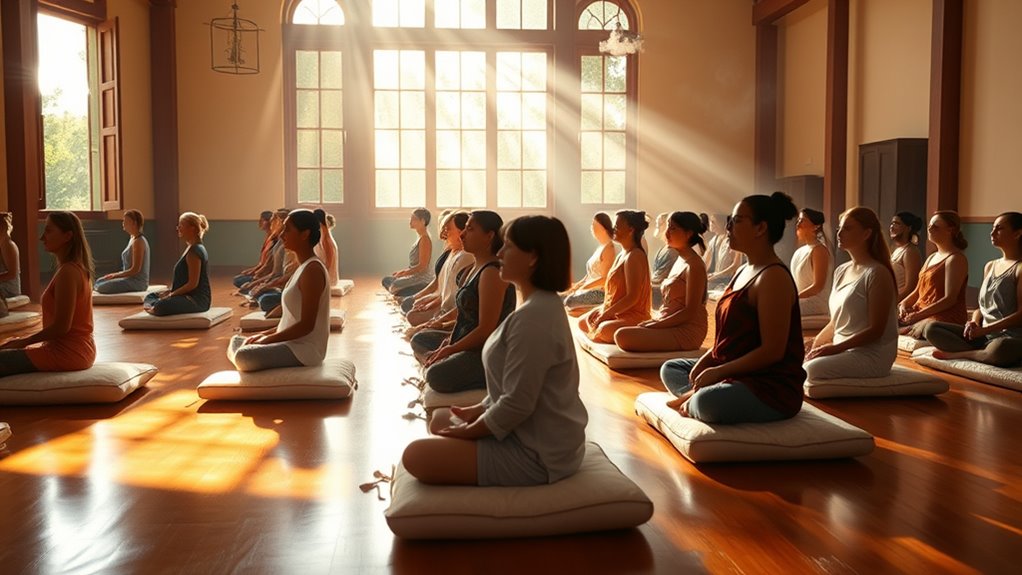
Have you ever wondered what it’s like to step away from everyday life and immerse yourself in deep meditation? Participating in a Vipassana retreat offers that rare opportunity. During these intense ten-day experiences, you practice mindfulness meditation, focusing your attention inward with unwavering dedication. The environment is intentionally designed to minimize distractions, often employing sensory deprivation techniques like silence and controlled surroundings, which help you explore more profoundly into your inner world. This deliberate reduction of external stimuli enhances your ability to observe your thoughts and sensations clearly, without interference from daily noise or social interactions.
As you settle into the retreat, you begin to notice how sensory deprivation heightens your awareness. When external distractions fade, your mind becomes more receptive to subtle internal sensations. Researchers have shown that this kind of environment promotes a state of heightened mindfulness, allowing you to observe your thoughts and feelings with greater objectivity. Over time, this sustained focus can lead to profound shifts in brain activity, strengthening neural pathways associated with attention and emotional regulation. The retreat’s silence, combined with sensory reduction, creates a space where your brain can rewire itself, fostering increased clarity and emotional resilience.
Neuroscience findings suggest that extended periods of mindfulness meditation, like those practiced during Vipassana retreats, can produce measurable changes in brain structure and function. For instance, the insula, a brain region involved in interoception—the sense of internal body states—becomes more active, improving your ability to perceive bodily sensations accurately. Simultaneously, the amygdala, which processes stress and fear, tends to decrease in activity after such retreats, indicating a reduction in emotional reactivity. These changes are often attributed to the sensory deprivation and sustained mindfulness practice, which quiets the noise in your mind and promotes a state of calm awareness. Additionally, the reduction of external stimuli supports the development of highly focused attention, enhancing your overall mental clarity during and after the retreat.

Retrospec Sedona Zafu Meditation Cushion with Buckwheat Hull Fill – Adjustable Yoga & Pilates Equipment Support – 17in Crescent Cotton Cover
NATURAL COMFORT & SUPPORT: Filled with sustainable buckwheat hulls, this meditation cushion elevates your practice by aligning your…
As an affiliate, we earn on qualifying purchases.
As an affiliate, we earn on qualifying purchases.
Frequently Asked Questions
How Does Silence Impact Brain Plasticity During Retreats?
Silence during retreats enhances your brain plasticity by boosting mindfulness meditation practices. When you immerse yourself in silence, your neural connectivity strengthens as you become more aware of your thoughts and emotions. This focused state promotes neural rewiring, leading to improved emotional regulation and mental clarity. As a result, your brain adapts more effectively, fostering personal growth and resilience through sustained silence and mindful observation.
Are There Long-Term Cognitive Benefits After Completing a Vipassana Retreat?
You might find that practicing mindfulness meditation during a Vipassana retreat boosts your long-term cognitive resilience. Regularly engaging in such silence-based practices can strengthen your focus, reduce stress, and improve emotional regulation. Over time, these benefits may translate into sharper memory, better decision-making, and enhanced mental clarity, helping you handle daily challenges more effectively. The retreat’s silence fosters deep introspection, supporting sustained cognitive health well beyond the experience.
Can Vipassana Improve Emotional Regulation Beyond the Retreat?
You can improve emotional regulation through vipassana by cultivating mindful awareness, which helps you observe emotions without immediate reaction. This practice boosts emotional resilience, enabling you to handle stress and negative feelings more effectively even outside the retreat. By consistently practicing mindfulness, you strengthen your ability to manage emotions calmly and clearly, leading to long-term benefits that extend beyond the retreat experience.
What Are the Neural Differences Between Experienced and Novice Practitioners?
You might wonder about the neural differences between experienced and novice practitioners. As you gain meditation expertise, your neural connectivity improves, especially in areas related to attention and emotional regulation. Experienced meditators show more efficient brain networks, while novices often have less integrated neural pathways. These differences suggest that consistent practice enhances brain function, making you better at managing stress and emotions through strengthened neural connectivity.
How Does Vipassana Affect Stress-Related Brain Regions?
You might think stress-related brain regions are fixed, but mindfulness meditation like Vipassana can change that. During a retreat, your neural connectivity improves, reducing activity in stress centers like the amygdala. This helps you manage stress better over time. Even just 10 days of silence enhances neural pathways, promoting calmer responses. So, your brain adapts, making you more resilient to stress through consistent practice.

ENSO SENSORY Japanese Zen Garden Kit for Desk – 12” Bamboo Sand Garden Zen Décor | Meditation Gift | Sensory Therapy Tool for Mindfulness & Emotional Wellness
THERAPIST-RECOMMENDED FOR CALMING & FOCUS – Loved by therapists, this natural bamboo zen garden supports emotional regulation, stress…
As an affiliate, we earn on qualifying purchases.
As an affiliate, we earn on qualifying purchases.
Conclusion
By embracing silence, you quiet your mind, deepen your awareness, and transform your perspective. By practicing stillness, you uncover clarity, cultivate compassion, and foster inner peace. By committing to Vipassana, you awaken your consciousness, strengthen your resilience, and experience growth. These retreats show that through silence, you find serenity; through patience, you find power; and through stillness, you discover yourself. Embrace the journey, and let silence guide you to a fuller, more mindful life.

MyHalos® Sleep Mask – 3D Blackout Eye Mask for Women & Men, Side Sleepers, Zero Pressure Memory Foam Eyelash Friendly, Breathable,Award-Winning Sleep Aid for Travel (Black, 1 Count (Pack of 1)
Complete Blackout: Innovative contoured design blocks 100% light. Perfect blindfold sleeping eye mask for night shift workers, frequent…
As an affiliate, we earn on qualifying purchases.
As an affiliate, we earn on qualifying purchases.

Practicing Mindfulness: 75 Essential Meditations to Reduce Stress, Improve Mental Health, and Find Peace in the Everyday
As an affiliate, we earn on qualifying purchases.
As an affiliate, we earn on qualifying purchases.