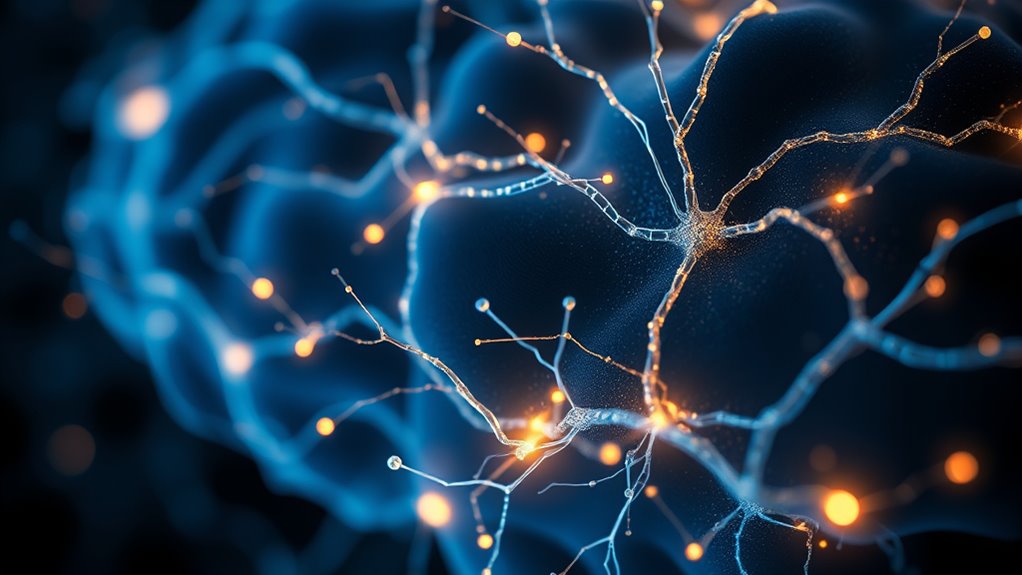

Your reticular activating system (RAS) acts as a filter, highlighting thoughts, intentions, and environmental cues aligned with your goals. It helps you focus by prioritizing relevant stimuli and dismissing distractions, shaping your perception of reality. When you align your focus with your desires, the RAS emphasizes opportunities and signs that support your manifestation efforts. Keep exploring to discover how mastering this natural process can amplify your ability to bring your intentions to life.
Key Takeaways
- The RAS filters and prioritizes thoughts, making focused intentions more prominent in perception and awareness.
- It highlights opportunities and resources aligned with your goals, facilitating manifestation through selective attention.
- The RAS interacts with emotional and decision-making regions, reinforcing positive states that support manifesting desires.
- By aligning mental focus and visualization, the RAS helps turn intentions into tangible outcomes.
- Conscious focus and affirmations can reprogram the RAS to favor desired realities and enhance manifestation efforts.
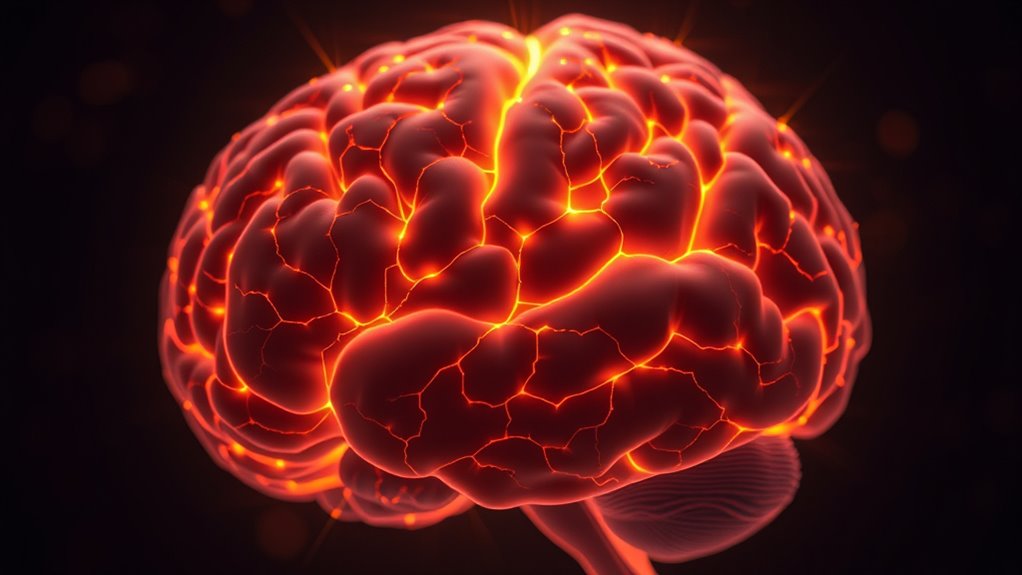
The Reticular Activating System (RAS) plays an essential role in controlling your wakefulness and attention. It’s a network of neurons located in your brainstem that filters incoming sensory information and determines what your brain focuses on. Neuroscience insights reveal that the RAS is fundamental to your brain function, acting as a gatekeeper that keeps you alert or helps you relax. When you’re engaged in a task or deeply focused, the RAS heightens your awareness by prioritizing relevant stimuli, allowing you to concentrate on what matters. Conversely, when you’re tired or sleepy, it reduces its activity, making it easier for your mind to drift into rest. This dynamic balance is indispensable for maintaining your overall alertness and mental clarity. Understanding how the RAS influences your perception emphasizes that your brain’s filtering process is a powerful tool in shaping your reality.
The RAS filters sensory input to keep you alert or help you relax, balancing focus and rest for mental clarity.
Understanding the neuroscience behind the RAS helps clarify its role in conscious manifestation. Your thoughts and intentions are influenced heavily by what your RAS filters and emphasizes. For example, if you set a clear goal or focus on a specific desire, your RAS begins to highlight opportunities and information aligned with that goal, even without you consciously realizing it. This filtering process means that your brain becomes more receptive to signs, coincidences, and resources that support your intentions. It’s as if your brain’s natural wiring is tuned to help you notice what you’re consciously or subconsciously seeking. This insight from neuroscience underscores that your brain function isn’t passive but actively shapes your perception and actions based on your focus.
Moreover, the RAS doesn’t operate in isolation. It interacts with other parts of your brain, such as the limbic system, which governs emotions, and the prefrontal cortex, responsible for decision-making and planning. When your emotional state is positive and aligned with your goals, the RAS is more likely to reinforce behaviors and perceptions that support your manifestation efforts. This synergy between brain regions enhances your ability to stay motivated and attentive to your intentions. By understanding this intricate connection, you can intentionally direct your focus, affirmations, and visualizations to influence your brain’s filtering process, making your conscious manifestations more effective.
In essence, the neuroscience insights into the brain function of the RAS reveal that your mind is a powerful tool in shaping your reality. It’s not just about dreaming or wishing; it’s about consciously tuning your brain to notice and attract the opportunities that align with your desires. When you harness the RAS effectively, you’re leveraging your brain’s natural capacity to support and manifest your intentions, turning your thoughts into tangible outcomes through focused awareness. Recognizing the role of brain function in manifestation highlights how aligning your mental focus with your goals can actively influence your environment.

Creative Visualization: Use the Power of Your Imagination to Create What You Want in Your Life
As an affiliate, we earn on qualifying purchases.
As an affiliate, we earn on qualifying purchases.
Frequently Asked Questions
How Can I Activate My Reticular Activating System Intentionally?
You can activate your reticular activating system intentionally by practicing neuroplasticity techniques and visualization exercises. Focus on clear, vivid mental images of your goals, which helps train your brain to notice opportunities aligned with your desires. Regularly engaging in these practices rewires your neural pathways, making it easier for your reticular activating system to filter relevant stimuli. Over time, this boosts your awareness and helps manifest your intentions more effectively.
Does Meditation Influence the Reticular Activating System?
Meditation definitely influences your reticular activating system by promoting brain wave modulation and improving sensory filtering. When you meditate, your brain shifts into calmer states, enhancing focus and awareness. This process fine-tunes your reticular activating system, making it easier to notice what’s important and filter out distractions. As a result, regular meditation helps you consciously direct your attention and harness your reticular activating system’s power for manifestation and clarity.
Can the Reticular Activating System Explain Sudden Insights?
Think of your mind as a lighthouse guiding you through fog. Your reticular activating system (RAS) helps explain sudden insights by tuning into specific signals, thanks to brainwave synchronization. When your subconscious awareness aligns, the RAS filters relevant information, making connections seem to appear out of nowhere. This heightened focus can open those “aha” moments, showing how your brain’s internal wiring sparks unexpected realizations effortlessly.
What Disorders Affect the Functioning of the Reticular Activating System?
You might wonder what disorders affect the reticular activating system’s functioning. Neural dysregulation, such as in sleep disorders like insomnia or narcolepsy, can disrupt its role in regulating alertness. Sensory processing issues, seen in autism spectrum disorder, also impact how the system filters stimuli. These conditions interfere with the RAS’s ability to maintain focus and consciousness, highlighting its essential role in daily mental and sensory functions.
How Does Sleep Impact the Reticular Activating System’S Role in Manifestation?
Sleep profoundly impacts the reticular activating system’s role in manifestation by influencing dream recall and sleep cycles. When you sleep well, your RAS stays balanced, making it easier to remember dreams and focus your intentions. Disrupted sleep can weaken this process, reducing your ability to visualize and manifest your desires. Prioritizing quality sleep helps your RAS stay tuned to your goals, enhancing your overall manifestation efforts.
Conclusion
Now that you understand the reticular activating system’s role, you see how it influences your focus, your goals, and your reality. You can choose what to notice, what to prioritize, and what to manifest. You become aware of how your mind filters information, how your thoughts shape your experiences, and how your mindset directs your life. Embrace this knowledge, harness this power, and realize that your awareness, your intention, and your actions all work together to create your world.