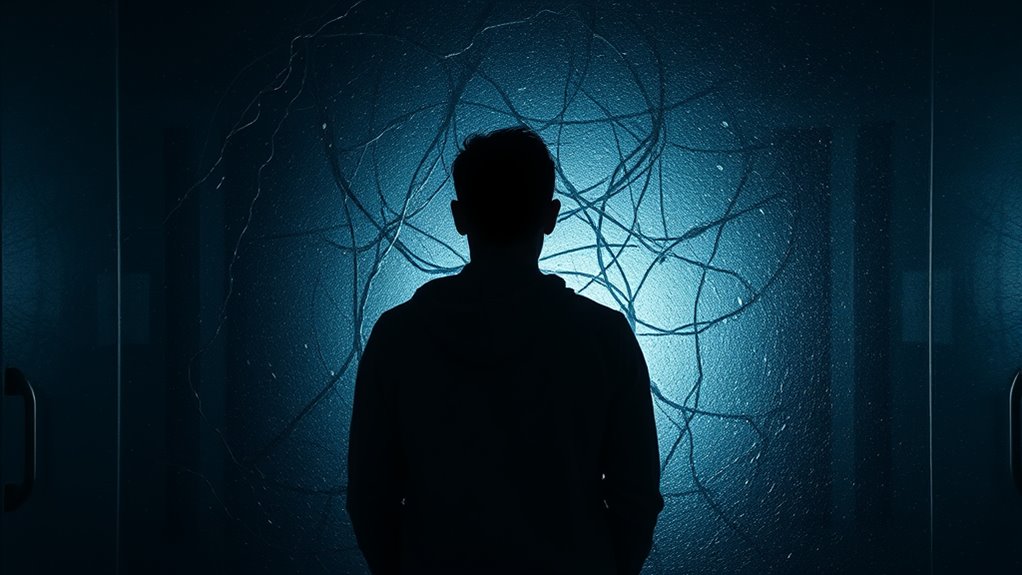

Feeling trapped in dreams often happens when you’re aware but powerless to change or escape what’s happening. This sensation is linked to conditions like sleep paralysis, which occurs during the shift between wakefulness and REM sleep, causing muscle atonia and vivid hallucinations. Both sleep paralysis and certain lucid dreams can leave you frustrated, as your desire for control clashes with physical or mental restrictions. Understanding this tension can help you make sense of these unsettling experiences and find ways to cope better.
Key Takeaways
- Sleep paralysis causes awareness without movement, creating feelings of being trapped and heightening fear during REM transitions.
- Lucid dreaming offers some control but can be limited, leading to frustration when desired actions are blocked.
- Both states reflect subconscious themes of restriction, control, and the human desire for freedom and escape.
- Recognizing sleep paralysis as a natural, temporary phenomenon can reduce fear and feelings of helplessness.
- Developing lucid dreaming skills may transform frustration into curiosity and empower individuals to navigate their dreams.

Dreams can sometimes leave you feeling trapped, as if you’re stuck in a world where escape is impossible. You might suddenly find yourself unable to move or speak, even though your mind is fully aware of your surroundings. This sensation is often caused by sleep paralysis, a state that occurs during the *shift* between wakefulness and REM sleep. During sleep paralysis, your body remains in a temporary state of muscle atonia, which is normal during REM sleep, but your mind wakes up before the paralysis subsides. The experience can be terrifying, especially when vivid hallucinations or a sense of an ominous presence creep into your consciousness. It’s as if you’re caught in a nightmare that you cannot wake from, intensifying feelings of restriction and frustration. Recognizing sleep paralysis as a natural sleep phenomenon can help reduce feelings of fear and helplessness during these episodes. On the flip side, you might also experience lucid dreaming, where you realize you’re dreaming and gain some control over the dream’s narrative. While lucid dreaming can be a fascinating and empowering experience, it can also bring its own sense of frustration if you’re aware of your constraints within the dream. You may want to change the scene or fly away, but find yourself unable to do so. This feeling of restriction makes the experience less freeing and more like being a passive observer trapped within your own mind. The boundaries of what you can or cannot do in a lucid dream can mirror real-life limitations, leaving you with a sense of helplessness, even when you’re aware of your dream state. Both sleep paralysis and lucid dreaming highlight a common theme: the tension between awareness and control. During sleep paralysis, you’re painfully aware but completely powerless to act, heightening your sense of being trapped. Conversely, in lucid dreaming, you might have some control, but physical or mental barriers still prevent you from fully shaping your experience. This contrast can create frustration, especially if you’re seeking freedom within your dreams but find yourself confined by your subconscious or physical limits. These experiences tap into a deep human desire to escape, to be free from the restrictions of reality, yet they often remind you of your vulnerability and limitations—even in your most surreal moments. Understanding these phenomena can help you navigate the feelings of entrapment they evoke. Recognizing sleep paralysis as a temporary, natural state may lessen its fearsome impact. Similarly, embracing the potential of lucid dreaming as a skill you can develop might turn frustration into curiosity. Ultimately, these experiences reveal how your mind processes restriction and control during sleep, offering insight into your subconscious fears and desires.

Kolbs Bed Wedge Pillow for Sleep Apnea, FSA Eligible Acid Reflux, and Back Pain Relief, with Chic Jacquard Cover – Headboard Wedges for Sleeping (Standard Width 7.5" Height)
FSA Eligible. Experience unparalleled comfort with our sleep apnea pillow, designed to elevate your upper body and improve…
As an affiliate, we earn on qualifying purchases.
As an affiliate, we earn on qualifying purchases.
Frequently Asked Questions
Can Recurring Dreams Reveal Hidden Fears?
Yes, recurring dreams can reveal hidden fears. These dreams often serve as subconscious messages, bringing unresolved emotions or anxieties to your awareness. When you notice patterns or themes repeating, it’s a sign your mind is trying to communicate something important. Pay attention to the symbols and feelings in these dreams, as they can help you uncover underlying fears that you might not consciously recognize, guiding you toward understanding and healing.
How Do Cultural Differences Influence Dream Restrictions?
Cultural differences shape how you perceive dream restrictions through cultural symbolism, which influences your beliefs about dream control techniques. In some cultures, you might believe dreams are sacred, limiting your ability to alter them, while others encourage active participation. By understanding these cultural influences, you can adapt your dream control techniques, respecting your cultural background and overcoming restrictions to achieve more meaningful or lucid dreams.
Are There Specific Symbols Indicating Frustration in Dreams?
Yes, certain symbolic representations and emotional cues in your dreams often indicate frustration. You might see symbols like clenched fists, broken objects, or barriers that reflect your inner tension. Emotional cues such as anger, helplessness, or irritation also point to underlying frustrations. Pay attention to these symbols and feelings, as they reveal your subconscious struggles and can help you understand what’s causing your emotional restriction.
Can Dream Restriction Affect Waking Life Emotions?
Studies show that about 60% of people experience dream restriction at some point. When your dream control feels limited, it can lead to frustration, which often spills into waking emotions. This restriction hampers emotional expression in dreams, making you feel powerless. As a result, you might wake up feeling anxious or irritable, reflecting the unresolved emotions from your dreams. Recognizing this link can help you manage your emotional well-being better.
What Role Does Sleep Quality Play in Dream Frustration?
Sleep quality directly impacts dream frustration, especially when sleep disruption and restless nights occur. When your sleep is fragmented, your dreams can become more vivid or intense, leading to feelings of restriction or frustration if you can’t fully remember or control them. Poor sleep prevents restorative rest, making you more likely to wake up feeling irritated or emotionally drained. Prioritizing good sleep hygiene helps reduce these dream-related frustrations and improves overall emotional well-being.

LC-dolida Sleep Headphones, 3D Sleep Mask Bluetooth Wireless Music Eye Mask, Sleeping Headphones for Side Sleepers Sleep Mask with Bluetooth Headphones Ultra-Thin Stereo Speakers Perfect for Sleeping
【Sleep Headphones & Bluetooth Sleep Mask & Sleep Eye Mask 3 in 1】LC-dolida sleep mask with bluetooth headphones…
As an affiliate, we earn on qualifying purchases.
As an affiliate, we earn on qualifying purchases.
Conclusion
Feeling trapped in your dreams can feel like you’re caught in an endless maze with no exit, drowning in a sea of frustration. But remember, these sensations are temporary, just like storms that pass to reveal clear skies. By understanding the roots of these feelings, you can regain control and break free from the cycle. Don’t let fear hold you hostage—you’re stronger than any nightmare, capable of transforming restriction into liberation. Your mind is a battlefield, and victory is within reach.

Boiron SleepCalm Sleep Aid for Deep, Relaxing, Restful Nighttime Sleep – Melatonin-Free and Non Habit-Forming – 60 Count
MELATONIN-FREE, PLANT-POWERED SLEEP RELIEF: SleepCalm Meltaway Tablets by Boiron, with plant-based active ingredients, provides a melatonin-free option to…
As an affiliate, we earn on qualifying purchases.
As an affiliate, we earn on qualifying purchases.

Lucid Dreaming: Unlocking the World Within: 2 Books in 1: A Guide on How to Lucid Dream: Learn to Take Control Today with a Guided Journal and Real … the World (Paths Through the Dreamworld)
As an affiliate, we earn on qualifying purchases.
As an affiliate, we earn on qualifying purchases.