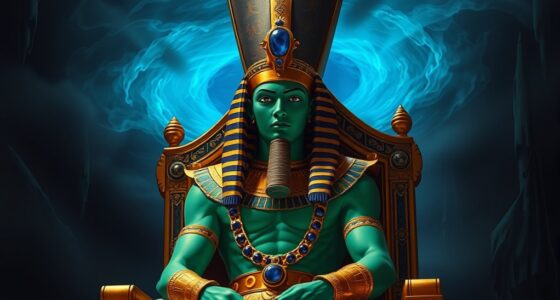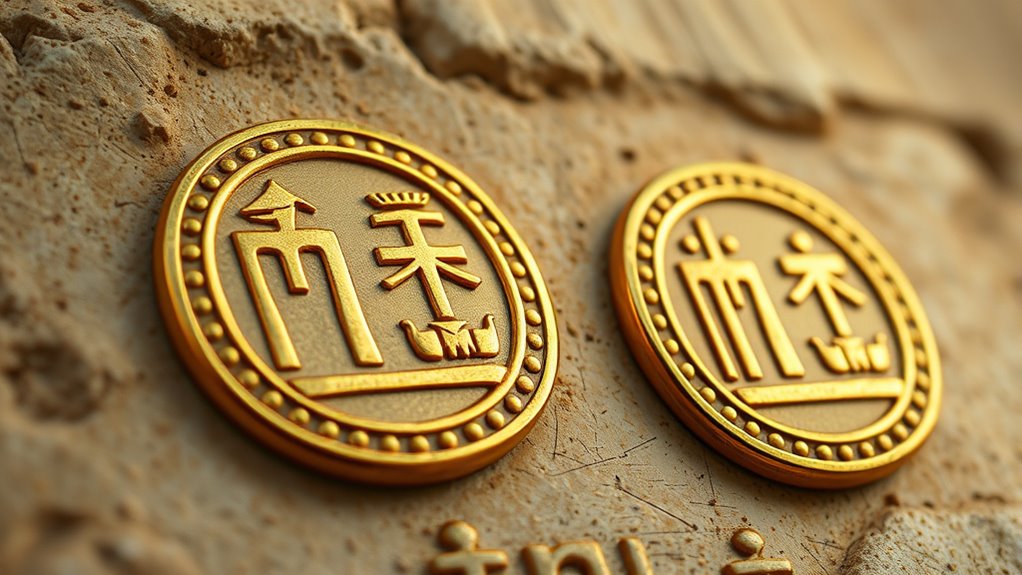
If you look at ancient Egyptian artifacts, you’ll see cartouches encasing pharaohs’ names, symbols of their divine authority and eternal rule. These oval shapes protect and highlight their royal identities, linking them to gods and everlasting life. Each name within a cartouche signifies different aspects of kingship, including divine power and legitimacy. Understanding how these symbols function reveals much about their culture. Keep exploring to uncover more about these fascinating symbols of royal identity.
Key Takeaways
- Cartouches encase royal names, symbolizing protection, eternity, and divine authority.
- They highlight the pharaoh’s titulary, including the throne and personal names, emphasizing royal identity.
- Cartouches serve as visual declarations of legitimacy, linking rulers to gods and eternal life.
- Used in monuments and tombs, they affirm the ruler’s divine right and political power.
- As key symbols, cartouches ensure royal names are prominent and recognizable throughout history.
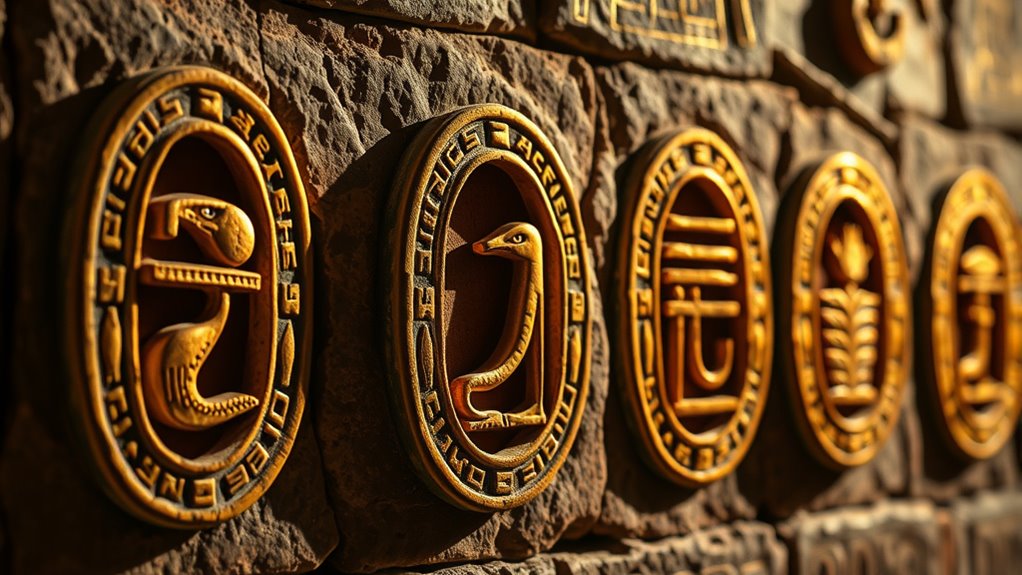
Have you ever wondered what symbols represent the true identity of royalty? In ancient Egypt, the answer lies in the intricate world of cartouches and royal names. These symbols are more than just decorative elements; they serve as a potent declaration of authority and divine right. When you look at hieroglyphic inscriptions on monuments, temples, or tombs, you’ll notice that royal names are encased within oval shapes called cartouches. This oval signifies protection and eternity, emphasizing the everlasting nature of the pharaoh’s rule. The hieroglyphic inscriptions inside these cartouches reveal the pharaoh’s royal titulary—an elaborate set of titles that convey their divine status, political power, and connection to gods. Understanding these inscriptions helps you grasp how the ancient Egyptians communicated the essence of their rulers’ identities.
The royal titulary typically consists of several key components: the Horus name, the Nebty name, the Golden Horus name, the throne name, and the personal name. Each part carries specific meaning, and collectively, they form a detailed identity for the ruler. The throne name, often enclosed within a cartouche, symbolizes the pharaoh’s divine authority and is used in official documents and inscriptions. The personal name, also placed within a cartouche, is a more familiar identifier, representing the individual’s earthly identity. When you examine hieroglyphic inscriptions, you’ll see that these names are carefully crafted, combining symbols that depict gods, royal attributes, and divine qualities. The use of cartouches to enclose these names was a deliberate act, safeguarding the royal identity and emphasizing its importance.
These symbols served not only as identifiers but also as a means of asserting the pharaoh’s divine status. By encasing their names in cartouches, rulers connected themselves to the gods and eternal life. This visual strategy made their names stand out, ensuring their legacy persisted through the ages. From the earliest dynasties to later periods, cartouches remained a key feature in royal iconography. They allowed the living ruler and their successors to affirm legitimacy and divine endorsement. When you study hieroglyphic inscriptions, the prominence of cartouches becomes clear: they are the signature of kingship, encapsulating the essence of royal identity in a timeless symbol. This simple yet powerful oval shape, combined with carefully chosen hieroglyphs, remains one of the most recognizable symbols of ancient Egyptian sovereignty.

EUEAVAN Cartouche Pendant Necklace for Women – Eye of Horus/Ankh Cross, Personalized Name Hieroglyph Ancient Egyptian Amulet Jewelry Gift (Gold 2)
Cartouche necklace-The cartouche symbol was an emblem of prosperity and good health. In ancient Egypt, amulets and cartouches…
As an affiliate, we earn on qualifying purchases.
As an affiliate, we earn on qualifying purchases.
Frequently Asked Questions
How Were Cartouches Initially Developed in Ancient Egypt?
You might find that cartouches were initially developed during Egypt’s early hieroglyphic evolution to enclose royal names, making them stand out. They served as a specialized royal inscription technique, emphasizing the pharaoh’s divine authority. Over time, these oval shapes evolved into a consistent symbol, helping distinguish royal titles from other hieroglyphs. This innovation reinforced the importance of the pharaoh’s identity and solidified their divine status in Egyptian culture.
What Materials Were Used to Create Royal Cartouches?
Imagine the ancient art of inscription as a shimmering dance, where materials tell stories. You’d see gold, lapis lazuli, and vibrant stones used for royal cartouches, reflecting their significance in ancient inscription techniques and royal jewelry symbolism. Craftsmen carved these precious materials with meticulous skill, creating lasting symbols of power, ensuring that the pharaoh’s name shone brightly, both in life and eternity.
Did All Pharaohs Have Unique Cartouche Designs?
Not all pharaohs had unique cartouche variations, but many did to emphasize their royal name symbolism. Some cartouches were personalized to reflect specific titles or achievements, while others followed a standard design. You’ll notice that these variations helped distinguish each ruler’s royal identity, making the cartouche a essential symbol of authority. This diversity in design highlights how pharaohs used their cartouches to showcase their unique legacy and divine status.
How Did Cartouches Influence Egyptian Art and Architecture?
Oh, sure, cartouches totally turned Egyptian art into a giant hieroglyphic billboard. You’ll see them everywhere—on temple walls, tombs, and monuments—transforming plain architecture into masterpieces of hieroglyphic artistry and architectural ornamentation. They weren’t just labels; they were the royal signature, adding grandeur and mystique. So, next time you admire Egyptian structures, remember that cartouches made every stone a royal badge of honor, dazzling eternity with a splash of divine branding.
Are Cartouches Still Used in Modern Egyptian Symbols or Flags?
Yes, cartouches are still used in modern Egyptian symbols and branding. You might see them in contemporary symbolism, especially in logos and official emblems that emphasize Egypt’s rich history. They influence modern branding by linking current designs to ancient royal identity symbols, creating a sense of tradition and heritage. This blending of old and new continues to keep Egypt’s cultural identity alive in today’s visual representations.
EUEAVAN Cartouche Pendant Necklace for Women – Eye of Horus/Ankh Cross, Personalized Name Hieroglyph Ancient Egyptian Amulet Jewelry Gift (Gold 2)
Cartouche necklace-The cartouche symbol was an emblem of prosperity and good health. In ancient Egypt, amulets and cartouches…
As an affiliate, we earn on qualifying purchases.
As an affiliate, we earn on qualifying purchases.
Conclusion
You now understand that cartouches and pharaoh names serve as powerful symbols of royal identity, embodying authority and divine connection. notably, nearly 90% of well-preserved cartouches contain the pharaoh’s throne name, highlighting its importance in projecting legitimacy. This shows how these symbols weren’t just decorative—they were essential tools for asserting power and continuity. By recognizing their significance, you gain a deeper appreciation for how ancient Egypt communicated royal authority across generations.
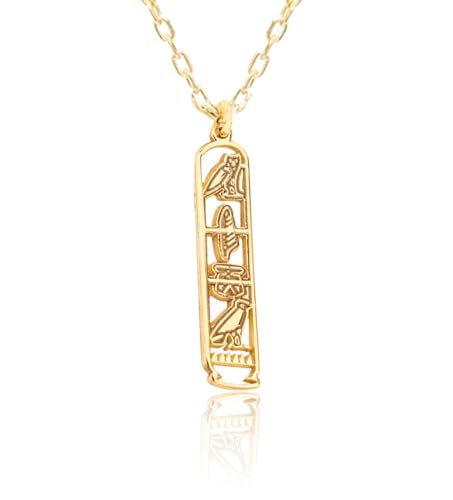
Personalized Egyptian Cartouche Name Necklace | 14K Gold Plated 925 Sterling Silver | Custom Name Pendant, Ancient Egypt Jewelry Gift
Authentic Egyptian Craftsmanship: Handcrafted in Egypt, this personalized cartouche necklace is a timeless piece of jewelry that captures…
As an affiliate, we earn on qualifying purchases.
As an affiliate, we earn on qualifying purchases.

NileCart Eye of Horus 12 In. Wall Art Home Decor – Hand-Painted Egyptian Symbol of Protection Wall Decor – Made in Egypt
Symbolizing the power of the god of light. Our perfectly sized historical Egyptian decorations measure 12"Wx1.5"Dx8.5"H 2 lbs….
As an affiliate, we earn on qualifying purchases.
As an affiliate, we earn on qualifying purchases.