
The Djed pillar is a key symbol in Egyptian mythology that represents stability, strength, and endurance. It is often associated with the god Osiris and the afterlife, embodying resilience amid chaos. You’ll find it in temples and monuments, where it reinforces spiritual stability and cosmic support. Its design influences architecture, emphasizing durability and unwavering strength. Explore further to discover how this ancient symbol continues to influence cultural and spiritual ideas.
Key Takeaways
- The Djed pillar symbolizes stability, strength, and endurance, representing eternal life and resilience in Egyptian mythology.
- It is associated with Osiris and the afterlife, embodying spiritual stability and protection.
- In architecture, the Djed influenced the design of enduring columns and structures emphasizing durability.
- It serves as a spiritual backbone, linking the earthly realm with divine forces to maintain cosmic order.
- The Djed’s enduring symbolism reflects core Egyptian values of resilience, stability, and eternal life.
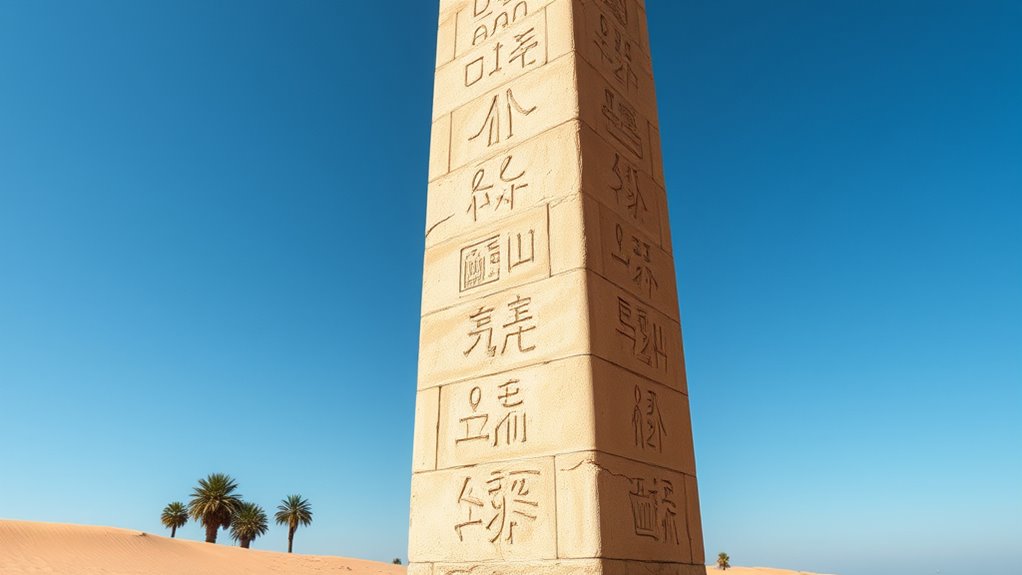
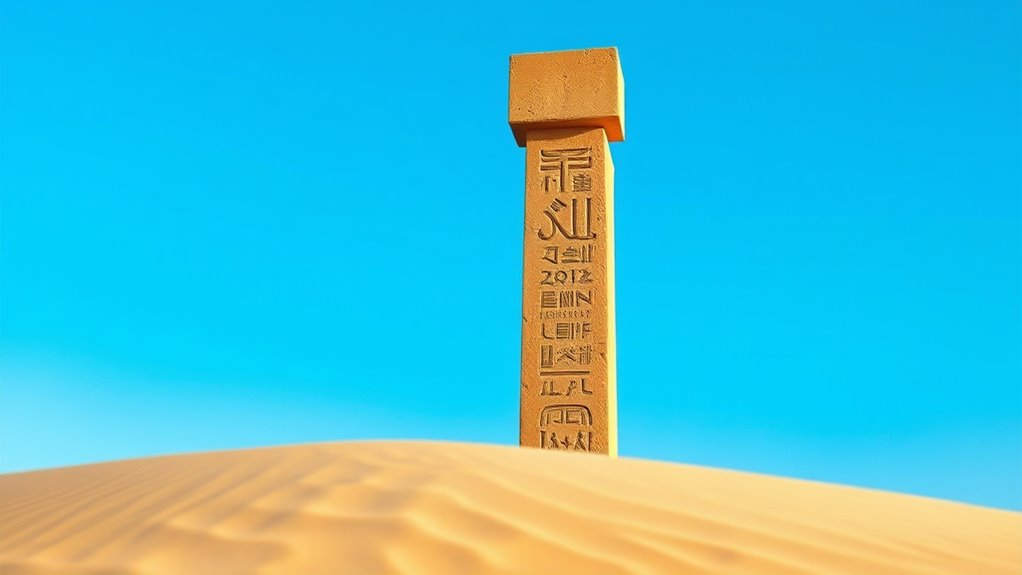
Have you ever wondered what the Djed Pillar represents in ancient Egyptian culture? This iconic symbol is more than just a decorative element; it embodies deep ancient symbolism rooted in the core values of stability, strength, and endurance. To the ancient Egyptians, the Djed was a powerful emblem, often associated with the god Osiris, the ruler of the afterlife. It signified resilience and eternal life, serving as a reminder that even in the face of chaos, stability could be maintained. When you look at the Djed Pillar, you’re witnessing a visual representation of these enduring ideals. Its form, with its broad, flared base and column-like shaft topped with a series of horizontal lines or disks, is intentionally designed to evoke a sense of grounded stability. This shape wasn’t accidental; it carried profound symbolic meaning, making it a vital part of ancient Egyptian spiritual and cultural identity. The architectural significance of the Djed Pillar is equally compelling. Throughout Egyptian temples and monuments, it appears in various forms, often integrated into sculptures, reliefs, and ritual objects. Its presence in architecture isn’t just decorative—it’s a deliberate choice that reinforces the concept of stability, both physical and spiritual. When you see the Djed represented in temple carvings or as part of funeral rites, it acts as a symbol of continuity and protection, anchoring the structure’s spiritual purpose. The ancient Egyptians believed that the Djed served as a sort of spiritual backbone, supporting the cosmos and ensuring the stability of the universe. Its placement in sacred spaces highlights its architectural significance as a symbol that connects the earthly realm with the divine. The design of the Djed also influenced architectural practices, inspiring columns and pillars that echoed its form, emphasizing strength and durability in construction. These structures were not just functional—they carried symbolic weight, reminding viewers of the importance of resilience and eternal stability. Additionally, the enduring presence of the Djed in Egyptian art and architecture underscores its role as a symbol of stability, shaping both spiritual beliefs and construction techniques. In essence, the Djed Pillar is a tribute to the ancient Egyptians’ understanding of the importance of stability, both in life and after death. It’s a symbol that transcends mere aesthetics, embodying core principles that guided their spiritual beliefs and architectural feats. When you explore its meaning, you gain insight into a culture that valued enduring strength and unwavering stability, central themes that continue to resonate through history. The Djed Pillar stands as a lasting reminder of the power of ancient symbolism and the architectural significance it held in shaping their world.

Egyptian Djed Pillar Pendant Necklace – Sterling Silver – Made in Egypt Jewelry
The Djed pillar, characterized by its straight, vertical lines and crossbars, is a representation of the backbone of…
As an affiliate, we earn on qualifying purchases.
As an affiliate, we earn on qualifying purchases.
Frequently Asked Questions
How Old Is the Djed Pillar Symbol?
The Djed pillar’s symbol dates back over 4,000 years, with ancient origins in Egypt’s early dynastic period. Its enduring presence shows its symbolic evolution from a representation of stability and strength. You see it in temples and artifacts, highlighting its significance across generations. Its ancient origins and continuous use underscore how this powerful symbol has evolved while maintaining its core message of resilience and support throughout history.
Are There Modern Uses of the Djed Symbol?
Think of the djed symbol as a sturdy lighthouse guiding modern design. You’ll see it in jewelry, where its strength symbolizes resilience, and in corporate logos, representing stability and trustworthiness. Its timeless appeal makes it perfect for conveying endurance today. So, when you spot the djed in contemporary settings, you’re witnessing an ancient emblem still standing tall, inspiring confidence and strength in new ways.
Did Any Specific Pharaoh Promote the Djed Pillar?
You’ll find that Pharaohs like Ramesses II promoted the djed pillar, emphasizing their spiritual authority through religious symbolism. They used it to reinforce stability, strength, and divine power, often incorporating the symbol into temple reliefs and rituals. By doing so, they publicly demonstrated their connection to the gods, asserting their role as divine intermediaries and emphasizing the enduring stability of their reigns through the sacred symbolism of the djed.
What Materials Were Used to Create Ancient Djed Pillars?
You see, ancient djed pillars were crafted from sturdy materials like limestone, sandstone, or baked clay, chosen for their durability and symbolic strength. Skilled builders used simple construction techniques, stacking and carving these materials with care. These choices weren’t just practical—they reflected deeper material symbolism, embodying stability and resilience. As you imagine these structures rising, you realize their enduring presence mirrors the unshakable foundation they represented in Egyptian culture.
How Does the Djed Symbol Relate to Egyptian Afterlife Beliefs?
You see, the djed symbol represents symbolic resurrection and afterlife protection. It’s a powerful emblem in Egyptian beliefs, signifying eternal stability and strength for the soul’s journey after death. By incorporating the djed into tombs and rituals, Egyptians believed it would guarantee the deceased’s safe passage to the afterlife, providing ongoing support and safeguarding their spiritual existence. This symbol embodies the hope and faith in life after death.

TAC IBEX Egyptian Figure Décor Decoration Ancient Pyramid Sculpture Pharaoh Obelisk Egypt Statue Decorative Decor Figurine Building Ornament Set of 4
【Perfect Gift for Ancient Egypt Culture Lover】This Ancient Egypt Statue Set has amazing details. It's a great gift…
As an affiliate, we earn on qualifying purchases.
As an affiliate, we earn on qualifying purchases.
Conclusion
The Djed pillar symbolizes stability and strength, reminding us of the enduring power of Egypt’s mythology. Its presence in temples and stories shows how essential stability was to ancient Egyptian life. So, next time you see the Djed, ask yourself—aren’t we all seeking a foundation of strength in our own lives? Embracing resilience and stability can help us face any challenge. After all, isn’t that what truly keeps us grounded?

AHANDMAKER 2Pcs Ancient Egyptian Murals Tapestry, Egypt Religion Historical Mythology Pharaohs Hieroglyphic Hanging Tassel Tapestry for Bedroom Living Room Coffee Home Décor(45.7×13 Inch)
Museum of Ancient Wonders: Step into the world of ancient Egypt with our 2 piece Ancient Egyptian Murals…
As an affiliate, we earn on qualifying purchases.
As an affiliate, we earn on qualifying purchases.

OUTOUR Exquisite Magnesium Oxide Corinthian Greek Column Pillar with Stand Base Pedestal for Indoor Outdoor Garden Pedestals Backyard Courtyard Patio Office Decor23.8’’High,Dark Bronze
1.Attractive Design: Topped by the lush fern, delicate orchid or other potted plant, our Corinthian pedestals are at…
As an affiliate, we earn on qualifying purchases.
As an affiliate, we earn on qualifying purchases.