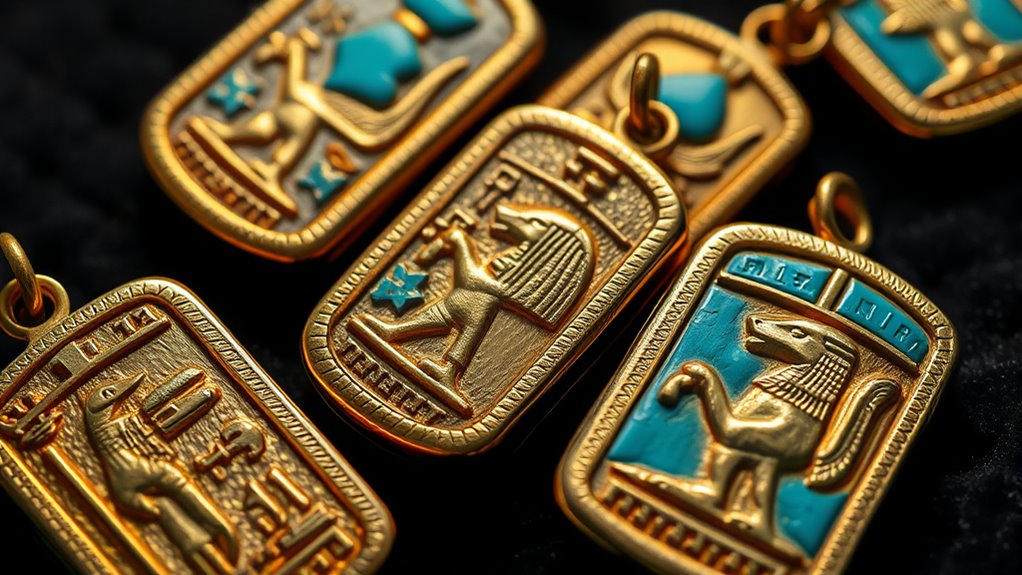

Egyptian amulets are powerful symbols of protection and spiritual energy designed to ward off evil and attract good fortune. Crafted with symbols like the Eye of Horus and Scarabs, they connect you to ancient divine forces. Made from materials such as gold and faience, these amulets carry deep meanings rooted in Egypt’s traditions. By understanding their origins and symbolism, you’ll see how these ancient charms continue to serve as spiritual safeguards—so, uncover more below.
Key Takeaways
- Egyptian amulets embody symbols like the Eye of Horus and scarabs, offering protection and spiritual strength.
- Materials such as faience and gold enhance the amulets’ symbolic and protective properties.
- Amulets originated over 4,000 years ago, serving as safeguards for both the living and the deceased.
- They act as conduits to invoke divine power and ward off evil spirits in ancient Egyptian culture.
- The symbolic design and material choices reinforce their role as tools for spiritual protection and good fortune.
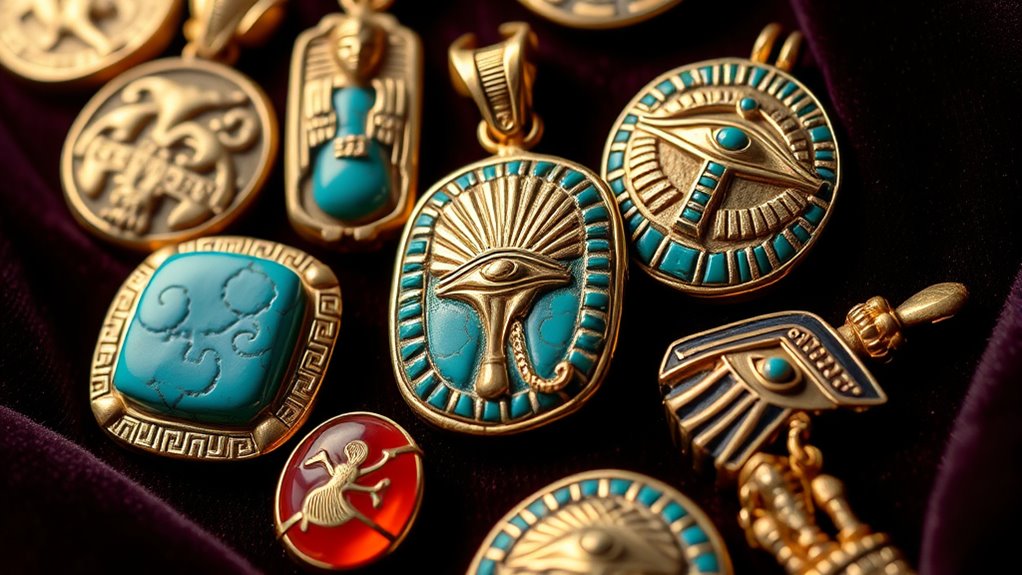
Egyptian amulets are small, powerful objects believed to offer protection, good fortune, and spiritual guidance. When you wear or carry one, you’re tapping into a long-standing tradition that connects you to ancient beliefs and practices. These tiny talismans are not random charms; they carry deep symbolic significance rooted in Egypt’s rich cultural history. Understanding their symbolic importance helps you appreciate why these objects have endured through millennia. Each amulet is crafted with specific symbols, often representing gods, animals, or hieroglyphs, which serve as protective forces or bring blessings. For example, the Eye of Horus symbolizes protection and health, while the scarab represents rebirth and transformation. The symbolic significance of these objects is what makes them more than mere jewelry—each piece is a conduit for spiritual power, designed to ward off evil or attract positive energy. Additionally, the materials used—such as faience, gold, and semi-precious stones—were chosen not only for their beauty but also for their symbolic meanings.
You should also consider the historical origins of these amulets to fully grasp their importance. Ancient Egyptians believed that the physical world was intertwined with the spiritual domain, and they used amulets as a way to bridge that gap. They first appeared over 4,000 years ago, during the early dynastic period, when artisans began embedding symbols into jewelry and charms. These amulets were often placed in tombs to protect the deceased in the afterlife, reflecting their role in spiritual safeguarding. Over time, their use expanded into everyday life, with common people and royalty alike wearing amulets to invoke divine favor. The materials used—such as faience, gold, and semi-precious stones—also carried symbolic meanings. For instance, blue faience represented fertility and rebirth, while gold signified the divine and eternal. Recognizing the historical origins of these objects helps you understand their sacred role and why they remain relevant today.
When you hold or wear an Egyptian amulet, you connect with a tradition that spans thousands of years. The symbols imbued within serve as more than decoration—they’re believed to channel divine energy and protect you from harm. Their symbolic significance is what makes them powerful; each amulet is carefully designed with purpose, meant to invoke specific spiritual effects. Knowing their historical origins reveals how deeply rooted these objects are in Egyptian culture, serving both practical and spiritual needs. Whether you see an amulet as a talisman or a piece of art, remember that its power comes from the centuries of belief and tradition that shaped it. These small objects are a testament to Egypt’s enduring faith in the unseen forces that guide and guard us.

Ankh Cross Eye of Horus Gemstone Necklace Key of Life Scarab Pendant Egyptian Goddess Isis Necklace Ancient Egyptian Protection Amulet Religious Jewelry for Women Men (gold)
Goddess Isis Horus Ankh Necklace – The Eye of Horus is a symbol of protection, good fortune, health,…
As an affiliate, we earn on qualifying purchases.
As an affiliate, we earn on qualifying purchases.
Frequently Asked Questions
How Are Egyptian Amulets Made and Consecrated?
You make Egyptian amulets using ancient crafting techniques like shaping clay, metal, or stone, then decorating them with symbols and inscriptions. To consecrate them, you perform ritual consecration practices, which involve cleansing the amulets with sacred water or incense and invoking protective deities through prayers or offerings. This process imbues the amulets with their magical power, ensuring they provide protection and blessings to their wearers.
What Materials Were Most Commonly Used for Amulets?
Did you know that faience, a glazed ceramic, was used in over 70% of ancient Egyptian amulets? These amulets were primarily made from materials like carnelian, turquoise, gold, and faience, valued for their symbolic meanings and durability. Today, these ancient materials inspire modern applications, from jewelry to decorative objects, as their rich history and symbolism continue to fascinate and influence contemporary design and cultural practices.
Are Egyptian Amulets Still Used in Modern Spiritual Practices?
Yes, you can find Egyptian amulets in modern spiritual practices. People use them to connect with ancient symbolism and seek protection or guidance. Whether worn as jewelry or kept in sacred spaces, these amulets carry deep cultural meaning. They serve as a bridge between past and present, allowing you to incorporate ancient Egyptian symbolism into your spiritual journey and experience a sense of protection and empowerment today.
How Do Amulets Differ Across Various Egyptian Dynasties?
You’ll find that amulets across Egyptian dynasties are like a vast, ever-changing tapestry of dynastic symbolism! Each era’s amulet evolution reflects unique artistic styles, spiritual beliefs, and political influences. From the simple, protective scarabs of the Old Kingdom to the intricate, richly symbolic pieces of the New Kingdom, these amulets grew more elaborate and powerful, showcasing how Egypt’s culture constantly transformed while holding onto its sacred symbols.
Can Amulets Be Personalized for Specific Protection Needs?
Yes, you can personalize amulets for specific protection needs through custom amulet design. By choosing symbols, materials, and inscriptions that resonate with your unique concerns, you create a powerful talisman tailored just for you. This personalized protection guarantees the amulet aligns with your intentions, enhancing its effectiveness. Working with an artisan or understanding traditional symbols helps you craft a meaningful, custom amulet that offers targeted spiritual safeguarding.

Hipunk Eye of Horus Necklace 316L Stainless Steel Egyptian Ancient Wedjat Eye of Ra Horus Symbol of Protection Mens' Amulet Protective Coptic Jewelry SP0009B
– Eye of Horus Necklace: Made from high-grade 316L stainless steel with 18K gold/black gun plating, our necklace…
As an affiliate, we earn on qualifying purchases.
As an affiliate, we earn on qualifying purchases.
Conclusion
As you wear these ancient Egyptian amulets, imagine them as tiny guardians, like stars guiding you through life’s darkness. Their magical symbols shimmer with protective power, wrapping you in a timeless shield. Just as a river carves its path through stone, these amulets carve a sense of safety and strength into your soul. Embrace their energy, and let their ancient magic light your way, turning everyday moments into sacred protections.

Fire Phoenix Designs Egyptian Charm Pendant Set 10 Pieces Antique Gold Plated Ankh Cross, Eye of Horus, Scarab Beetle Collection CC07112023
AUTHENTIC DESIGN: Set includes 10 detailed Egyptian-themed charms featuring Ankh crosses, Eye of Horus symbols, and winged scarab…
As an affiliate, we earn on qualifying purchases.
As an affiliate, we earn on qualifying purchases.

Pharoah's Pocket – Egyptian Protective Amulet Charms – Made in Egypt
HAND-MADE IN EGYPT: Sustainably crafted in Luxor, Egypt by skilled multi-generational artisans.
As an affiliate, we earn on qualifying purchases.
As an affiliate, we earn on qualifying purchases.