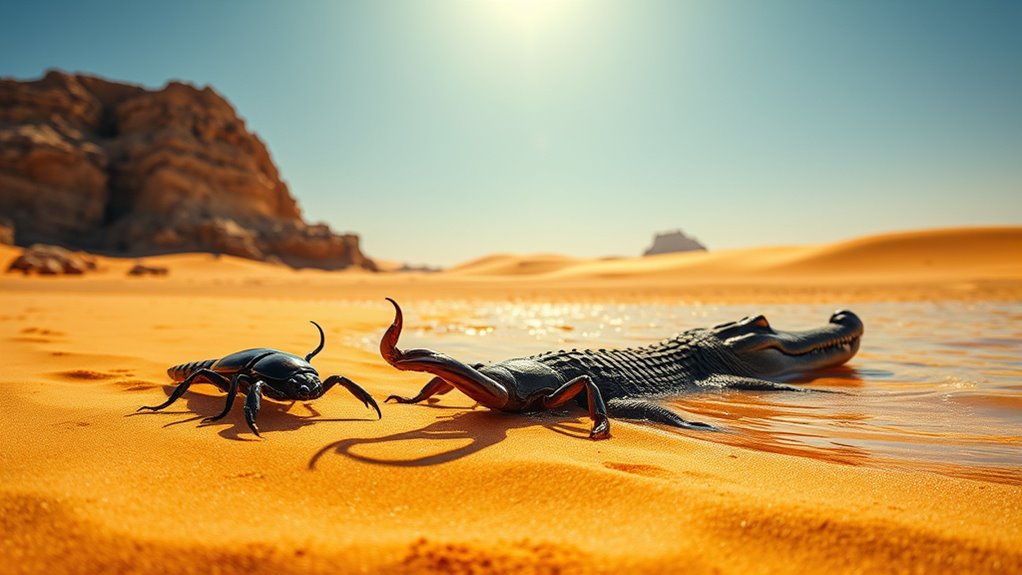

In Egyptian mythology, desert animals like crocodiles, scorpions, falcons, and ibises symbolize powerful divine forces and spiritual truths. Crocodiles embody Sobek’s strength and protection, while scorpions represent both danger and divine safeguard through goddess Serqet. Falcons and ibises symbolize divine kingship and wisdom, connecting rulers and deities. These animals reflect core beliefs about life, death, and divine power—exploring their symbolism reveals a deeper understanding of Egyptian spirituality. Keep exploring to uncover more about their fascinating stories.
Key Takeaways
- Crocodiles symbolize Sobek, embodying strength, protection, and divine authority in Egyptian mythology.
- Scorpions represent danger and divine safeguarding, linked to goddess Serqet, symbolizing resilience and protection.
- Falcons are associated with Horus, signifying kingship, vision, and divine power.
- Ibis birds symbolize Thoth, embodying wisdom, knowledge, and spiritual enlightenment.
- Desert animals often serve as messengers and symbols reflecting core spiritual and cosmological principles.

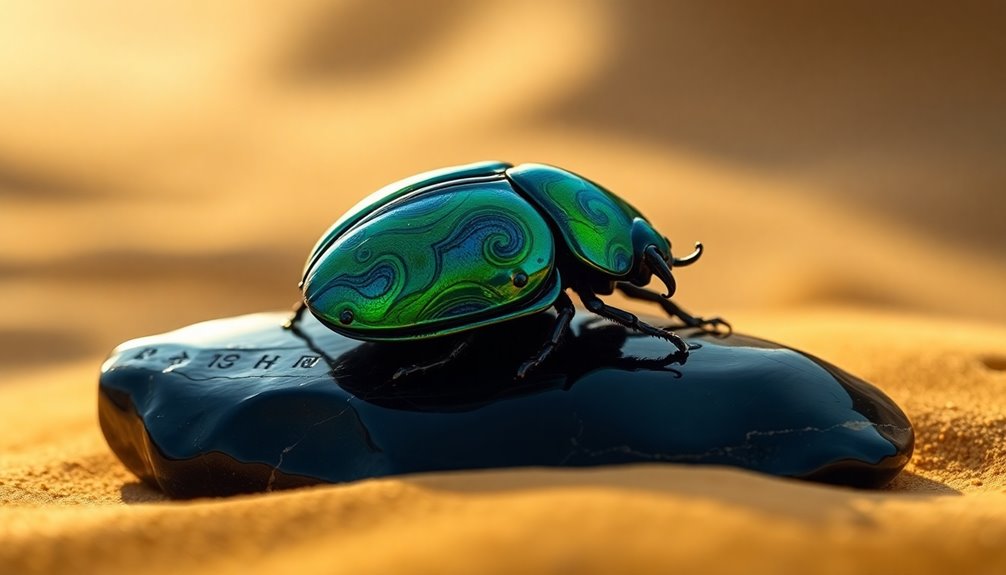
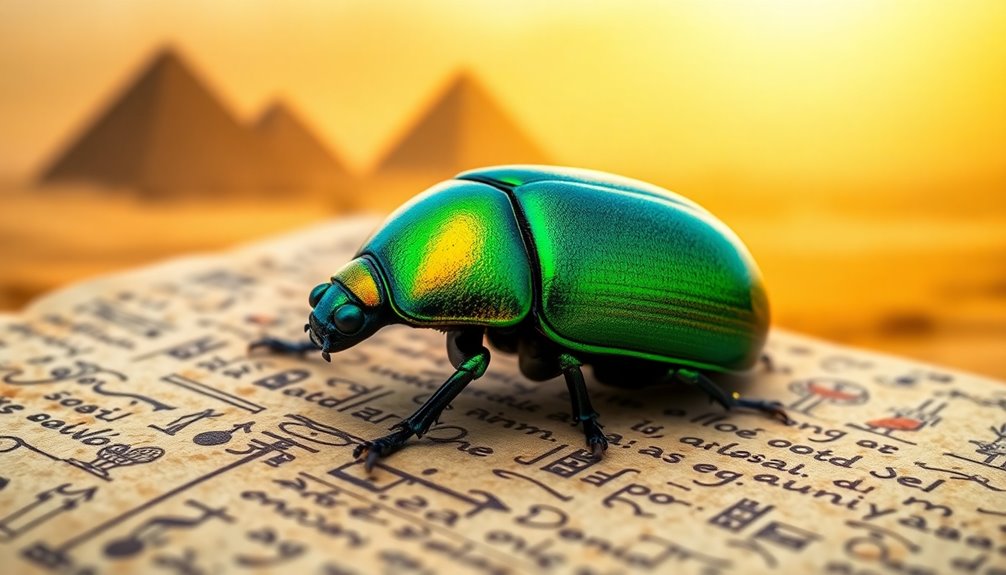
In Egyptian mythology, desert animals are more than just creatures surviving harsh conditions—they embody powerful symbols and divine qualities. You might see a scarab beetle and instantly recognize it as a symbol of rebirth, renewal, and transformation. These animals are woven into myths and religious beliefs, representing forces beyond their physical presence. As mythological creatures, they connect the mortal world to the divine, serving as messengers or symbols of gods’ attributes. You’ll find that each animal’s symbolism reflects essential aspects of Egyptian spirituality and cosmology, making them indispensable to understanding the culture’s view of life, death, and the divine.
Take the crocodile, for example. It was revered as the embodiment of Sobek, the god of the Nile and fertility. To Egyptians, the crocodile symbolized strength, protection, and primal power. They believed that Sobek’s fierce nature helped maintain the balance of the universe, and the crocodile itself became a mythological creature representing both danger and divine authority. You’d see crocodile-shaped amulets and statues, which were thought to offer protection and invoke divine favor. Similarly, the scorpion was seen as a symbol of both danger and protection. Its mythological role is tied to the goddess Serqet, who was believed to ward off venomous stings and protect against evil. In this way, the scorpion embodies the duality of threat and safeguard, making it a potent symbol of divine power and resilience.
The falcon, another prominent mythological creature, is associated with Horus, the sky god. Its animal symbolism centers on kingship, vision, and divine authority. You’d notice that falcons often appear in royal iconography, emphasizing the connection between the ruler and the divine realm. The ibis, representing Thoth, the god of wisdom and knowledge, is also a significant mythological bird. Its animal symbolism highlights intelligence, writing, and the pursuit of truth. Through these creatures, Egyptians expressed complex spiritual ideas, viewing animals as living symbols that carried divine messages across the mortal and divine worlds.
In essence, desert animals in Egyptian mythology are more than just survivalists—they are divine symbols and mythological creatures embodying core spiritual principles. Their animal symbolism reveals profound truths about life, death, protection, and power. Whether it’s the crocodile’s strength, the falcon’s vision, or the scorpion’s dual nature, each animal plays a crucial role in shaping the mythic landscape of ancient Egypt, bridging the human and divine in enduring ways.
Top picks for "desert animal egyptian"
Open Amazon search results for this keyword.
As an affiliate, we earn on qualifying purchases.
Frequently Asked Questions
How Were Desert Animals Worshipped in Ancient Egyptian Rituals?
You can see that desert animals held great ritual significance in ancient Egypt, often symbolizing divine traits. You might have participated in rituals where animals like scorpions and crocodiles were worshipped, emphasizing their animal symbolism. These animals were revered as embodiments of gods, and offerings or ceremonies honored their power and protection. By understanding their ritual significance, you see how ancient Egyptians integrated desert animals into their spiritual practices to seek favor and safety.
Did Any Desert Animals Symbolize Specific Gods or Goddesses?
You might be surprised, but yes, desert animals often symbolized specific gods or goddesses through powerful animal symbolism and desert deity associations. The powerful crocodile represented Sobek, embodying strength and protection, while the scorpion symbolized danger and transformation linked to deities like Selket. These animals weren’t just creatures; they were divine symbols, embodying qualities of deities that influenced ancient Egyptians’ beliefs and rituals deeply.
What Roles Did Desert Animals Play in Egyptian Mythology Stories?
In Egyptian mythology, desert animals play essential roles by embodying mythical creature symbolism and desert animal symbolism. You’ll see scorpions representing protection and danger, while crocodiles symbolize strength and rebirth. These animals often appear in stories to convey divine qualities or warnings. Their symbolism helps you understand ancient beliefs about nature’s power, with each creature embodying specific traits that connect humans to gods and the mystical forces of the desert world.
Were Desert Animals Used in Egyptian Jewelry or Amulets?
Yes, desert animals were used in Egyptian jewelry and amulets, embodying powerful desert animal symbolism. You’ll find these animals featured as motifs in jewelry, such as crocodiles, scorpions, and falcons, representing protection, strength, and divine connection. Wearing these motifs helps channel the animals’ qualities, offering spiritual benefits. Incorporating desert animal symbolism in your jewelry connects you to ancient Egyptian culture and its reverence for desert creatures.
How Did Desert Animals Influence Egyptian Art and Hieroglyphs?
Imagine discovering how desert animal symbolism shapes ancient Egypt’s art and hieroglyphs. These creatures, like the crocodile and scorpion, influence hieroglyphic representations, conveying power, protection, and mystery. They add vivid detail to carvings and paintings, making symbols more meaningful. Their influence on hieroglyphs helps tell stories, honor gods, and depict daily life, turning simple images into profound messages. You see their lasting impact in Egypt’s timeless art.
Conclusion
As you explore these desert creatures’ roles in Egyptian mythology, you’ll see they embody more than just survival—they symbolize resilience and hidden wisdom. These animals, from the fierce scorpion to the mighty crocodile, gently remind us that strength often wears a subtle guise. Embracing their stories, you uncover layers of meaning beneath their surface, inviting a deeper appreciation for nature’s quiet guides. In their silent presence, you find a timeless connection to the desert’s mysterious, enduring spirit.