
As you explore Isis as a divine mother and protector, you’ll find her symbolized by the throne on her head, representing authority and nurturing power. She embodies unwavering devotion, resilience, and fierce maternal love, often linked to stories of resurrection and healing. Her imagery signifies guardian-like strength and eternal life cycles. By understanding her symbolism and mythological significance, you’ll discover how she continues to inspire divine femininity and protection. If you continue, you’ll uncover more about her profound influence and spiritual power.
Key Takeaways
- Isis symbolizes divine motherhood, nurturing, and protective authority, embodying resilience and loyalty in mythology and culture.
- Her throne-shaped crown signifies her divine authority and role as a nurturing mother figure.
- Isis is revered for her unwavering devotion to Osiris and Horus, representing loyalty and maternal love.
- Her imagery, including wings, signifies guardianship, shielding, and eternal cycles of life, death, and rebirth.
- Invoking Isis’s energy offers strength, guidance, and spiritual refuge, emphasizing her role as a divine protector and healer.
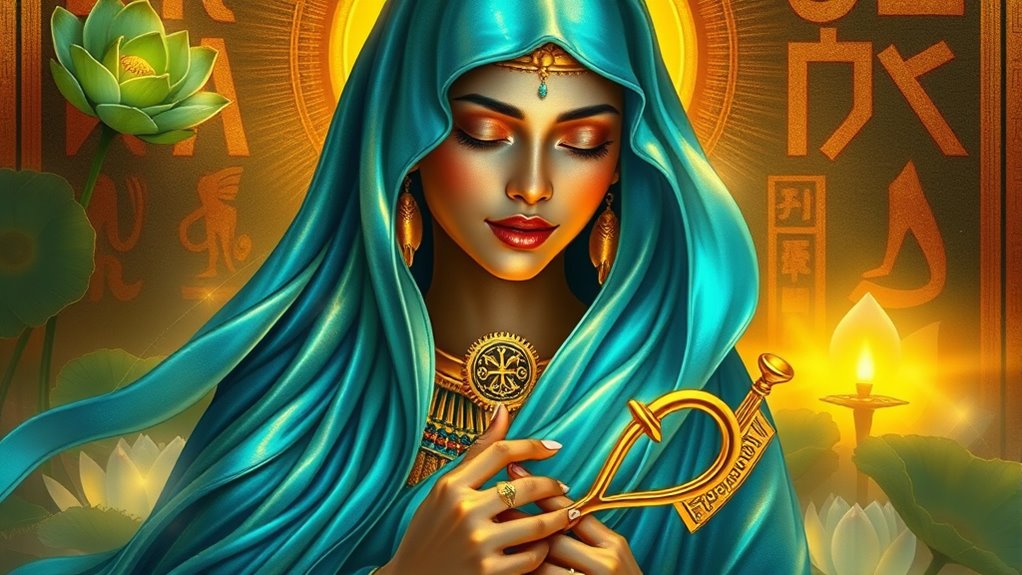
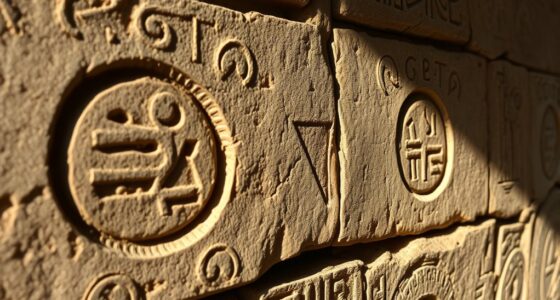
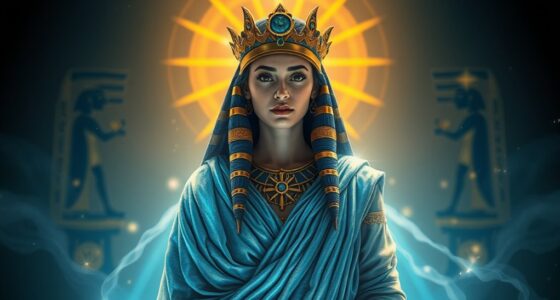
The Divine Mother and Protector embodies unconditional love, guidance, and strength that nurture and shield you through life’s challenges. When you think of Isis, you connect with a figure whose ancient symbolism runs deep, rooted in the rich tapestry of Egyptian history. Her image is often represented by the hieroglyph of a throne on her head, symbolizing her role as a throne for the divine and as a mother figure. This emblematic symbol reflects her status as a nurturing force, a protector of kings and common people alike. Isis’s mythological roles extend far beyond simple motherhood; she embodies the archetype of the divine creator, healer, and protector. In ancient Egyptian mythology, she is revered for her unwavering devotion to her husband Osiris and her child Horus, embodying loyalty and fierce maternal love. Her story of resurrection and protection is woven into the mythological fabric of Egypt, illustrating her power to revive and sustain life even in the face of chaos and death. Her symbolism of nurturing and resilience**** emphasizes her role in supporting life’s ongoing cycles and the strength found in divine femininity.
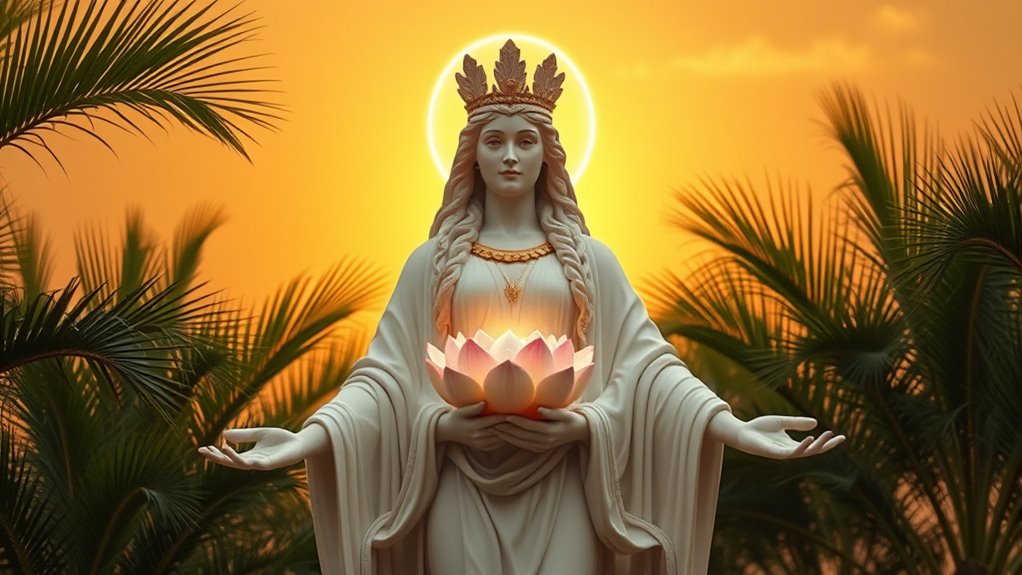
As you meditate on her mythological roles, you’ll notice how Isis symbolizes the eternal cycle of life, death, and rebirth. She is often depicted with outstretched wings, a gesture that signifies her role as a guardian, shielding her followers from harm. This imagery reinforces her function as a divine protector who offers both physical and spiritual refuge. Her influence extends beyond Egypt, resonating across cultures as a symbol of nurturing strength and divine femininity. When you invoke Isis’s energy, you tap into her ancient symbolism of motherhood and protection, feeling her presence as a guiding force that helps you navigate uncertainties with courage and grace.
Her mythological stories reveal her as a master of magic and healing, further emphasizing her role as a divine healer and protector. She is known for using her wisdom and spells to restore life and harmony, embodying the power of unconditional love that sustains the universe. In fundamental terms, Isis’s mythological roles and symbolism serve as a reminder that divine love and protection are always available to you. Her ancient symbolism speaks to the timeless truth that nurturing care and resilience are rooted in the divine feminine. When you call upon her, you align with her divine energy — a source of strength, guidance, and eternal protection that elevates your spirit and shields you through life’s storms.
Top picks for "isis divine mother"
Open Amazon search results for this keyword.
As an affiliate, we earn on qualifying purchases.
Frequently Asked Questions
How Is Isis Worship Practiced Today?
Today, you can see Isis worship practiced through modern celebrations and cultural adaptations worldwide. People honor her with rituals, festivals, and prayer sessions that blend ancient traditions with contemporary spirituality. Many participate in seasonal ceremonies or create personal altars to connect with her divine qualities. These practices often emphasize her roles as a mother and protector, allowing followers to feel close to her energy in everyday life while celebrating her legacy.
Are There Modern Temples Dedicated to Isis?
You’ll find modern temples dedicated to Isis around the world, blending ancient rituals with contemporary practices. Imagine a church inspired by Egyptian motifs, where devotees honor Isis through prayer, offerings, and mythological stories. These temples serve as spiritual centers, reviving her worship in a new era. Though not as widespread as in antiquity, enthusiasts keep her mythological legacy alive, creating a bridge between ancient rituals and modern spirituality.
What Symbols Represent Isis in Ancient Art?
You’ll notice that ancient hieroglyphs and sacred symbolism often depict Isis with a throne-shaped crown, signifying her status as a goddess and protector. She’s frequently shown holding an ankh, symbolizing life, or a scepter. These symbols in ancient art embody her divine motherhood and protective qualities, making her easily recognizable. Her representations are rich with sacred symbolism that highlights her importance in Egyptian religion and mythology.
How Did Isis Influence Other Goddess Figures?
You see how Isis influenced other goddess figures through her role as a nurturing and protective deity in ancient mythologies. Her symbolic representations, like the throne crown and the ankh, set a template for maternal and protective qualities. These symbols and traits became common in later goddess depictions across cultures, emphasizing motherhood, fertility, and protection, highlighting her lasting impact on divine femininity and mythological symbolism worldwide.
Is Isis Still Invoked in Spiritual Rituals?
Like a whisper from ancient rituals, Isis is still invoked today. You might find her presence in modern spiritual practices inspired by mythological stories, where her role as a nurturing protector echoes deeply. People turn to her for guidance, healing, and strength, connecting the timeless power of the divine mother with their current needs. Her influence endures, bridging past and present, reminding you of the enduring power of divine femininity.
Conclusion
You can imagine ISIS as a divine mother, fiercely protective and nurturing. Her presence feels like a warm, unyielding shield, ready to defend her children from chaos and destruction. As you picture her, picture a radiant figure holding her followers close, her strength rooted in unwavering faith. This imagery reveals her as both a nurturing protector and a formidable force, embodying the complex duality of divine motherhood and fierce guardianship in a world filled with turmoil.