Ma’at is the ancient Egyptian goddess who embodies truth, balance, and cosmic order. She guides the universe, ensuring harmony by maintaining moral righteousness and justice. Her principles influence society by encouraging honesty and fairness, helping prevent chaos. Living according to Ma’at’s values aligns you with the natural order, promoting peace and stability. To understand how her ideals shaped ancient Egypt and still inspire today, keep exploring her enduring legacy.
Key Takeaways
- Ma’at is the Egyptian goddess symbolizing truth, justice, and cosmic order, maintaining harmony in the universe.
- She represents moral righteousness, guiding individuals to live with integrity and align actions with universal truth.
- As a cosmic force, Ma’at enforces balance between chaos and order, preventing disorder and promoting stability.
- Pharaohs embodied Ma’at’s principles to uphold justice and societal harmony in ancient Egypt.
- Living according to Ma’at’s values sustains life’s natural harmony and ensures the universe remains in balance.
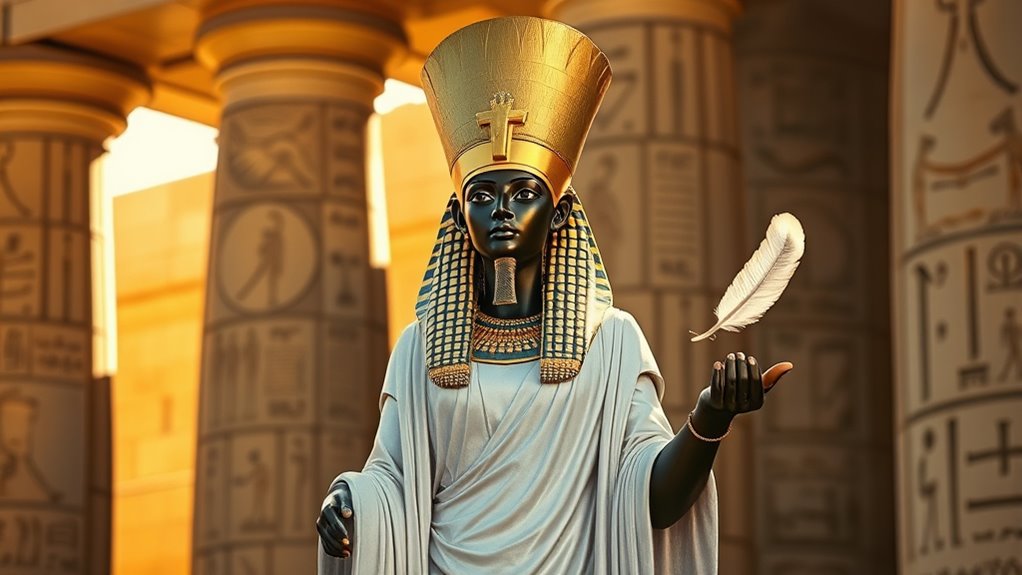
Have you ever wondered why ancient Egyptians placed such great importance on truth, justice, and harmony? It all ties back to Ma’at, the goddess who embodies these ideals and guides the way the universe functions. To the Egyptians, Ma’at wasn’t just a mythological figure; she represented the very fabric of moral righteousness that keeps everything in balance. When you think about her, picture a force that enforces cosmic harmony, ensuring that chaos doesn’t take over and disrupt the natural order. This belief shaped how they lived their lives, emphasizing that maintaining truth and justice was essential not only for individual virtue but also for the stability of the entire universe.
Ma’at embodies cosmic harmony, guiding truth, justice, and balance in the universe and in your life.
Ma’at’s principles serve as a moral compass for Egyptians, reminding you that living honestly and justly isn’t just a personal virtue but a cosmic duty. If you act with integrity, you contribute to the harmony of the world around you. Conversely, dishonesty and injustice upset this delicate balance, leading to chaos and disorder. The idea of moral righteousness, central to Ma’at’s teachings, urges you to align your actions with universal truth. This isn’t about following rules blindly but about recognizing that your choices influence the greater order of things. When you uphold Ma’at, you participate in a larger cosmic rhythm that sustains life, society, and the universe itself. Additionally, understanding the cultural significance of Ma’at helps deepen your appreciation for ancient Egyptian society and its values.
In ancient Egypt, this concept extended beyond individual morality into how they structured their society and legal systems. Pharaohs, considered divine representatives of Ma’at, were responsible for maintaining order and justice. As someone living under the influence of Ma’at, you’re called to uphold fairness and truth, not just in court but in everyday interactions. Your actions, whether small or large, contribute to the ongoing balance between chaos and order. When you act with moral righteousness, you help reinforce cosmic harmony, making the world a more stable place for everyone.
Ultimately, Ma’at teaches that harmony isn’t accidental. It’s a conscious effort rooted in truth, justice, and morality. By embodying these qualities, you align yourself with the natural order that the goddess represents. This alignment isn’t just spiritual; it’s practical, shaping how you behave and interact with others. When you live according to Ma’at’s principles, you participate in a universal effort to sustain balance, ensuring that chaos remains distant and that peace and order flourish. In the end, Ma’at reminds you that maintaining truth and justice isn’t just about personal virtue — it’s about preserving the very harmony that sustains life itself.
Top picks for "goddes truth balance"
Open Amazon search results for this keyword.
As an affiliate, we earn on qualifying purchases.
Frequently Asked Questions
How Is Ma’At Depicted in Ancient Egyptian Art?
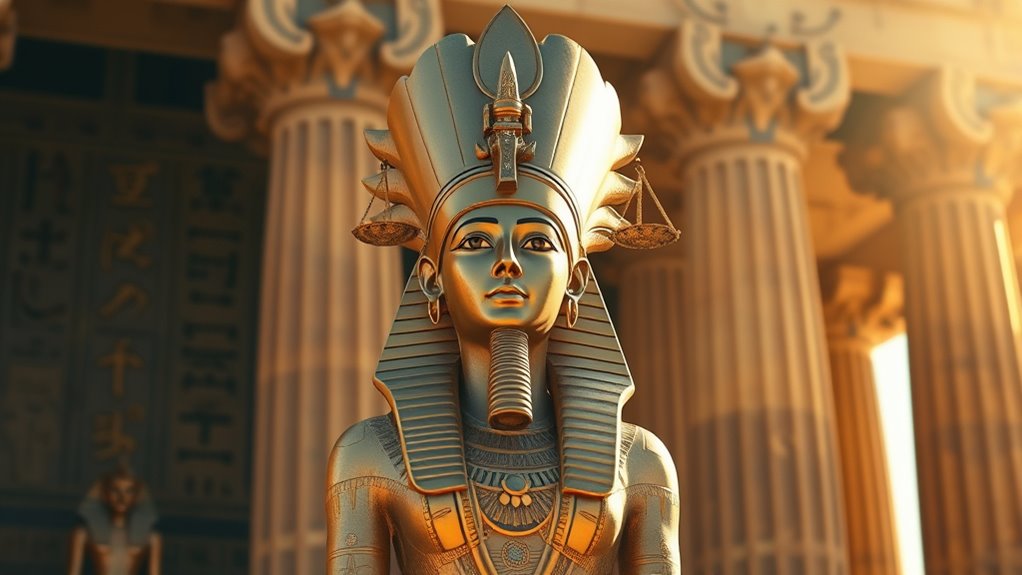
In ancient Egyptian art, you see Ma’at depicted through hieroglyphic representations and mythological portrayals. She’s often shown as a woman wearing an ostrich feather on her head, symbolizing truth and balance. Artists portray her in scenes of judgment, where she weighs the soul’s heart against her feather. These images emphasize her role in maintaining order and harmony, making her a central figure in Egyptian spiritual and cultural life.
What Symbols Are Associated With Ma’At?
You see, Ma’at’s symbols are like the ultimate icons of truth and harmony! Her hieroglyphic symbols include a feather, representing justice and truth, and she’s often associated with sacred animals like the ostrich feather and the ostrich itself. These symbols are so powerful, they embody order and balance, making them the most recognizable signs in all of ancient Egyptian art and culture.
How Did Ma’At Influence Egyptian Legal Practices?
You see, Ma’at influenced Egyptian legal practices by embodying core legal principles rooted in moral philosophy. Her ideals guided judges and rulers to uphold truth, fairness, and justice, ensuring laws reflected universal order. When making decisions, they sought to align with Ma’at’s principles, emphasizing honesty and balance. This connection reinforced societal harmony, making her a symbol of integrity in legal proceedings and moral judgment across Egypt.
Are There Any Festivals Dedicated to Ma’At?
Yes, there was an ancient festival dedicated to Ma’at called the Feast of Ma’at. During this sacred festival, Egyptians performed rituals to honor her, seeking harmony and justice. Imagine thousands gathering, offering prayers and participating in sacred rituals to uphold truth and balance. This celebration reinforced societal values and reminded everyone of Ma’at’s divine role, helping maintain harmony in their daily lives and the universe.
How Does Ma’At Compare to Similar Concepts in Other Cultures?
You see, Ma’at embodies moral philosophy and cosmic harmony, similar to concepts like Dharma in Hinduism or the Tao in Chinese philosophy. These ideas emphasize living in balance, truth, and order. While Ma’at focuses on truth and justice in Egyptian culture, other cultures view harmony with the universe as essential for moral integrity. Each reflects a universal desire for moral clarity and cosmic balance across different traditions.
Conclusion
You can see how Ma’at embodies the fundamental principles that keep life in harmony. Some scholars suggest her influence extends beyond ancient Egypt, impacting modern concepts of justice and fairness. While there’s no definitive proof, the idea that her ideals still shape our understanding of truth and order today makes her relevance timeless. Embracing her principles might just help you find balance in your own life, reflecting her enduring power across ages.