
Satet is the powerful goddess behind the Nile’s life-giving floods, embodying the primal water forces that sustain Egypt. She controls the annual inundation, ensuring floods bring fertility and abundance to the land. Her origins stem from waters of chaos, symbolizing the cycle of birth and renewal. As a nurturing and fierce protector, she represents the divine order that keeps Egypt thriving. To understand her true significance in Egypt’s life and prosperity, explore her myths and rituals further.
Prime for Young Adults — start your free trial
Fast free delivery, streaming and member deals for eligible 18–24 year olds.
As an affiliate, we earn on qualifying purchases.
Key Takeaways
- Satet is the goddess who controls the annual flooding of the Nile, ensuring land fertility and agricultural prosperity.
- She embodies the primal water forces that give birth to floods, symbolizing renewal and divine power.
- Her divine influence sustains the Nile’s life-giving waters, representing the cycle of birth, death, and rebirth.
- Satet is honored through rituals during the flood season to seek her favor and ensure a bountiful harvest.
- Her role links water, divine order, and Egypt’s prosperity, making her central to the civilization’s survival.

Satet, the ancient Egyptian goddess of the Nile floods, played an essential role in ensuring the prosperity of the land. Her origins are steeped in mythical stories that link her closely to the life-giving river. These mythical origins often depict her as a powerful and protective deity, embodying the very essence of the floodwaters that renew the land each year. She is seen as both a nurturing mother and a fierce guardian, her divine presence woven into the fabric of Egypt’s river symbolism. The Nile’s annual inundation, which brought fertility and abundance, was believed to be a gift from her divine power. As the goddess associated with the floodwaters, you can think of her as the personification of the river’s essential cycle, a symbol of renewal and sustenance for all living things. Her connection to the river goes beyond mere water; it represents life itself, the rhythm of nature, and the divine order that sustains Egypt’s civilization.
You might picture her as a figure who controls the waters, shaping the landscape and ensuring the land’s fertility with each rising flood. It’s her mythical origins that reveal her importance: she was believed to have emerged from the waters of chaos, embodying the primal forces that gave birth to the Nile’s life-giving floods. Her association with water and the river’s symbolism makes her a central figure in Egyptian religion, representing the cyclical nature of growth, death, and rebirth. The Nile’s floodwaters, seen as a divine blessing, are a reflection of her power and favor. As a goddess, she’s often depicted with symbols like the scepter or the papyrus plant, emphasizing her role in nurturing and protecting the land. Her divine influence is seen in the rituals and offerings made to honor her, seeking her favor for a bountiful flood season.
In essence, you can understand Satet as a divine embodiment of the river’s life force. Her mythical origins and river symbolism highlight her crucial role in maintaining Egypt’s harmony and prosperity. Every flood season, as the waters rise and flood the banks, it’s a reminder of her enduring power and her deep connection to the land’s survival. Without her, the cycle of growth and renewal would falter, emphasizing her importance as the goddess behind the Nile’s lifeblood. Through her, the ancient Egyptians saw the divine in the natural world, recognizing her as the guardian of their fertility and prosperity.
As an affiliate, we earn on qualifying purchases.
Frequently Asked Questions
How Did Satet’s Worship Evolve Over Ancient Egyptian History?
You see, Satet’s worship evolved considerably through ancient Egyptian history, reflecting changing Nile symbolism and ritual practices. Initially revered as a protector goddess associated with the Nile’s flooding, her role expanded, integrating her into various regional cults. Over time, her rituals became more elaborate, emphasizing her connection to water and fertility, and her importance grew, highlighting her essential role in ensuring the Nile’s life-giving flow and Egypt’s prosperity.
Are There Any Modern Rituals Honoring Satet?
You might think ancient rituals are long gone, but some modern festivals still honor Satet. During these events, devotees perform ritual offerings, celebrating her role as the goddess of the Nile and flood. Ironically, although ancient Egypt’s rituals faded, contemporary practices aim to connect with her life-giving powers. These modern ceremonies offer a fascinating glimpse into how ancient reverence persists, blending tradition with today’s spiritual expressions.
What Symbols Are Associated With Satet Besides the Flood?
You’ll notice that ancient Egyptian symbolism linked to Satet includes sacred animal representations, especially the crocodile and the lioness, symbolizing power and protection. These animals reflect her fierce and protective nature. Additionally, symbols like the bow and arrow represent her role as a warrior goddess. These iconographies help us understand her importance beyond just the flood, emphasizing her connection to strength, defense, and divine authority.
Did Satet Have Any Counterparts in Other Ancient Cultures?
Ever wonder if Satet’s mythological parallels pop up elsewhere? You’d be surprised! In other cultures, you find goddess counterparts like the Greek Artemis or the Roman Diana, linked to water, hunting, and protection. These cultural counterparts reflect similar themes of nature and power, showing how different civilizations personified their environment’s life-giving forces. So yes, Satet’s role echoes through history, connecting her to a broader web of mythological parallels.
How Was Satet Depicted in Ancient Egyptian Art?
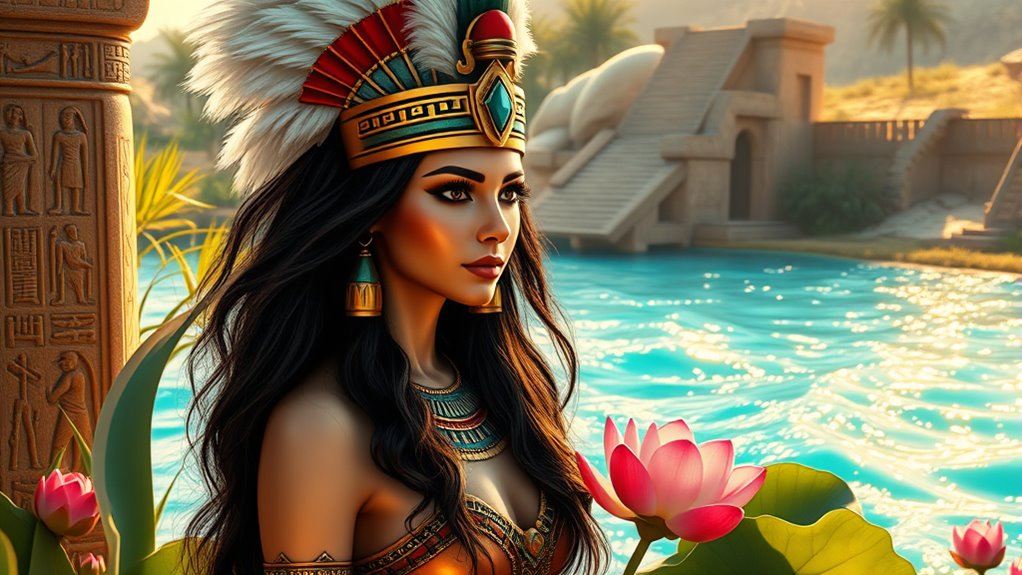
In ancient Egyptian art, you’ll see Satet depicted as a woman wearing a crown with a set of antelope horns and a netted dress, symbolizing her connection to the Nile and fertility. Her imagery often includes mythological symbolism, like the lion’s head or an overflowing scepter, emphasizing her role in the ancient ritual that honors her power. These depictions highlight her importance in maintaining the life-giving flow of the Nile.
Conclusion
So, next time you thank the Nile for your morning coffee, remember Satet’s the true hero, wielding her floodwaters like a goddess with a plan—probably to keep things interesting. Without her, Egypt’s life-giving river would be just a muddy mess, and you’d be stuck wondering where all the water went. Cheers to Satet, the goddess who makes sure the Nile’s flood is less “Oops” and more “Thank you!”
Fall Picks
fall essentials
As an affiliate, we earn on qualifying purchases.