
Sekhmet, the warrior goddess of healing and destruction, embodies the powerful balance between chaos and order. She can release fierce destruction when angered but also brings healing and renewal. Her stories teach you to respect natural cycles and inner strength. Ancient rituals and offerings honored her dual nature, emphasizing the importance of balancing chaos and harmony in life. Exploring her story offers deeper insights into mastering resilience and wisdom—keep going to uncover more.
Key Takeaways
- Sekhmet embodies both fierce destruction and healing, symbolizing the balance between chaos and order.
- She was central in ancient Egyptian rituals, where offerings aimed to appease her wrath and invoke her healing powers.
- Her stories teach respect for natural cycles, highlighting destruction as a necessary step toward renewal.
- Rituals like the “Feast of Sekhmet” reinforced spiritual harmony through offerings and prayers.
- Her dual nature encourages resilience, inner strength, and embracing both fierce and gentle qualities for wisdom.
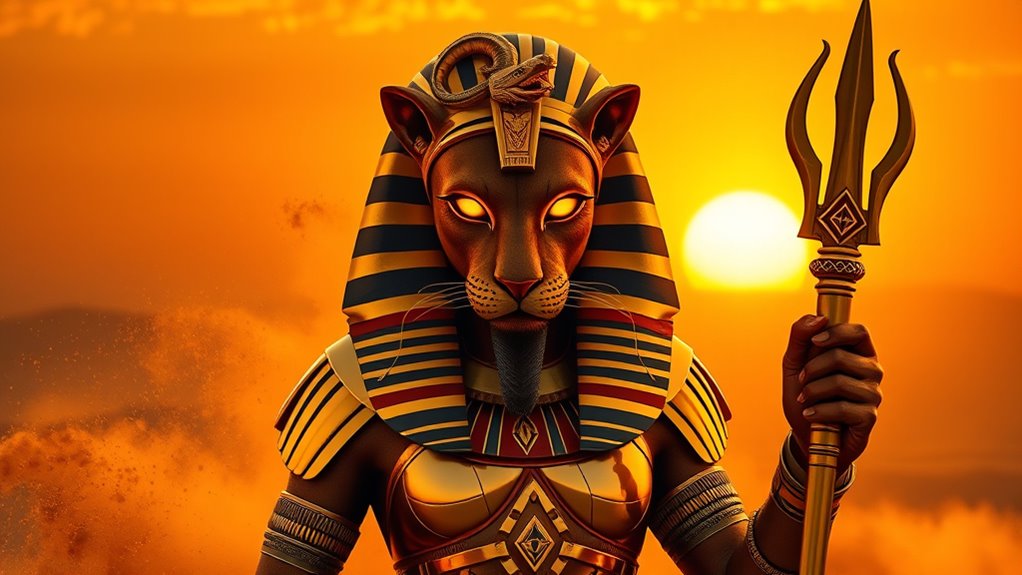
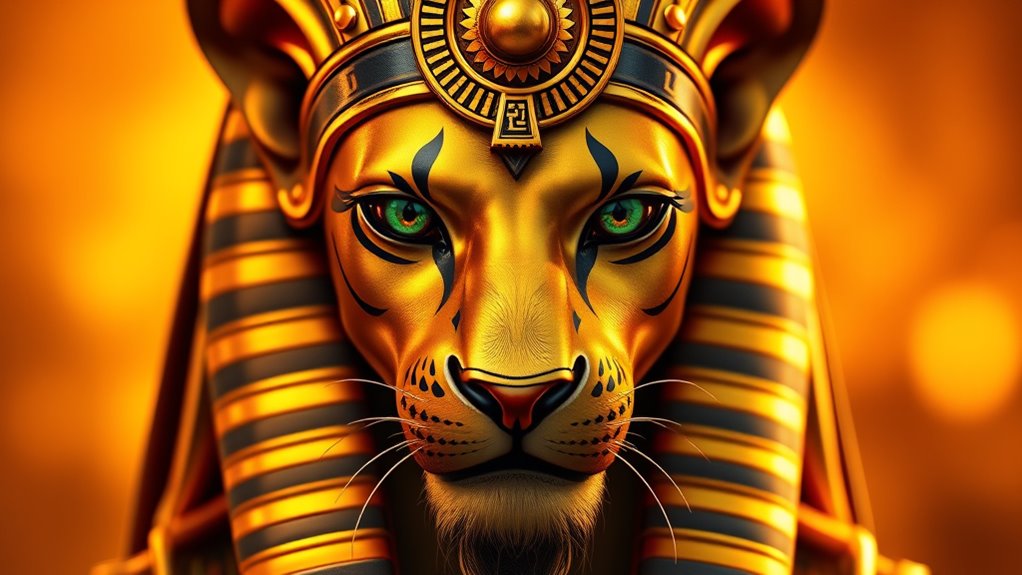
Have you ever wondered how a single goddess could embody both fierce destruction and protective healing? Sekhmet, the lion-headed Egyptian deity, exemplifies this duality perfectly. Her mythological symbolism is rich and complex, representing not only raw power but also the delicate balance of life and death. As a warrior goddess, she commands respect through her fierce presence, yet she’s also a healer who brings relief and renewal. This striking contrast draws you into her story, revealing how ancient Egyptians understood the importance of balance between chaos and order. In ancient rituals, Sekhmet’s role was essential. Priests and worshippers performed ceremonies to honor her, seeking her favor for protection and health. These rituals often involved offerings, prayers, and symbolic acts meant to appease her wrath while invoking her healing energies. You might participate in such rituals, lighting incense, reciting prayers, or presenting symbolic objects to seek her blessing, feeling the divine power she embodies. Her mythological symbolism is deeply woven into these practices, illustrating her as a force of nature—capable of releasing destruction when angered but equally capable of restoring harmony when invoked correctly. Historically, her stories serve as lessons about respecting the balance of nature and understanding that destruction can be necessary for creation. When you explore her mythology, you see her as a reflection of the universe’s dual aspects—destruction as a precursor to rebirth, and healing as a path to renewal. This understanding influences how ancient Egyptians approached life’s challenges, seeing her as both a protector and a destroyer. To honor her, they would perform specific rituals, like the “Feast of Sekhmet,” where offerings were made to seek her favor and protection. These acts weren’t just about appeasing a deity; they were about acknowledging the cycle of chaos and order within their lives. Recognizing the importance of system security assessments in safeguarding communities, they believed that proper rituals could maintain cosmic harmony. These acts also reinforced the idea that spiritual and physical protection are interconnected. As you explore her stories, you realize that Sekhmet’s power lies in her ability to embody both extremes—her mythological symbolism serving as a reminder that destruction and healing are two sides of the same coin. Whether through ancient rituals or personal reflection, she teaches you the importance of respecting your inner strength and understanding that sometimes, destruction is necessary to pave the way for renewal. Sekhmet’s enduring presence in mythology reminds you that true power lies in balance, and that embracing both her fierce and gentle aspects can help you navigate life’s complexities with resilience and wisdom.

Sitting Sekhmet Collectible Figurine, Egypt
The craftsmanship of this piece is superb, this piece is made of resin
As an affiliate, we earn on qualifying purchases.
As an affiliate, we earn on qualifying purchases.
Frequently Asked Questions
What Symbols Are Associated With Sekhmet’s Imagery?
You’ll notice Sekhmet’s imagery features symbols like ancient hieroglyphs that depict her powerful name and attributes. Lion symbolism is central, as she’s often shown with a lion’s head, representing strength and ferocity. Additionally, she’s associated with sun disks, signifying her connection to solar power, and sometimes holds scepters or an ankh, symbolizing life and protection. These symbols emphasize her dual nature as a fierce warrior and healer.
How Is Sekhmet Worshipped in Modern Times?
You can explore Sekhmet’s modern worship through ancient rituals and contemporary devotion. Many followers honor her by performing ceremonies that include offerings, prayer, and meditation, often blending traditional Egyptian symbols with new practices. Some participate in festivals or create altars at home, reflecting their reverence. Modern devotion keeps her spirit alive, connecting ancient wisdom with present-day spirituality, allowing you to honor her power and healing energy in meaningful ways.
Are There Specific Rituals Dedicated to Sekhmet’s Healing Powers?
You can participate in specific rituals dedicated to Sekhmet’s healing powers by engaging in ancient healing ceremonies and Sekhmet’s ritual invocations. These practices often involve chanting her praises, offering symbolic gifts, and performing meditative prayers to invoke her healing energy. You might also light candles or burn incense while reciting her invocations, creating a sacred space where her divine power for health and recovery is called upon, fostering spiritual and physical healing.
What Myths Explain Sekhmet’s Dual Nature?
You learn that mythological duality defines Sekhmet’s story, showcasing her as both fierce warrior and healer. In her myths, she embodies goddess symbolism that highlights her destructive wrath when angered and her healing power when invoked for health. These stories reveal her complex nature, reminding you that strength and compassion coexist within her divine role, making her a powerful symbol of balance between destruction and healing.
How Does Sekhmet Influence Contemporary Healing Practices?
Sekhmet influences your contemporary healing practices by inspiring you to balance fierce energy with compassion. You may incorporate ancient healing methods that honor her duality, such as energy work or ritual healing, into modern spiritual practices. Her fierce protection encourages you to face challenges head-on, while her healing aspect reminds you to seek inner balance. By connecting with Sekhmet’s energy, you can deepen your understanding of holistic health and spiritual resilience today.

Ankh Cross Eye of Horus Gemstone Necklace Key of Life Scarab Pendant Egyptian Goddess Isis Necklace Ancient Egyptian Protection Amulet Religious Jewelry for Women Men (gold)
Goddess Isis Horus Ankh Necklace – The Eye of Horus is a symbol of protection, good fortune, health,…
As an affiliate, we earn on qualifying purchases.
As an affiliate, we earn on qualifying purchases.
Conclusion
Imagine standing before Sekhmet, her fiery breath ready to heal or release destruction. Just like a fierce lioness guarding her pride, she embodies both fierce protection and powerful healing. Her dual nature reminds you that strength can bring both chaos and salvation. When you face challenges, think of her—balancing destruction with renewal—and remember, within every storm lies the seed of new beginnings. Embrace her energy to face your own battles with courage.

Flute Egyptian Musk Incense Sticks – Ancient Egyptian Aroma for Relaxation, Rejuvenation & Stress Relief – 20 Sticks/Pack, 6 Packs/Box (9 Inch – 120 Sticks) | 40 Minutes Burning Time
EGYPTIAN MUSK INCENSE STICK: Flute Egyptian Musk incense sticks are crafted with a refined blend of essential oils…
As an affiliate, we earn on qualifying purchases.
As an affiliate, we earn on qualifying purchases.

Sekhmet Prayer Bead Necklace in Garnet: Egyptian Goddess of Healing, War, Justice and Vengeance
Prayer beads for Sekhmet, Egyptian goddess of healing, battle, justice
As an affiliate, we earn on qualifying purchases.
As an affiliate, we earn on qualifying purchases.