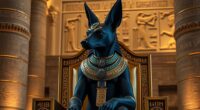
Set is an ancient Egyptian god representing chaos, storms, and disorder that challenge both natural and divine order. He embodies unpredictable natural forces like deserts and wild winds, symbolizing upheaval and conflict. Though often seen as a disruptive force, he also serves as a protector against chaos, highlighting his dual role. To understand more about this complex deity and his significance in Egyptian mythology, explore the deeper stories and symbolism that surround Set.
Key Takeaways
- Set is an ancient Egyptian deity representing chaos, storms, deserts, and wild natural forces.
- He embodies both disruptive chaos and the necessary primal forces for creation and renewal.
- Worship practices included offerings and rituals during storms to appease and seek protection from him.
- Mythology depicts Set as a complex figure, a trickster and fierce rival to gods like Osiris and Horus.
- His origins and symbolism reflect a worldview where disorder and chaos are integral to cosmic balance.

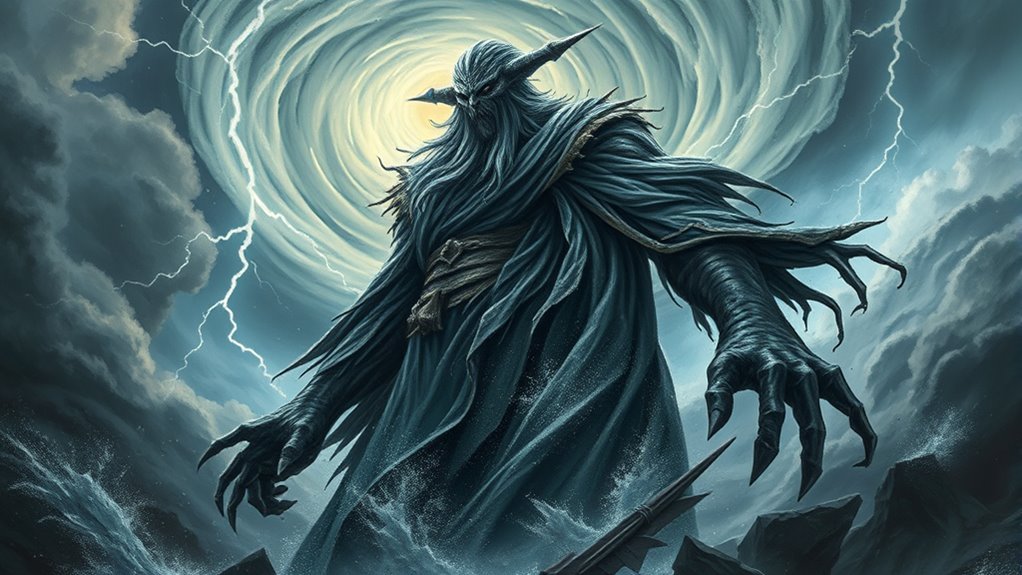
Have you ever wondered what drives chaos and upheaval in myth? When it comes to Set, the Egyptian god of storms and disorder, his origins are as complex as the chaos he embodies. His mythical origins trace back to ancient Egypt, where he’s often depicted as a mysterious and powerful deity standing apart from the orderly pantheon. Unlike gods associated with order and stability, Set symbolizes the unpredictable forces of nature—tempests, deserts, and wild winds. His mythological story begins with his birth, believed to be a son of the sky god Osiris and the earth goddess Nut. Yet, unlike his siblings, Set’s nature is marked by tumult and rebellion, making him a figure of both fear and reverence. His origins are often shrouded in stories emphasizing chaos, highlighting that he was born from the primal forces that challenge cosmic harmony. mythical origins emphasize his connection to primal and natural forces that defy human control.
In ancient Egypt, worship practices surrounding Set reflect his dual nature. Some communities revered him as a protector against chaos, recognizing his crucial role in maintaining the balance of natural forces. Rituals often involved offerings and ceremonies designed to appease him, especially during storms or violent weather events. Temples dedicated to Set were sometimes built in remote or harsh environments, emphasizing his association with deserts and storms. However, his worship was not universal; many Egyptians viewed him with suspicion or outright fear, associating him with disorder and violence. Despite this, he remained an integral part of Egyptian mythology, symbolizing the necessary chaos that makes order possible. His worship practices also included offerings to ensure safe passage through storms or to invoke his strength during turbulent times. These rituals underscored a recognition that chaos, embodied by Set, was a natural and essential aspect of the world.
Set’s mythical origins and worship practices reveal a deity who defies simple categorization. He embodies the unpredictable, the wild, and the disruptive forces that challenge stability. Rather than being purely evil, Set is a complex figure representing the crucial chaos that underpins creation and destruction alike. His mythological stories often depict him as a trickster or a fierce rival to gods like Osiris and Horus, embodying conflict and upheaval. Yet, in some traditions, Set also serves as a guardian, standing against enemies and chaos itself. His worship practices, though sometimes fear-based, acknowledge that chaos is not entirely destructive but necessary for renewal and transformation. By understanding Set’s origins and rituals, you gain insight into a mythic worldview where disorder isn’t merely chaos to be feared but a fundamental force woven into the fabric of existence.
Frequently Asked Questions
What Are Set’s Most Notable Mythological Feats?
You see, Set’s most notable mythological feats showcase his dual nature and chaos symbolism. He famously murders Osiris, symbolizing destruction and upheaval, yet later defends Egypt from foreign invaders, highlighting his complex role. Set’s chaos symbolism is evident in his unpredictable storms and turbulent nature, embodying both destructive force and necessary chaos that paves the way for renewal. His feats reflect the intricate balance between disorder and order in mythology.
How Does Set Influence Modern Culture?
Like a storm that reshapes the sky, Set influences modern culture through ancient rituals and modern adaptations. You see his chaos reflected in movies, music, and art, where themes of rebellion and disorder flourish. His mythological energy inspires festivals and spiritual practices, reminding you that chaos can foster creativity and change. By embodying unpredictability, Set encourages you to embrace the unpredictable and find strength in disorder.
Are There Any Temples Dedicated to Set Today?
Yes, there are temples dedicated to Set today, though they’re rare. Some modern worshipers, especially those interested in ancient Egyptian mythology, visit these temples to honor him or explore his symbolism. You might find small, private sites or cultural centers that celebrate Set’s chaotic energy. While not widespread, these temples serve as places for those who seek to connect with his powerful, unpredictable nature.
What Symbols Are Associated With Set?
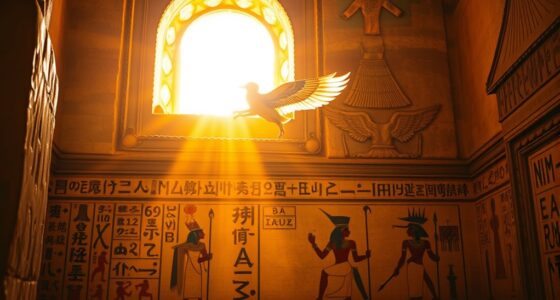
Like a thunderclap in a clear sky, the symbols of Set strike with power. You’ll find ancient hieroglyphs depicting a stylized, curved staff or a mysterious, jagged shape, representing chaos and disorder. His symbolic representations often include a black jackal’s head or a throne with a set-animal emblem. These symbols embody his unpredictable nature, reminding you of the storm’s raw energy and the chaos lurking beneath calm surfaces.
How Is Set Portrayed in Different Mythologies?
In different mythologies, you see Set portrayed with mythological duality, embodying chaos and destruction but also protection and change. Symbolic interpretations vary: in Egyptian myths, he’s a necessary force of disorder, while other cultures view him as a villain or trickster. This contrast highlights his complex role, showing how mythological duality shapes his depiction, emphasizing both destructive and transformative aspects.
Conclusion
As you stand in the swirling chaos of Set’s storm, you feel the fierce flicker of fury and freedom. His tempestuous temper tears through tranquility, turning calm to chaos with a crack of thunder. Embrace the electric energy, the relentless roar of disorder that defines him. In his wild whirlwinds, you find both the thrill of turbulence and the truth that chaos is his kingdom—where storms surge and disorder reigns supreme.