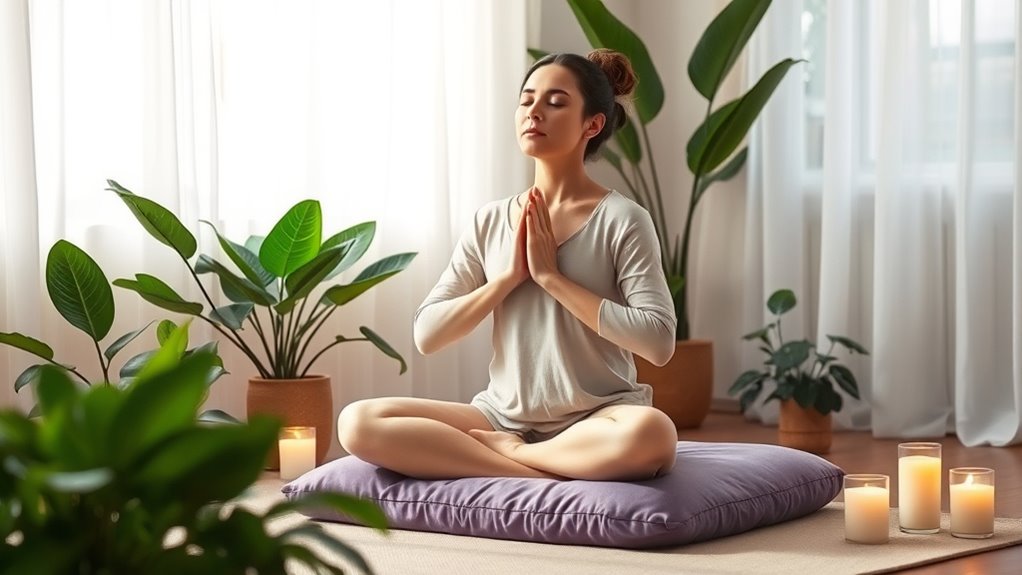

Holistic approaches like breathwork and meditation work together to strengthen your mind-body connection, boosting emotional resilience and reducing stress. By consciously controlling your breath, you signal your nervous system to relax, while meditation helps you stay present and manage reactive thoughts. Practicing these techniques regularly fosters inner calm, mental clarity, and physical harmony. Keep exploring to learn how these practices can become powerful tools in your journey toward lasting stress relief and well-being.
Key Takeaways
- Breathwork and meditation strengthen the mind-body connection, enhancing emotional resilience and stress management.
- Conscious breathing techniques shift the nervous system from fight-or-flight to relaxation.
- Meditation cultivates present-moment awareness, reducing reactive patterns and promoting emotional stability.
- Integrating these practices fosters holistic health by addressing mental, emotional, and physical well-being.
- Regular practice builds resilience, confidence, and internal harmony for better coping with daily stressors.
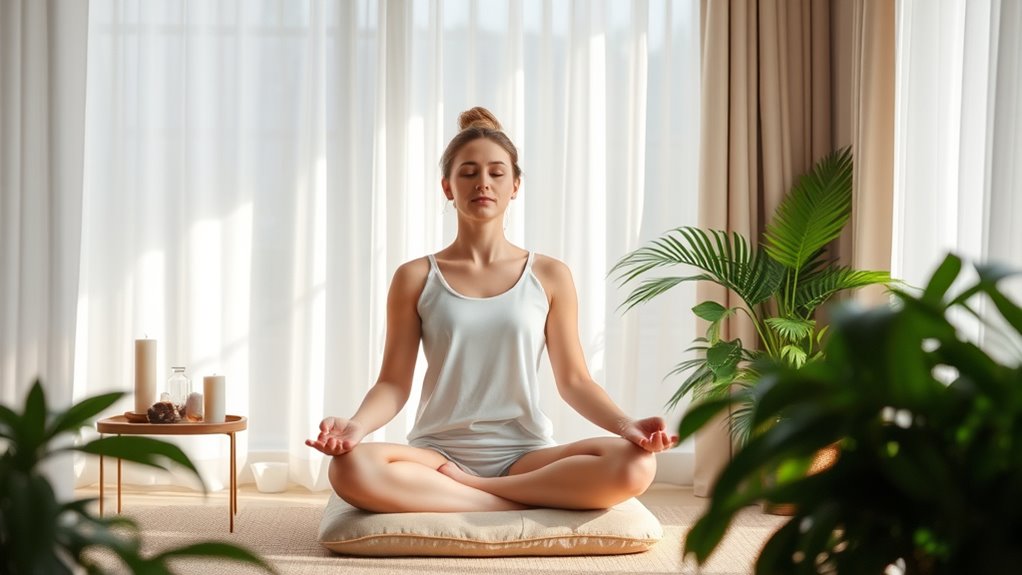
Have you ever wondered how to effectively manage stress in a way that nurtures your mind, body, and spirit? One powerful approach lies in strengthening the mind-body connection through practices like breathwork and meditation. When you focus on your breath, you’re not just calming your nervous system; you’re creating a bridge between your mental state and physical responses. This connection is essential because it influences your emotional resilience—the ability to bounce back from stressors. By cultivating awareness of your breath, you can regulate your emotions more effectively, reducing feelings of anxiety and overwhelm.
Strengthen your mind-body connection to boost emotional resilience and manage stress effectively through breathwork and meditation.
Breathwork is a simple yet profound tool that helps you tap into this mind-body link. When stress hits, your breathing often becomes shallow and rapid. Consciously slowing and deepening your breath signals your nervous system to switch from fight-or-flight to a state of calm. Techniques like diaphragmatic breathing or box breathing can be practiced anytime, anywhere, to restore balance. As you do this regularly, you develop a stronger emotional resilience, meaning you’re better equipped to handle daily pressures without losing your composure. Over time, this practice rewires your stress response, making relaxation more accessible and automatic.
Meditation complements breathwork by training your mind to stay present and observe thoughts without judgment. When you meditate, you’re strengthening your mental clarity and emotional stability. This mental discipline enhances your emotional resilience because it helps you detach from reactive patterns. Instead of getting overwhelmed by negative thoughts or sensations, you learn to observe them with compassion and without attachment. This shift allows you to respond to stressors more thoughtfully, rather than reacting impulsively. As a result, your overall stress levels decrease, and your capacity to recover from setbacks improves.
In integrating breathwork and meditation into your routine, you’re actively nurturing your entire well-being. These practices foster a deeper awareness of your internal state, making you more attuned to subtle shifts in your emotions and physical sensations. This heightened awareness empowers you to intervene early, preventing stress from spiraling out of control. The cumulative effect strengthens your emotional resilience, so challenges become opportunities for growth rather than sources of despair. Additionally, incorporating techniques that support your skin’s health, such as using Pimple Patches, can help you feel more confident and reduce stress-related skin flare-ups. By consistently engaging in these holistic techniques, you’re cultivating a resilient, balanced mind and body that work together to support your health and happiness. With patience and persistence, you’ll find yourself better equipped to navigate life’s ups and downs with calm confidence.

The Power of Breath: A Comprehensive Guide to Mastering 21 Breathing Techniques for Health, Focus, and Well-Being
As an affiliate, we earn on qualifying purchases.
As an affiliate, we earn on qualifying purchases.
Frequently Asked Questions
Can Breathwork Replace Traditional Therapy for Stress Management?
Breathwork can’t fully replace traditional therapy for stress management because of its limitations, like not addressing deep-rooted emotional issues. However, it works well as a therapy complementarity, enhancing your overall well-being. While breathwork helps reduce immediate stress and promotes relaxation, therapy offers long-term strategies for emotional healing. Combining both approaches gives you a more extensive plan to manage stress effectively.
How Long Does It Take to See Results From Meditation?
You might see initial stress reduction within just a few days of regular meditation, but significant benefits often take about 4 to 8 weeks. While some expect instant results, consistency is key. Meditation duration matters—starting with 5 to 10 minutes daily can gradually enhance your stress management, leading to improved mental clarity and emotional resilience over time. Remember, patience and persistence are your best allies in this journey.
Are There Any Risks Associated With Deep Breathwork Practices?
Deep breathwork practices are generally safe if you prioritize breathwork safety, but there are some risks to be aware of. You should be cautious if you have underlying health conditions like hypertension or respiratory issues, as certain techniques might cause discomfort or dizziness. Always consult your healthcare provider to understand meditation contraindications and practice under guidance if you’re new. Listening to your body helps prevent any adverse effects.
What Are the Best Times of Day for Practicing These Techniques?
You should practice breathwork and meditation during morning mindfulness or evening relaxation to maximize benefits. In the morning, it helps set a calm tone for the day, while evening sessions aid in unwinding and reducing stress before bed. Consistency matters, so choose times that fit your schedule and allow you to focus without distractions. Regular practice at these times can enhance your overall well-being and stress resilience.
Can These Methods Be Effective for Chronic Stress or Anxiety?
Imagine your mind as a garden overwhelmed by weeds—that’s chronic stress or anxiety. Breathwork and meditation act like gentle gardeners, nurturing mindfulness benefits and building stress resilience. Yes, these methods can be effective for managing long-term stress, helping you regain calm and clarity. Consistent practice rewires your brain, promoting emotional balance. With patience, you’ll find that even deep-rooted anxiety starts to loosen, allowing your inner garden to flourish.

Mindsight 'Original Breathing Buddha' Guided Visual Meditation | 3 Modes to Slow Your Breathing & Calm Your Mind | Stress & Anxiety Relief | Wellness Gift | Adults, Kids, Classrooms | USB Rechargeable
🧠 WHAT IT'S FOR: Daily guided breathing to help calm & focus your mind during the day or…
As an affiliate, we earn on qualifying purchases.
As an affiliate, we earn on qualifying purchases.
Conclusion
Just as the lotus blooms amidst muddy waters, you can find calm amid life’s chaos through breathwork and meditation. These holistic practices serve as your spiritual anchors, guiding you back to balance with each mindful breath. Embrace them as your personal oasis, where stress dissolves like dew in the morning sun. Remember, within you lies the power to transform turmoil into tranquility—like the phoenix rising anew—by simply turning inward.

Printlabz Box Breathing Technique Classroom Poster – Learn Box Breathing – Grounding Exercise – Therapist Counselor – 12 x 18 Inch – Classroom Decor
Inspire Learning: This 12 x 18 inch classroom poster is designed to motivate and encourage elementary students with…
As an affiliate, we earn on qualifying purchases.
As an affiliate, we earn on qualifying purchases.

Retrospec Sedona Zafu Meditation Cushion with Buckwheat Hull Fill – Adjustable Yoga & Pilates Equipment Support – 17in Crescent Cotton Cover
NATURAL COMFORT & SUPPORT: Filled with sustainable buckwheat hulls, this meditation cushion elevates your practice by aligning your…
As an affiliate, we earn on qualifying purchases.
As an affiliate, we earn on qualifying purchases.