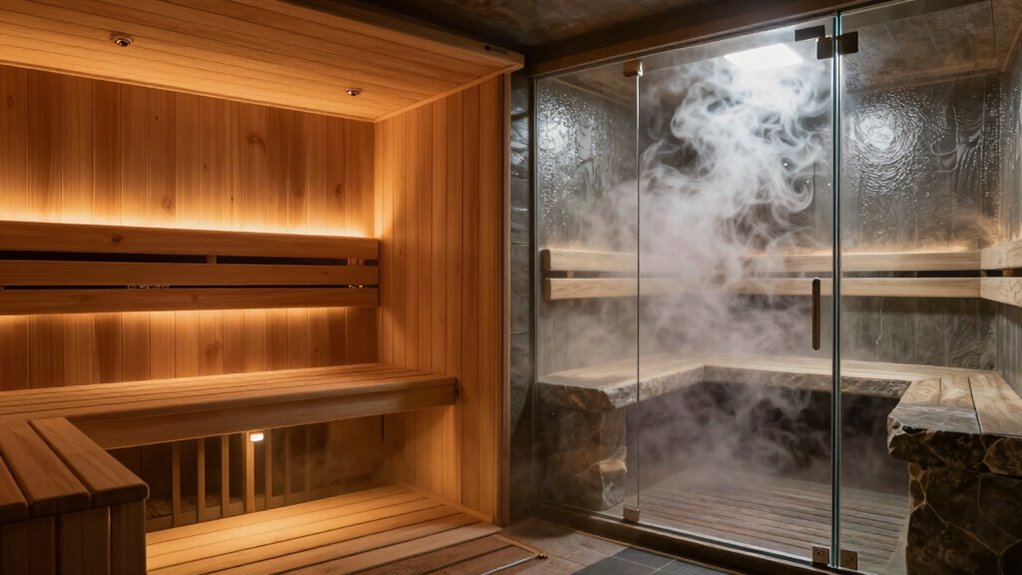
Infrared saunas use infrared wavelengths to directly warm your body, providing gentle, deep heat that’s comfortable and feels relaxing without much humidity. Steam saunas produce intense, moist heat that creates a hot, humid environment, often feeling more overwhelming and sweaty quickly. Your body reacts differently to each—infrared offers a soothing, dry warmth, while steam delivers a vigorous, moist experience. To understand which suits your needs best, explore how heat types and sensation influence each session’s comfort and effects.
Key Takeaways
- Infrared saunas emit dry, penetrating heat at lower temperatures, promoting gentle, localized sweating and deep muscle relaxation.
- Steam saunas produce moist, high-temperature environments that cause intense, full-body sweating with a hot, humid feel.
- Infrared heat feels softer and more comfortable, often perceived as soothing, while steam heat is immediate, hot, and moist, potentially overwhelming.
- Infrared saunas operate at 120-135°F with dry heat; steam saunas are typically at 110-115°F with high humidity.
- The sensory experience varies: infrared is calming and dry, steam is vigorous and moist, impacting comfort and health benefits.
How Do Infrared and Steam Saunas Generate Heat?
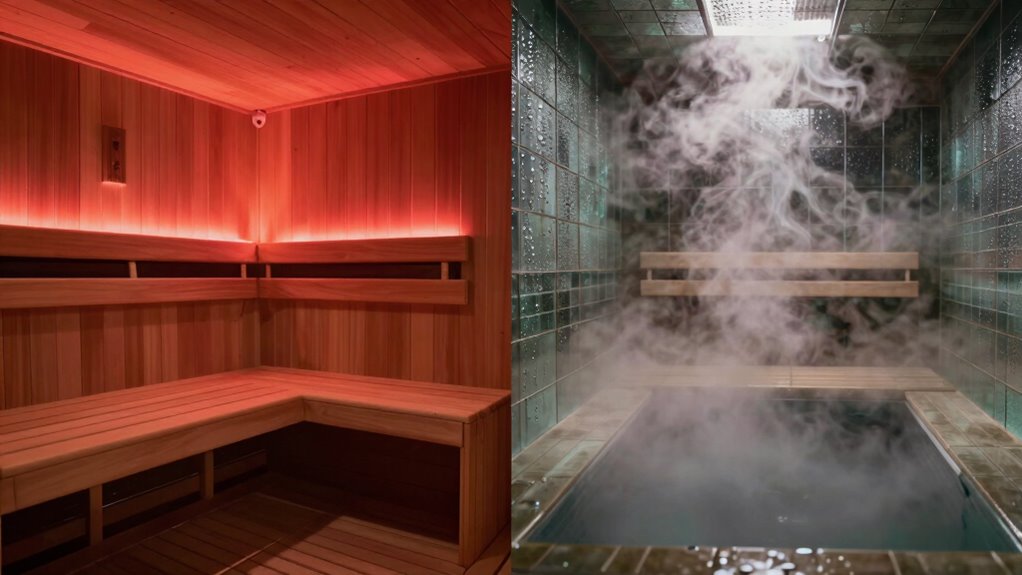
Infrared and steam saunas produce heat in different ways to create their therapeutic environments. Infrared saunas use infrared wavelengths to directly warm your body without markedly heating the surrounding air. These wavelengths penetrate your skin, raising your core temperature efficiently. In contrast, steam saunas generate heat through the production of steam, which increases the air’s humidity level. The high steam humidity makes the environment feel hot and moist, as the moisture surrounds you and transfers heat through convection and evaporation. While infrared saunas focus on emitting specific wavelengths to penetrate deep into tissues, steam saunas rely on humid heat to envelop your body. Both methods effectively heat your body but do so through distinct mechanisms—infrared through wavelengths and steam through humidity. Understanding the differences in heat transfer methods can help you choose the sauna type that best suits your preferences and health goals. Additionally, the environmental impact of each sauna type varies depending on energy consumption and water use, which may influence your choice for a more eco-friendly option.
What Do You Feel During Infrared vs. Steam Sauna Sessions?
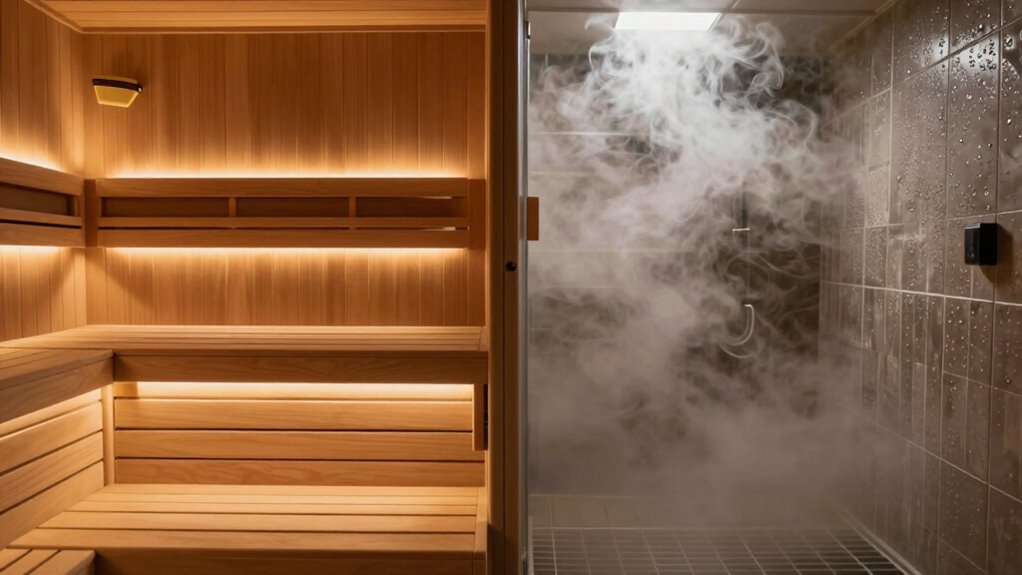
During an infrared or steam sauna session, you’ll notice different sensations of heat intensity and how comfortably you breathe. You might feel more intense warmth with the steam, making you sweat heavily, or a gentler heat with infrared that warms your body without overwhelming your lungs. These differences directly affect how you experience sweating and overall comfort during each session. Additionally, the inclusive design and diverse options available in modern saunas can enhance comfort for a variety of users.
Sensation of Heat Intensity
When you step into an infrared sauna, you’ll notice that the heat feels gentler and more tolerable, often described as a deep, penetrating warmth that soothes your muscles without overwhelming your senses. The temperature perception is more controlled, providing a sense of heat comfort that’s easier to handle. In contrast, steam saunas deliver intense heat with high humidity, making the sensation feel hotter and more immediate. Additionally, the heat intensity in steam saunas can sometimes lead to quicker fatigue, so understanding your comfort level is key. Recognizing the temperature regulation differences can help you choose the sauna type that best suits your preferences and tolerance. Exploring skin response to each type can also guide your sauna experience, as different heat modalities affect the skin differently.
Breathing Comfort Levels
Breathing comfort varies markedly between infrared and steam saunas, affecting how easy it is to breathe during each session. In an infrared sauna, the dry heat often promotes better respiratory comfort and breathing ease, making it easier to inhale deeply without feeling suffocated. The air remains relatively dry, so you’re less likely to experience congestion or dizziness. Conversely, steam saunas produce moist, humid air that can sometimes make breathing feel heavier or more challenging, especially if you have respiratory issues or allergies. The humidity can cause a sensation of heaviness in the chest or congestion, reducing overall breathing comfort. Your experience depends on your sensitivity to humidity and personal comfort preferences, but generally, infrared saunas offer a more breathable environment for most users. Additionally, cabling failures in sauna installation can impact the safety and functionality of electronic components, emphasizing the importance of proper setup. Proper maintenance and inspection can help prevent these issues and ensure a safe sauna experience. Being aware of potential electrical issues is also crucial to maintaining a safe and comfortable sauna environment. Moreover, selecting a sauna with high-quality electrical wiring can significantly reduce the risk of malfunctions during use.
Perspiration and Sweating Feel
The way you sweat in an infrared sauna differs markedly from the experience in a steam sauna, shaping how your body reacts to each session. In an infrared sauna, you’ll notice a gentle, more localized sweat sensation as your body warms gradually, leading to a mild perspiration experience. You might feel more comfortable, with sweat forming mainly on your chest and back. Conversely, in a steam sauna, the intense humidity causes your entire body to perspire heavily and quickly, creating a thick, all-over sweat. The sensation can feel overwhelming at first, but it’s highly effective for detoxification. Your perspiration experience in each type of sauna influences how refreshed and relaxed you feel afterward, making these differences important to contemplate for your preferences and comfort.
How Does Your Body Respond Differently to Each Sauna Type?
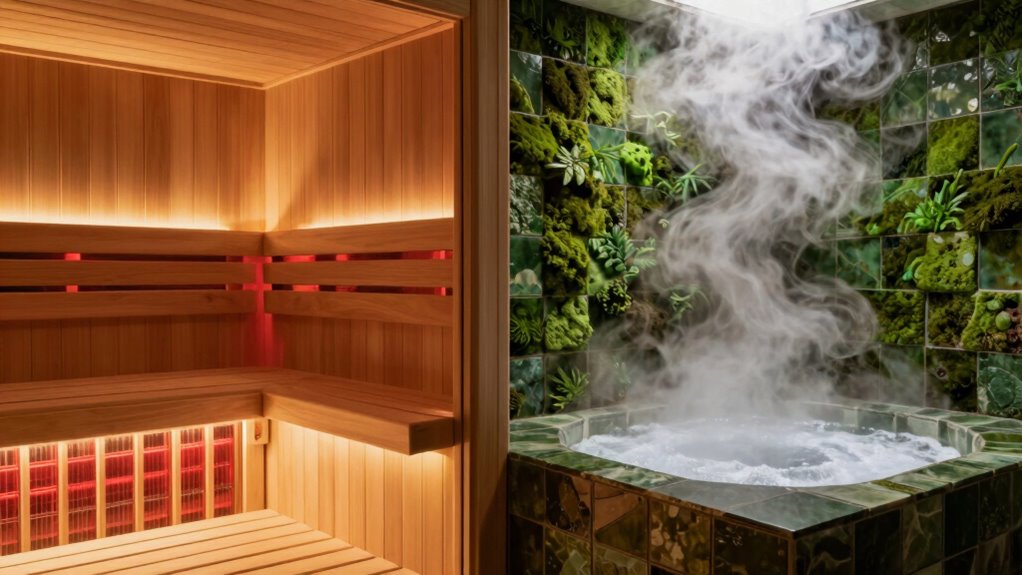
Infrared and steam saunas trigger different responses in your body due to their distinct heat delivery methods. With infrared saunas, the heat penetrates deeper into your tissues, promoting a gentle yet sustained thermal comfort that can enhance relaxation and reduce muscle tension. You might notice a calmer emotional response, feeling more centered and less overwhelmed. In contrast, steam saunas provide moist heat that quickly raises your skin temperature, often resulting in a more immediate, intense sensation of warmth. This can lead to a more vigorous emotional response, making you feel invigorated or energized. Your body’s reactions are shaped by these differences: infrared’s soothing warmth fosters calmness, while steam’s intense heat energizes and stimulates your senses.
Which Sauna Is Better for Sensitive Skin and Breathing?

If you have sensitive skin or breathing issues, your choice of sauna matters. Air quality concerns and how each type affects skin sensitivity can make a big difference. Understanding these factors helps you pick the safer option for your health. Additionally, considering the presence of microplastics in dust and the potential for airborne contaminants can further guide your decision toward a healthier sauna experience. Since air filtration methods vary between sauna types, being aware of these differences can improve indoor air quality and reduce exposure to allergens or pollutants. Incorporating proper humidity control can also help minimize skin irritation and respiratory discomfort during your sauna sessions. Being mindful of indoor air quality and how each sauna’s environment impacts it can further enhance your overall safety and comfort, especially since air quality improvements are key to a healthier sauna environment.
Air Quality Concerns
When considering air quality, infrared and steam saunas each have distinct impacts on your skin and breathing, especially if you have sensitivities. Infrared saunas typically offer higher air purity because they don’t produce steam or humidity, reducing the chance of mold or bacteria growth. This can lower allergen exposure, making them a better choice if you’re concerned about airborne irritants. Steam saunas, on the other hand, generate moist air that can trap mold or bacteria if not properly maintained, potentially worsening air quality for sensitive individuals. Proper humidity control and regular cleaning are essential to prevent issues related to moisture and bacteria buildup, especially in steam saunas. If you’re prone to allergies or respiratory issues, maintaining good ventilation practices and cleanliness becomes vital regardless of which sauna you choose. Overall, infrared saunas tend to provide a cleaner, more allergen-free environment for sensitive skin and breathing. Additionally, air filtration systems can further improve indoor air quality in both types of saunas. Regular ventilation practices also play a critical role in maintaining optimal air quality and minimizing airborne irritants, and investing in air purification devices can significantly enhance the environment inside your sauna space.
Skin Sensitivity Effects
Choosing the right sauna can substantially impact your skin and breathing, especially if you have sensitivities. Infrared saunas typically cause less skin irritation because they operate at lower surface temperatures and don’t produce steam or moisture that can trigger allergic reactions. Steam saunas, on the other hand, expose your skin to high humidity and heat, which might aggravate sensitive skin or cause irritation. If you’re prone to allergic reactions or skin irritation, an infrared sauna may be gentler and safer, reducing the risk of discomfort. Additionally, some individuals find that humidity levels play a significant role in their skin and respiratory responses, influencing their sauna choice. However, if you tolerate humidity well, steam saunas can still be enjoyable. Consider your skin’s reactions and consult a dermatologist if necessary to choose the option that minimizes irritation and supports your breathing comfort. Additionally, understanding your skin sensitivities can help determine which heat type is more suitable for your specific needs. Recognizing how your respiratory health responds to different heat and humidity levels can further inform your choice.
Heat and Humidity: Which Sauna Feels More Comfortable?
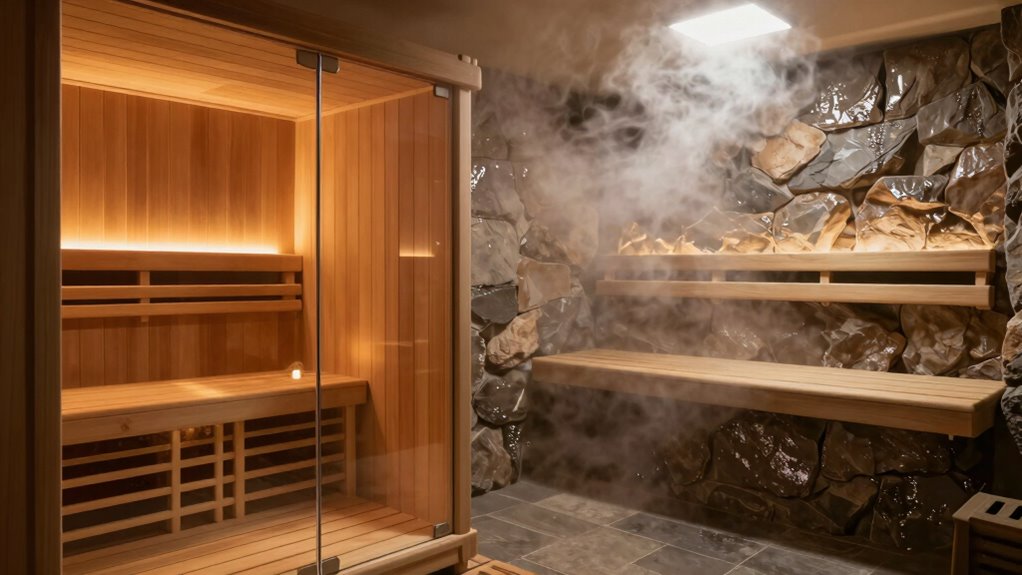
The difference in heat and humidity levels between infrared and steam saunas considerably impacts how comfortable they feel. Infrared saunas offer a lower temperature comfort, usually between 120-135°F, with dry heat that many find relaxing. Steam saunas, on the other hand, provide high humidity at temperatures around 110-115°F, which can feel more intense but humid. Your humidity preference plays a key role here; if you prefer dry heat, infrared is more comfortable. If moist heat feels better, steam suits you. Consider this table to compare their sensations:
| Sauna Type | Temperature Comfort | Humidity Level | Sensation |
|---|---|---|---|
| Infrared Sauna | Moderate | Low | Dry, penetrating heat |
| Steam Sauna | Mild | High | Moist, enveloping warmth |
How to Choose the Best Sauna for Your Wellness Goals
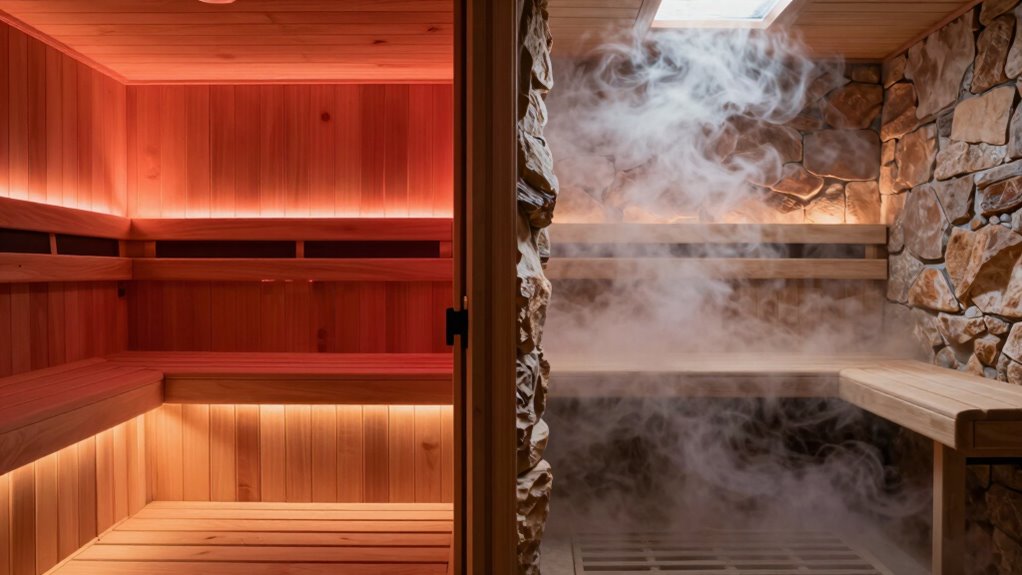
Selecting the right sauna depends on your specific wellness goals, whether you’re aiming to relax muscles, detoxify, improve circulation, or boost mental clarity. Consider how temperature regulation affects your comfort—infrared saunas typically operate at lower temperatures, making them easier to tolerate, while steam saunas have higher humidity levels that can feel more intense. Think about session duration, too; shorter sessions in high-temperature environments may suit some goals, whereas longer, more moderate sessions could benefit others. Your choice should align with your body’s response and your personal preferences. By understanding how heat and humidity impact your experience, you can select a sauna that best supports your wellness journey and ensures you get the most out of each session.
Frequently Asked Questions
Are Infrared or Steam Saunas More Energy-Efficient?
You’ll find infrared saunas more energy-efficient because they use less energy to heat up quickly and maintain temperature. Their lower energy consumption reduces overall environmental impact, making them a greener choice. Steam saunas typically consume more power due to their need for continuous water heating and steam generation. So, if you care about energy efficiency and minimizing environmental impact, an infrared sauna is the better option for you.
How Long Should I Stay in Each Sauna Type?
Well, if you’re aiming for the perfect sweat, follow the duration guidelines tailored to your personal tolerance. Typically, 15-20 minutes in an infrared sauna suffices, while steam rooms may require just 10-15 minutes due to their intense humidity. But hey, if you’re feeling adventurous or overly ambitious, listen to your body and don’t push beyond what’s comfortable—your sweat session shouldn’t turn into a sauna saga.
Can Infrared Saunas Help With Detoxification?
Yes, infrared saunas can help with detoxification by promoting the detox process and toxin elimination. The deep heat penetrates your skin, increasing your sweat production, which helps flush out harmful substances from your body. Regular sessions can support your body’s natural detox mechanisms, leaving you feeling refreshed and revitalized. Just make certain you stay hydrated and listen to your body’s signals during each session for safe, effective detoxification.
Are There Any Safety Concerns With Steam or Infrared Saunas?
Safety concerns in saunas are real but manageable, like treading carefully on thin ice. You should prioritize sauna hygiene to prevent infections and be cautious if you have allergies, as steam or infrared heat might trigger reactions. Always stay hydrated, avoid prolonged sessions, and listen to your body. Consulting your doctor is wise, especially if you have underlying health conditions, ensuring your sauna experience remains safe and enjoyable.
Do Sauna Types Differ in Their Effects on Muscle Recovery?
Yes, sauna types differ in their effects on muscle recovery. Infrared saunas penetrate deeper into muscle tissue, helping reduce muscle pain and inflammation more effectively. Steam saunas, with their higher humidity, boost circulation and relax muscles through intense heat. You’ll likely notice faster muscle recovery and relief from soreness with infrared, while steam saunas enhance overall circulation, easing tension and promoting healing. Both support recovery but in different, beneficial ways.
Conclusion
As you stand at the crossroads of heat and humidity, imagine the moment you step into your ideal sauna—each breath, each sweat, revealing the secret your body craves. Will it be the gentle infrared glow or the steamy embrace? The choice is yours, but the true transformation begins when you embrace the heat that calls to you. Are you ready to unleash the full potential of your wellness journey? The answer awaits inside.