When choosing a rowing machine, consider how magnetic, air, and water resistance feel and fit your goals. Magnetic systems are quiet and smooth but may lack natural resistance. Air resistance is responsive and scalable but noisier. Water resistance offers a realistic, immersive experience with smooth, authentic strokes. Your choice depends on your budget, noise preferences, and workout style, and exploring these options further can help you pick the best fit for your fitness journey.
Key Takeaways
- Magnetic resistance offers smooth, quiet operation with easy adjustments but may feel less natural during intense efforts.
- Air resistance provides responsive, scalable resistance that increases with rowing speed, creating a dynamic workout experience.
- Water resistance mimics natural rowing feel with realistic water sounds, offering immersive and smooth resistance.
- Magnetic systems generally require less maintenance and are ideal for quiet environments, while water and air systems need regular upkeep.
- Choose based on your fitness goals, preferred noise level, and budget; magnetic for quiet and low maintenance, water and air for realism and responsiveness.
What Are the Main Factors to Consider When Choosing a Rowing Machine?
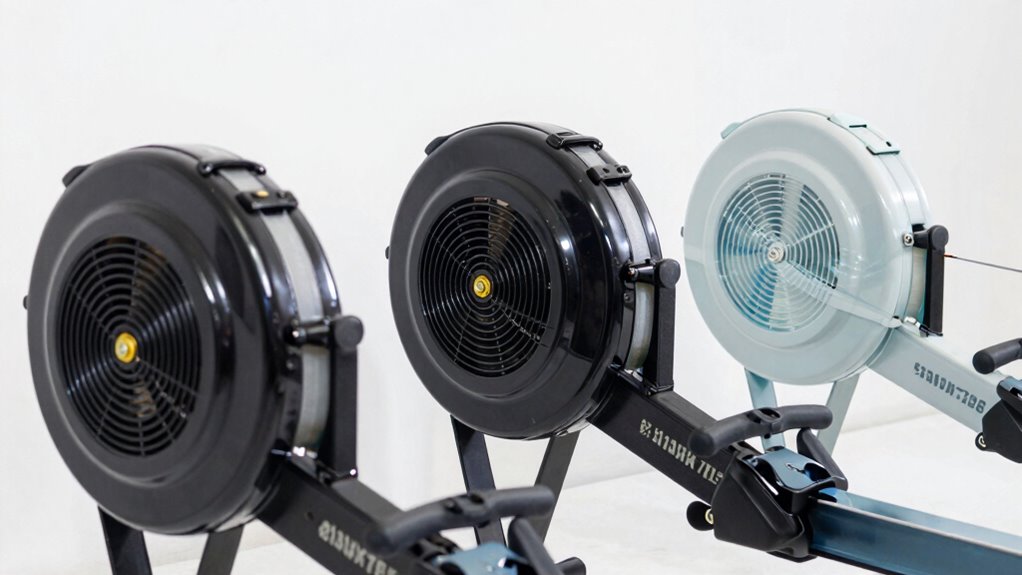
When choosing a rowing machine, it’s important to contemplate several key factors that will influence your workout experience and long-term satisfaction. Comfort features are essential; look for padded seats, adjustable foot straps, and ergonomic handlebars to ensure a comfortable session. These features help prevent discomfort and allow you to focus on your workout. Additionally, consider the maintenance requirements of the machine. Some models demand regular cleaning or lubrication, while others are more low-maintenance. Choosing a machine with minimal upkeep can save you time and hassle. Think about how easy it is to access parts for cleaning or repairs. Proper equipment maintenance is crucial for longevity and optimal performance. Regularly inspecting and maintaining your rowing machine helps prevent unexpected breakdowns and preserves its performance quality. Moreover, understanding the different resistance types can help you select a machine that aligns with your fitness goals and training preferences. Recognizing the resistance mechanism can also guide you in choosing a model that offers the right level of challenge. For example, some resistance types may provide a more smooth rowing motion, contributing to a more natural feel during your workouts. Ultimately, balancing comfort features with manageable maintenance guarantees your rowing machine remains enjoyable and reliable over time.
How Do Magnetic, Air, and Water Resistance Rowers Feel and Perform?
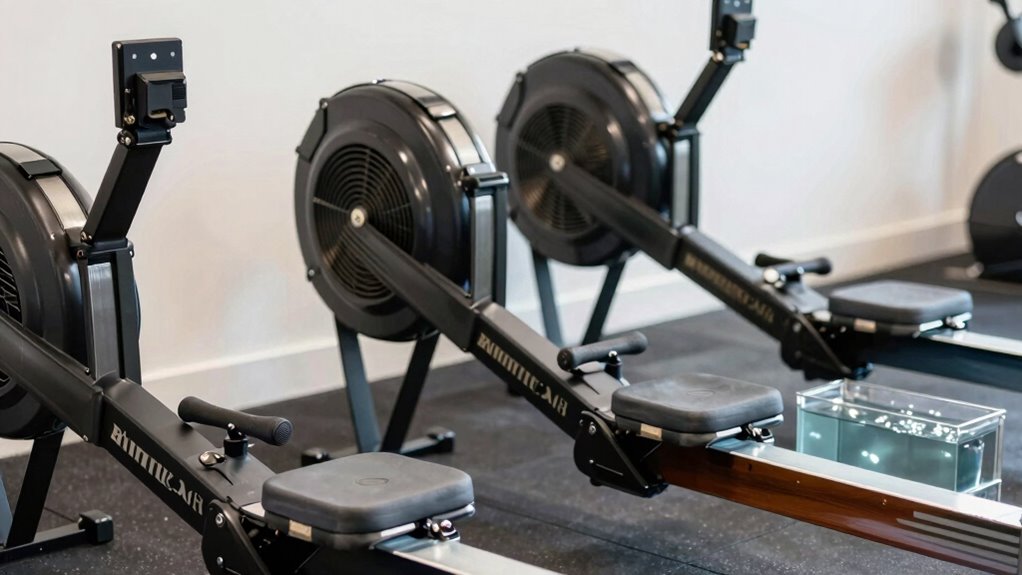
How do the different resistance types—magnetic, air, and water—feel and perform during a workout? Magnetic rowers offer a very smooth glide with quiet operation, making them ideal for quiet environments. Air rowers provide a dynamic feel; resistance increases with your effort, creating a natural, smooth glide but with higher noise levels. Water rowers mimic real rowing’s feel, delivering smooth resistance that varies with your pace, and produce calming water sounds. This variety allows you to select a rower that best suits your space and training preferences. Additionally, the resistance mechanisms can influence the level of physical engagement, making each type suitable for different fitness goals. The sustainability impacts of these resistance mechanisms can also be considered when choosing a rower, especially for environmentally conscious users. Here’s a comparison:
| Resistance Type | Feel & Glide | Noise Levels |
|---|---|---|
| Magnetic | Very smooth, consistent | Very quiet |
| Air | Dynamic, responsive | Moderate to loud |
| Water | Realistic, smooth | Quiet or water sounds |
This helps you choose based on your preference for feel, noise, and workout realism. Resistance variation can also influence the level of physical engagement, making each type suitable for different fitness goals.
What Are the Pros and Cons of Magnetic Resistance Rowing Machines?
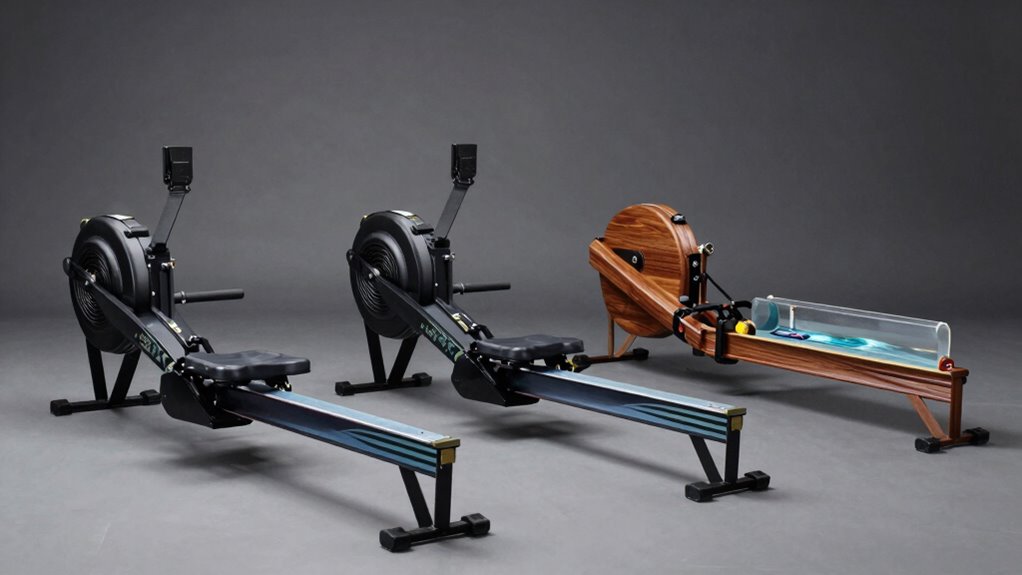
Magnetic resistance rowers stand out for their quiet operation and smooth performance, making them a popular choice for home gyms or shared spaces. Their magnetic quietness guarantees you can work out without disturbing others, ideal for early mornings or late nights. Resistance adjustability is a major advantage, allowing you to easily change the intensity with a simple dial or digital control. This feature makes it easy to customize your workout and progress gradually. Additionally, the resistance control in magnetic rowers can be precisely calibrated, providing consistent resistance throughout your workout. For users seeking customizable workout intensities, magnetic rowers offer a reliable solution. Moreover, many models feature digital displays that track your performance metrics in real-time, enhancing the overall workout experience. Some models also include built-in workout programs, which can help keep your training varied and motivate you to reach your fitness goals. One notable benefit is the low maintenance required, as magnetic resistance systems typically have fewer moving parts and less wear-and-tear compared to other types. However, magnetic rowers can be more expensive upfront compared to other types, and some users find the resistance levels less dynamic than water or air models. Additionally, the resistance may feel less natural during intense efforts, which could impact the realism of your rowing experience.
Why Do Water Resistance Rowers Feel More Like Real Rows?
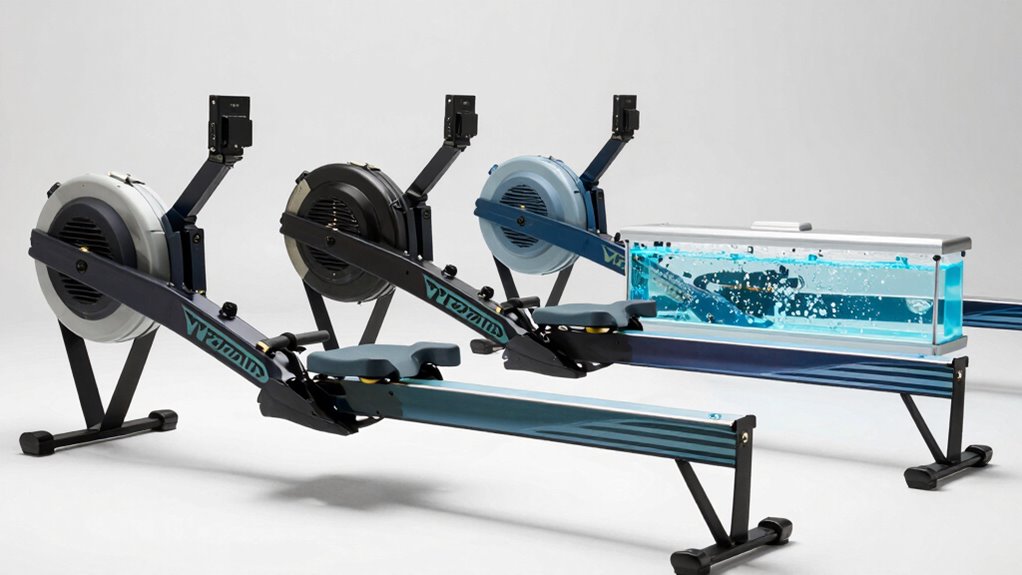
Water resistance rowers mimic the natural feel of actual rowing because the resistance is generated by a tank of water that responds dynamically to your effort. This creates a more authentic experience, closely resembling real rowing movements and sensations. The water’s fluid motion provides smooth, consistent resistance, enhancing water realism and making each stroke feel genuine. The water’s dynamic response offers a more realistic rowing experience. The fluid dynamics offer a more natural stroke feel. Less abrupt resistance changes, maintaining realism. Provides a more true-to-life rowing experience overall. Additionally, the fluid motion of water resistance helps reduce the impact on joints, making it suitable for various fitness levels. The presence of dynamic resistance further ensures that the intensity adjusts seamlessly, engaging your muscles and mind more fully. Because water resistance responds immediately to your effort, it fosters a more immersive workout experience that closely mirrors actual rowing. The realistic feel is also enhanced by the consistent resistance response, which adapts smoothly to changes in stroke speed and effort. These features make water resistance rowers feel more like actual rows, engaging your muscles and mind more fully.
Which Resistance System Fits Your Fitness Goals and Budget?

Choosing the right resistance system depends on your fitness goals and budget. If you want equipment with high durability and minimal maintenance, magnetic rowers often last longer and require less upkeep. They tend to be quieter, making them ideal for shared spaces or apartments. Air resistance rowers are typically more affordable and known for their durability, but they generate more noise, which might be a concern if noise levels matter to you. Water resistance rowers offer a realistic rowing feel and moderate noise, though their equipment durability can vary depending on the brand. Consider your environment and how much noise you’re comfortable with, along with your budget. Understanding resistance types can help you make an informed decision about which system best suits your needs. Additionally, maintenance requirements vary between resistance types and can influence your long-term satisfaction. When selecting a rower, keep in mind the performance features that align with your workout style and goals. Incorporating training customization options can further enhance your workout experience. Ultimately, select a system that aligns with your fitness objectives and fits your lifestyle without compromising on quality or noise preferences.
Frequently Asked Questions
Which Resistance Type Is Best for High-Intensity Interval Training?
For high-intensity interval training, air resistance rowers are your best choice because they offer dynamic resistance that matches your effort level. As you increase your pace, the resistance automatically ramps up, making interval training more effective. Plus, they allow for resistance customization through adjusting your stroke rate. This adaptability helps you push harder during sprints and recover efficiently during rest periods, optimizing your workout results.
How Noisy Are Water Versus Air Resistance Rowing Machines?
Water resistance rowing machines tend to be quieter than air resistance models, making them ideal if noise level differences matter to you. While water machines produce gentle splashing sounds, they’re generally less disruptive. You can further reduce noise with sound mitigation techniques like placing mats underneath or using quieter models. Air resistance rowers generate more noise due to the fan, so if you want a quieter workout, water rowing machines are a better pick.
Can Resistance Types Be Customized or Adjusted During Workouts?
Yes, resistance types can often be adjusted or customized during your workout. Many rowing machines feature adjustable resistance settings or control panels that let you modify the intensity in real-time. Some models even offer advanced adjustability features, allowing you to personalize your workout customization easily. This flexibility helps you target specific fitness goals, challenge yourself progressively, and maintain motivation throughout your rowing session.
What Maintenance Is Required for Each Resistance System?
Your rowing machine’s resistance system is a powerhouse, but it still needs TLC. Magnetic systems demand minimal maintenance—just occasional cleaning of the metal parts to prevent dust buildup. Air resistance systems require regular cleaning of the fan blades to keep airflow smooth. Water resistance models need the water to stay clean—top it up when needed and change the water periodically. Proper maintenance prolongs durability and ensures your workout remains smooth as silk.
Are There Any Safety Concerns Unique to Each Resistance Type?
You should stay alert to safety concerns like hydraulic fluid leaks in hydraulic resistance models, which can cause slips or skin irritation. Magnetic resistance machines might experience magnetic interference, affecting performance or safety features. Air and water resistance rowers generally pose fewer unique risks, but always guarantee proper maintenance to prevent mechanical issues. Regularly check for loose parts and follow manufacturer guidelines to stay safe during your workouts.
Conclusion
As you picture yourself gliding smoothly on a water rower, it’s no surprise how authentic the feel can be. Whether you prefer the quiet consistency of magnetic, the dynamic challenge of air, or the immersive experience of water resistance, choosing the right system aligns with your goals and budget. When you finally see yourself pulling through your workout, you’ll realize that selecting the perfect resistance system turns your fitness journey into a seamless, motivating experience.