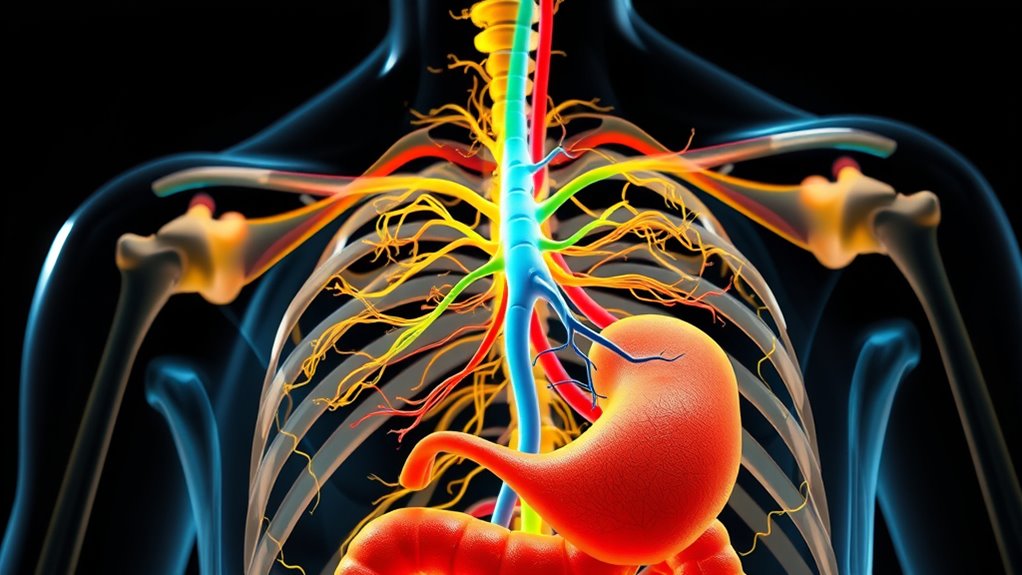

The vagus nerve acts as a crucial communication route between your brain and key organs involved in digestion. It helps activate your parasympathetic system, promoting relaxation, slowing your heart, and stimulating digestion. It transmits signals from your gut to your brain, supporting balance and gut health. Practices like deep breathing and mindful eating can boost its function. Want to discover more about how this nerve influences your overall well-being? Continue to explore this fascinating connection.
Key Takeaways
- The vagus nerve connects the brain to vital organs, regulating digestion by transmitting signals for enzyme release and gut motility.
- It activates the parasympathetic system, promoting relaxation, slowing heart rate, and supporting digestive processes.
- Continuous neural feedback from the gut to the brain maintains internal balance and coordinates digestion.
- Healthy vagus nerve function influences satiety, gut microbiome balance, and overall gastrointestinal health.
- Practices like deep breathing and mindful eating can enhance vagus nerve activity, improving digestion and bodily well-being.
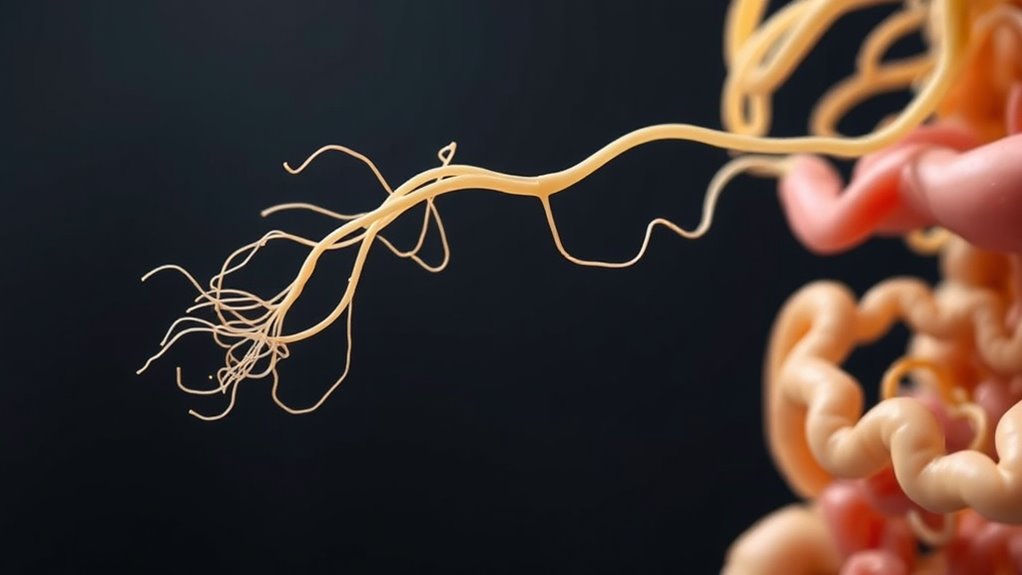
The vagus nerve is an essential part of your body’s nervous system, acting as a communication highway between your brain and many important organs. It forms a network of neural pathways that connect your brainstem to your heart, lungs, stomach, and other crucial organs. This extensive wiring allows your brain to monitor and influence these organs, ensuring your body’s functions stay balanced and responsive. One of its primary roles is to activate the parasympathetic system, often called the “rest and digest” system, which promotes relaxation, recovery, and digestion. When the vagus nerve is functioning properly, it signals your body to slow your heart rate, decrease blood pressure, and stimulate digestive processes, such as enzyme secretion and gut motility.
The vagus nerve connects your brain to vital organs, promoting relaxation, digestion, and overall balance.
As you go about your day, your vagus nerve continuously transmits information from your organs back to your brain. This feedback loop helps your nervous system maintain homeostasis—your internal stability. When you eat, for example, the vagus nerve sends signals from your stomach and intestines to your brain, indicating that digestion should commence. This neural communication prompts the release of digestive enzymes and stimulates the muscles that move food through your gastrointestinal tract. In this way, the vagus nerve coordinates digestion seamlessly, ensuring nutrients are absorbed and waste is eliminated efficiently.
The neural pathways of the vagus nerve also influence other bodily functions related to digestion, such as the sensation of satiety and the regulation of gut bacteria. When these pathways are healthy and active, they help you feel full after eating and support a balanced gut microbiome. Conversely, disruptions in vagal signaling can lead to digestive issues like bloating, reflux, or slowed gastric emptying. Lifestyle factors such as stress, poor diet, or illness can impair vagus nerve function, which in turn affects your parasympathetic responses and overall digestive health.
Supporting your vagus nerve through practices like deep breathing, meditation, and mindful eating can enhance its activity and promote better digestion. Engaging in activities that stimulate the parasympathetic system helps keep this nerve healthy and responsive. These habits can help you manage stress and improve your overall well-being, as a well-functioning vagus nerve is crucial for maintaining internal balance and supporting a healthy gut microbiome.
You can support your vagus nerve and enhance its role in digestion through practices like deep breathing, meditation, and mindful eating. These activities stimulate the neural pathways of the parasympathetic system, encouraging relaxation and promoting beneficial digestive function. Regularly engaging in such habits helps keep the vagus nerve strong and responsive, ensuring your body’s communication highway remains efficient. By understanding and nurturing this crucial nerve, you take an active role in maintaining your digestive health and overall well-being.

Pulsetto Wellness Wearable with Vagus Nerve Support – Patented Neuro Technology for Relaxation, Stress Balance, Focus, and Restful Sleep
Feel Calm in Minutes – Experience soothing relaxation and renewed balance with quick, 4-10 minute sessions. Pulsetto helps…
As an affiliate, we earn on qualifying purchases.
As an affiliate, we earn on qualifying purchases.
Frequently Asked Questions
Can Vagus Nerve Stimulation Improve Digestion-Related Conditions?
Yes, vagus nerve therapy can improve digestion-related conditions. By stimulating the vagus nerve, you may enhance your digestive health, reduce symptoms of indigestion, and support better gut function. This therapy activates your parasympathetic nervous system, promoting relaxation and improved digestion. If you’re experiencing digestive issues, consulting a healthcare professional about vagus nerve stimulation might help you restore ideal digestive health naturally and effectively.
How Does Stress Affect Vagus Nerve Function in Digestion?
Stress impacts your vagus nerve, disrupting its ability to support digestion. When you’re stressed, your nerve resilience weakens, impairing signals that regulate stomach acid, motility, and enzyme release. This interference can cause discomfort, bloating, or indigestion. To maintain ideal digestion, manage stress through relaxation, deep breathing, and mindfulness. Strengthening your nerve resilience helps your vagus nerve perform its essential role, ensuring smooth and healthy digestion despite life’s pressures.
Are There Natural Ways to Strengthen the Vagus Nerve?
Yes, you can naturally strengthen your vagus nerve by practicing breathing exercises and meditation techniques regularly. Deep, slow breathing helps activate your vagus nerve, promoting relaxation and better digestion. Meditation, especially mindfulness-based practices, reduces stress and enhances vagal tone. Incorporate these techniques into your daily routine to improve nerve function, support digestion, and boost overall well-being. Consistency is key to seeing lasting benefits.
What Are Signs of Vagus Nerve Dysfunction During Digestion?
If you notice digestive symptoms like bloating, nausea, or irregular bowel movements, it could be a sign of vagus nerve dysfunction or nerve impairment. You might also experience difficulty swallowing or sudden changes in heart rate during digestion. These signs indicate your vagus nerve isn’t working properly, affecting your digestive process. Recognizing these symptoms helps you seek appropriate care to support nerve health and improve digestion.
Does the Vagus Nerve Influence Appetite and Hunger Signals?
Ever wonder how you feel hungry or full? The vagus nerve plays a key role in appetite control and hunger regulation by transmitting signals between your gut and brain. It influences feelings of satiety and hunger, helping you decide when to eat or stop. Without proper vagus nerve function, your appetite signals could become disrupted, making it harder to maintain a healthy balance between hunger and fullness.

HealthAndYoga™ Deep Breathing Exerciser – Breath Exercise System
Compact, high quality break-resistant plastic, 3-ball inhaling breath system
As an affiliate, we earn on qualifying purchases.
As an affiliate, we earn on qualifying purchases.
Conclusion
Now that you know how essential the vagus nerve is for digestion, it’s clear why nurturing your nervous system matters. Did you know that approximately 80% of your immune system is housed in your gut, influenced directly by this nerve? By supporting your vagus nerve through mindful practices like deep breathing and healthy eating, you can improve digestion and overall well-being. Taking care of this nerve helps keep your body balanced and functioning at its best.

Mindful Eating for Kids Tool – Great for Picky Eaters, Sensory Food Aversion, and Healthy Eating. Created by Your Therapy Source
Engage your child with five interactive areas: Hunger Rating, Gratitude, Sensory Exploration, Eating Check-In, and Food Review—each designed…
As an affiliate, we earn on qualifying purchases.
As an affiliate, we earn on qualifying purchases.

Physician's CHOICE Probiotics 60 Billion CFU – 10 Strains + Organic Prebiotics – Immune, Digestive & Gut Health – Supports Occasional Constipation, Diarrhea, Gas & Bloating – for Women & Men – 30ct
Max Strength General Purpose Probiotic: Our non-refrigerated probiotic is designed to support digestive health & gut health. A…
As an affiliate, we earn on qualifying purchases.
As an affiliate, we earn on qualifying purchases.