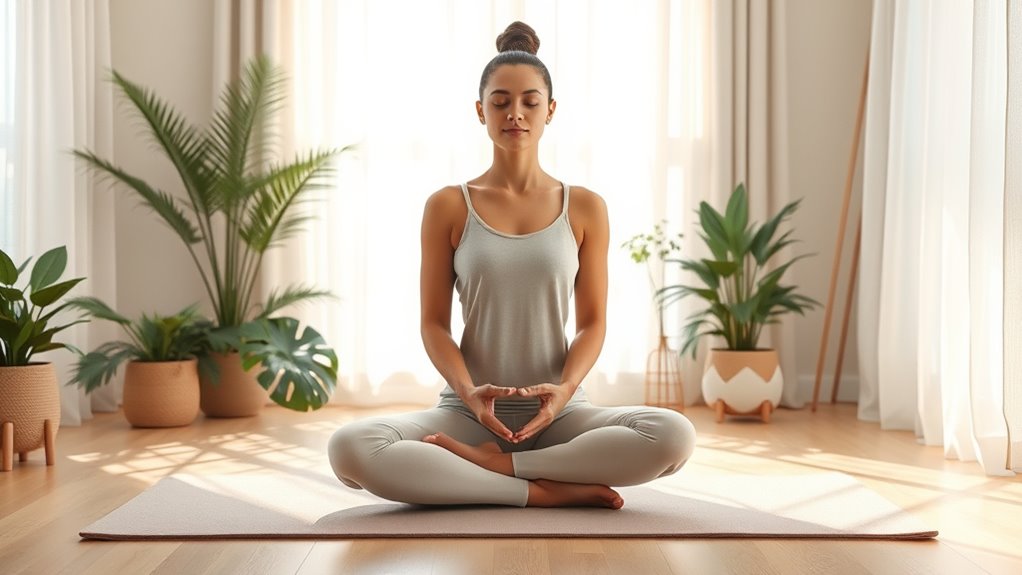

Practicing yoga can help reduce anxiety by incorporating gentle postures like Child’s Pose, Legs-Up-The-Wall, and Savasana, which promote relaxation and calm your nervous system. Focusing on breath during these poses enhances mindfulness and releases tension. As you slow down and tune into your sensations, you’ll feel more in control and centered. If you keep exploring these techniques, you’ll discover even more ways to strengthen your mental resilience through yoga.
Key Takeaways
- Gentle poses like Child’s Pose and Savasana promote relaxation and help reset the nervous system.
- Legs-Up-The-Wall pose alleviates tension and encourages calming blood flow.
- Incorporating mindful breathing during asanas enhances mental clarity and reduces anxiety.
- Slow, restorative postures support emotional balance and stress relief.
- Regular practice of calming asanas fosters resilience against daily anxiety triggers.
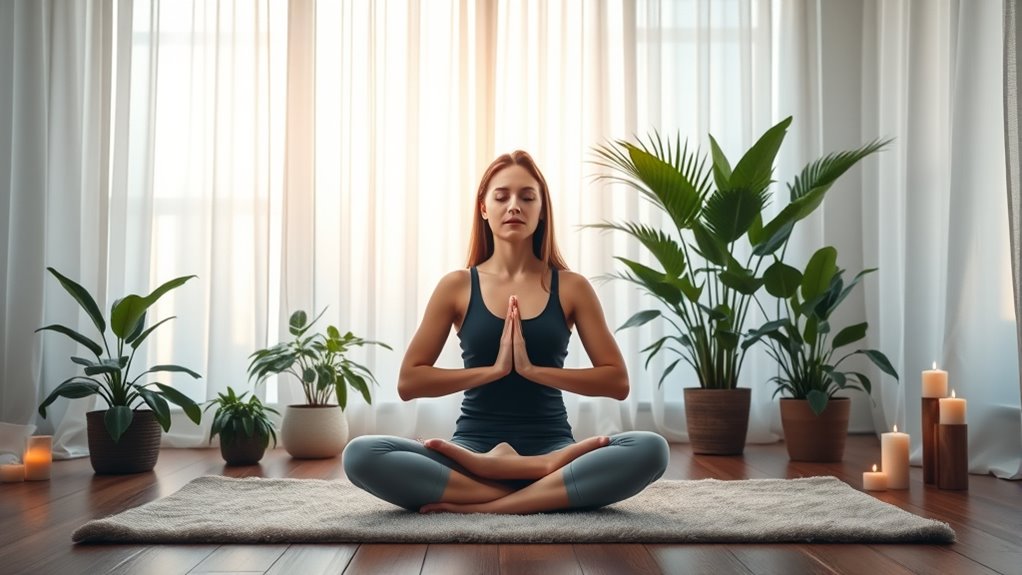
Have you ever wondered how yoga can boost your mental health? It’s not just about stretching or physical postures; yoga deeply influences your mental well-being through mindfulness practices and breathing techniques. When you focus on mindfulness, you become more aware of your thoughts and feelings without judgment. This awareness helps you recognize anxious patterns early and develop a sense of calm. Breathing techniques, a core part of yoga, play a crucial role in calming your nervous system. By controlling your breath, you can reduce stress hormones and promote relaxation, which is especially helpful when anxiety feels overwhelming.
Yoga enhances mental health through mindfulness and breathing, helping you recognize anxiety early and promote calm.
Incorporating mindfulness practices into your yoga routine means paying close attention to your body and breath during each pose. Instead of rushing through postures, you slow down and tune into how each movement feels. This focus shifts your attention away from worries and racing thoughts, anchoring you in the present moment. As you become more mindful, you start to notice the subtle signals your body gives you, such as tension or fatigue, allowing you to adjust accordingly. This heightened awareness fosters a sense of control and safety, helping to diminish feelings of anxiety.
Breathing techniques, or pranayama, are particularly effective for reducing anxiety. Techniques like diaphragmatic breathing or alternate nostril breathing slow your heart rate and lower blood pressure. When you consciously breathe deeply and evenly, you send a message to your brain that it’s safe to relax. Practicing these techniques regularly enhances your ability to stay grounded during stressful situations. For example, during moments of panic or worry, a few slow, deep breaths can quickly restore a sense of calm. Over time, these breathing habits become ingrained, making it easier to manage anxiety outside of your yoga sessions.
Certain yoga asanas also support mental health by encouraging relaxation and releasing tension. Postures like Child’s Pose, Legs-Up-The-Wall, or Savasana create space for your nervous system to reset. As you hold these poses, focus on your breath and allow your mind to settle. The combination of gentle movement, mindfulness, and breathing techniques creates a powerful tool against anxiety. Regular practice helps rewire your brain to respond more calmly to stressors, reducing the frequency and intensity of anxious episodes. Additionally, integrating mindfulness into your routine strengthens your ability to manage stress in daily life.
Ultimately, yoga offers a holistic approach to managing anxiety by integrating mindfulness practices and breathing techniques. It’s about more than just physical flexibility; it’s a pathway to mental resilience. As you deepen your practice, you’ll likely notice a greater sense of calm, clarity, and emotional balance, empowering you to face daily challenges with confidence and peace.

Mindsight 'Original Breathing Buddha' Guided Visual Meditation | 3 Modes to Slow Your Breathing & Calm Your Mind | Stress & Anxiety Relief | Wellness Gift | Adults, Kids, Classrooms | USB Rechargeable
🧠 WHAT IT'S FOR: Daily guided breathing to help calm & focus your mind during the day or…
As an affiliate, we earn on qualifying purchases.
As an affiliate, we earn on qualifying purchases.
Frequently Asked Questions
Can Yoga Replace Professional Therapy for Anxiety?
Yoga alone can’t replace professional therapy for anxiety. While practices like mindfulness meditation and breathing exercises help manage symptoms and promote relaxation, they don’t address underlying causes or provide personalized support. If you’re struggling with anxiety, combining yoga with professional therapy offers a more all-encompassing approach. This way, you benefit from both calming techniques and expert guidance to develop effective coping strategies.
How Soon Can I Notice Mental Health Improvements From Yoga?
You might notice mental health improvements from yoga within a few weeks, especially if you incorporate mindfulness meditation and breathing techniques regularly. As you practice consistently, you’ll likely feel reduced anxiety and increased calmness. Don’t expect overnight changes, but with dedication, you’ll gradually feel more centered. Keep practicing, stay patient, and observe how these mindful practices positively influence your mood and overall mental well-being over time.
Are There Specific Yoga Poses for Severe Anxiety Attacks?
During severe anxiety attacks, you can try poses like Child’s Pose and Legs-Up-The-Wall to help calm your nerves. Incorporate breathing techniques like deep diaphragmatic breathing and practice mindfulness meditation to focus your mind and reduce panic. These practices work quickly to soothe your nervous system, helping you regain control and feel more grounded during intense moments. Consistent practice enhances their effectiveness over time.
Is Yoga Safe for People With Pre-Existing Mental Health Conditions?
Yes, yoga can be safe for people with pre-existing mental health conditions, but you should always consider safety considerations. Consult your healthcare provider before starting any new practice, especially if you’re managing mental health issues. Choose gentle poses and listen to your body, avoiding anything that causes discomfort or anxiety. Practicing under a qualified instructor can also help guarantee you perform poses correctly and safely, supporting your mental health journey.
How Often Should I Practice Yoga for Mental Health Benefits?
You should practice yoga at least three to four times a week for mental health benefits. Maintaining a consistent yoga schedule helps your mind and body adapt, reducing anxiety over time. Practice consistency is key; even short daily sessions can improve mood and calm your nerves. Listen to your body, and gradually increase your practice duration to maximize the calming effects of yoga on your mental well-being.

Retrospec Sedona Zafu Meditation Cushion with Buckwheat Hull Fill – Adjustable Yoga & Pilates Equipment Support – 17in Crescent Cotton Cover
NATURAL COMFORT & SUPPORT: Filled with sustainable buckwheat hulls, this meditation cushion elevates your practice by aligning your…
As an affiliate, we earn on qualifying purchases.
As an affiliate, we earn on qualifying purchases.
Conclusion
Practicing these yoga asanas is like tending to a garden—you nurture your mind and watch anxiety wither away. By dedicating just a few minutes each day, you create a peaceful sanctuary within yourself. Think of your breath as the gentle breeze that clears away storm clouds of stress. Embrace these poses as your tools to cultivate calm and resilience, transforming your mental landscape into a serene oasis where anxiety no longer takes root.

Mindsight 'Breathing Buddha' Guided Visual Meditation Tool for Mindfulness | Slow Your Breathing & Calm Your Mind for Stress & Anxiety Relief | Perfect for Adults & Kids (Multicolor, Pebble (Sound))
🧠 Introducing (6) Ambient Nature Sounds: the addition of crashing waves, birds chirping or a strong breeze can…
As an affiliate, we earn on qualifying purchases.
As an affiliate, we earn on qualifying purchases.

Gaiam Yoga Bolster – Long, Rectangular Meditation Pillow – Supportive Cushion for Restorative Yoga and Sitting on the Floor – Built-In Carrying Handle – Machine Washable Cover'
YOGA BOLSTER: Supports the body during yoga, meditation or relaxation
As an affiliate, we earn on qualifying purchases.
As an affiliate, we earn on qualifying purchases.