Studio monitors and regular speakers serve different purposes, so don’t mix them up. Studio monitors provide flat, accurate sound ideal for mixing and mastering, while home speakers boost bass and warmth for casual listening. If you need precise audio without coloration, studio monitors are your best choice. However, if you’re after a rich, immersive experience for entertainment, regular speakers are better. Keep exploring to understand how to choose the right one for your needs.
Key Takeaways
- Studio monitors provide flat, accurate sound for precise audio work, while regular speakers emphasize bass and warmth for casual listening.
- Use studio monitors in professional environments for mixing and mastering; regular speakers are ideal for home entertainment.
- Studio monitors have minimal sound coloration and broad frequency response; regular speakers often boost certain frequencies for a pleasing sound.
- Proper acoustic treatment enhances studio monitor performance; regular speakers are less dependent on room acoustics.
- Choosing between them depends on your primary use, room setup, and need for audio fidelity versus entertainment.

PreSonus Eris 3.5 Studio Monitors, Pair — Powered, Active Monitor Speakers for Near Field Music Production, Desktop Computer, Hi-Fi Audio
HONEST. Eris 3.5 near field studio monitors deliver studio-quality, accurate sound perfect for music production, hi-fi audio listening,…
As an affiliate, we earn on qualifying purchases.
As an affiliate, we earn on qualifying purchases.
What Are Studio Monitors and Home Speakers?
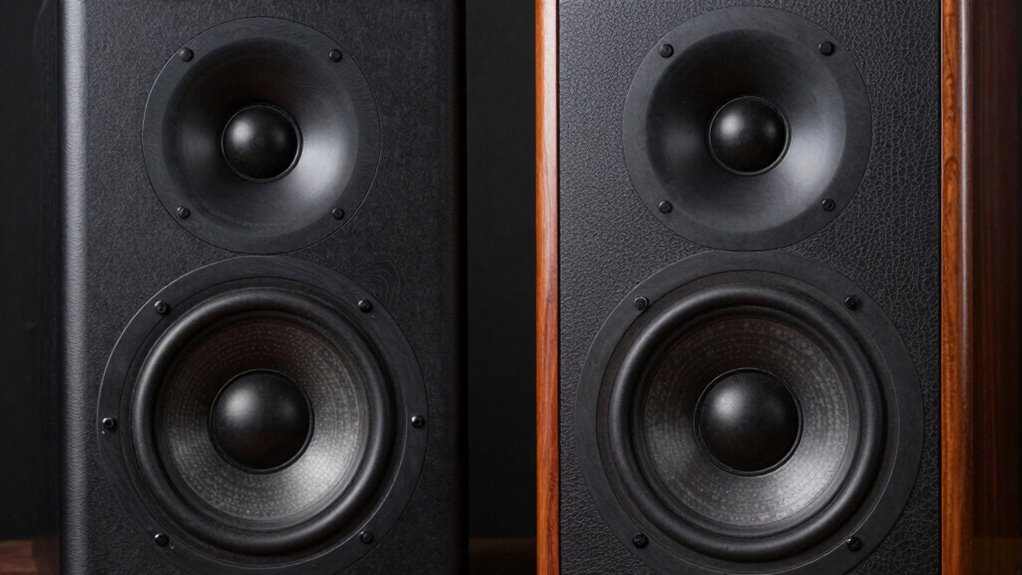
Studio monitors and home speakers are designed for different purposes, which affects their construction and sound output. As a result, studio monitors deliver a flat, accurate sound that’s vital for mixing and mastering. They’re built to reproduce sound with minimal coloration, so you can hear every detail clearly. This high sound quality helps you make precise adjustments during production. On the other hand, home speakers are optimized for a pleasing listening experience, often emphasizing bass and warmth. Acoustic treatment in a studio environment is essential for studio monitors because it reduces sound reflections and enhances accuracy. Proper Acoustic treatment is crucial for achieving the best performance from studio monitors, ensuring sound clarity and precision. Without it, even the best studio monitors might not perform well. Additionally, room acoustics play a significant role in how sound is perceived, affecting the overall listening experience. Understanding these differences ensures you select the right speakers for your needs. For optimal performance, investing in sound treatment can greatly improve your listening environment and the accuracy of your studio monitors. Furthermore, sound isolation techniques can prevent external noise from interfering with your audio, ensuring a clearer sound.
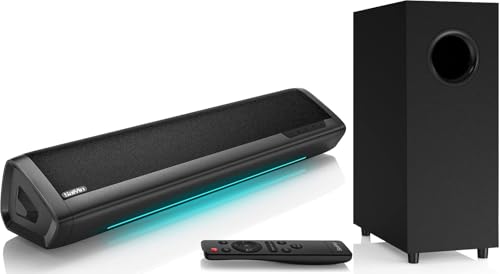
Saiyin Sound Bars for TV with Subwoofer, 2.1 Deep Bass Small Soundbar Monitor Speaker Home Theater Surround System PC Gaming Bluetooth/AUX/Optical Connection, Wall Mountable 17-inch
【Enjoy Deep Bass from Dedicated Subwoofer】The deep rich bass from our new generation sound bar and subwoofer will…
As an affiliate, we earn on qualifying purchases.
As an affiliate, we earn on qualifying purchases.
How Do They Differ in Performance, Design, and Use?

While both studio monitors and regular speakers produce sound, their performance, design, and intended use differ considerably. Studio monitors prioritize acoustic fidelity, delivering a flat frequency response for accurate sound reproduction, so you hear what’s truly recorded. They typically have a sturdy build focused on minimizing distortion, and their design emphasizes clarity over volume. Power handling is vital; studio monitors are built to manage continuous, high-level listening without distortion, ensuring precise mixing. Regular speakers, on the other hand, often enhance bass and treble to create a pleasing sound for casual listening. They’re designed for aesthetic appeal and broader use, not necessarily accurate sound. This difference means studio monitors are essential for professionals needing precise audio, while regular speakers suit everyday entertainment.

(2) JBL 305P MkII 5" 2-Way Active Powered Studio Reference Monitors Speakers
PACKAGE INCLUDES: (2) 305P MkII 5 2-Way Powered Studio Reference Monitor Monitoring Speaker
As an affiliate, we earn on qualifying purchases.
As an affiliate, we earn on qualifying purchases.
When Should You Use Studio Monitors Instead of Home Speakers?
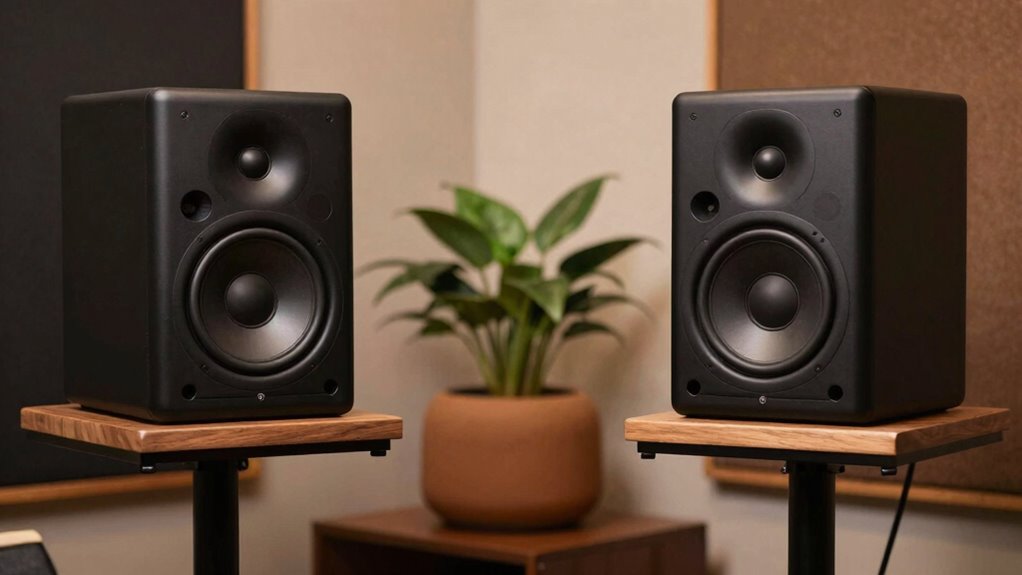
You should consider using studio monitors whenever you need accurate sound reproduction for professional audio work or critical listening. They excel in delivering flat frequency responses, especially in bass response, ensuring your mixes translate well across systems. Studio monitors typically have lower power consumption, making them efficient for long sessions. Use them when clarity, precise detail, and minimal coloration are essential. Additionally, they help you identify subtle nuances in your recordings, avoiding the colorization common with home speakers. Keep in mind, studio monitors are designed for controlled environments, not casual listening. Consider these factors:
- Accurate bass response for mixing
- Flat frequency response
- Low power consumption
- Critical listening precision
- Minimal coloration in sound
Choose studio monitors when accuracy outweighs aesthetics or casual use. Understanding sound accuracy can help you decide when professional-grade equipment is necessary.

Sound Addicted – Studio Monitor Isolation Pads for 5 Inch Monitors, Pair of Two High Density Acoustic Foam which Fits Most Speaker Stands | SMPad 5
SMPad 5 is made out of the highest quality acoustical foam (50kg/m^3 density).
As an affiliate, we earn on qualifying purchases.
As an affiliate, we earn on qualifying purchases.
How to Spot a Good Studio Monitor Versus a Regular Home Speaker
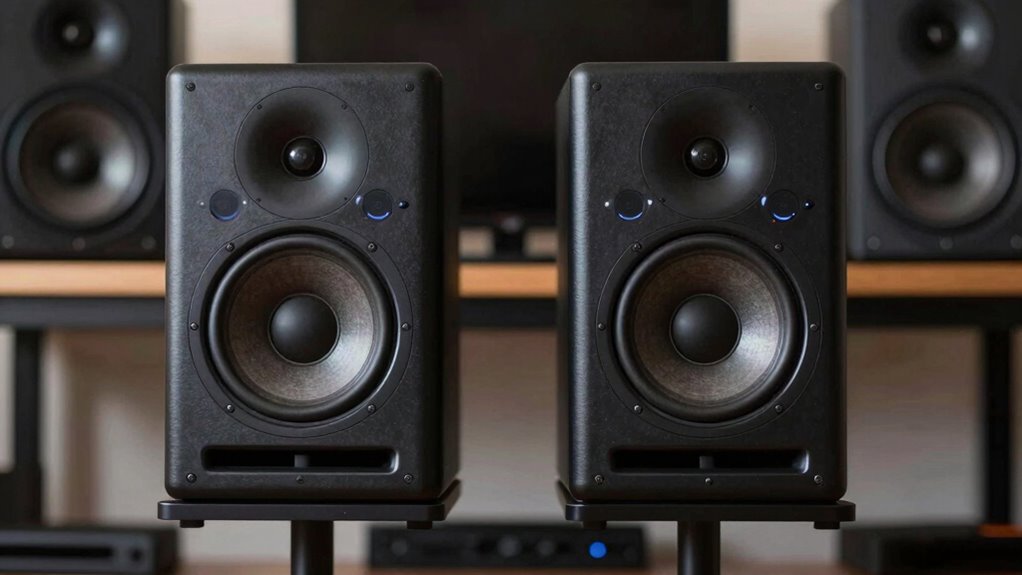
Recognizing a good studio monitor involves examining specific features that distinguish it from regular home speakers. First, check its acoustic accuracy; a quality studio monitor reproduces sound faithfully without coloration, allowing you to hear exactly what’s recorded. Next, review the frequency response—look for a wide and flat range that accurately covers low to high frequencies. A good monitor presents a balanced sound without exaggerated bass or treble, ensuring precise mixing and editing. Unlike home speakers, which often enhance certain frequencies for enjoyment, studio monitors prioritize transparency. When testing, listen for clarity across all frequencies and consistency in sound reproduction. If it reproduces audio accurately and covers a broad, flat frequency response, you’re likely looking at a reliable studio monitor. Additionally, heritage and milestones play a role in understanding the importance of accuracy and quality in professional audio equipment. Being aware of acoustic design principles can further help distinguish high-quality monitors from ordinary speakers. Furthermore, understanding the material construction can provide insights into the durability and acoustic performance of the monitor. Paying attention to speaker placement techniques can also significantly impact sound clarity and accuracy during use. It’s also helpful to consider signal processing features that may optimize sound reproduction and performance.
Factors to Consider When Choosing Between Studio Monitors and Home Speakers
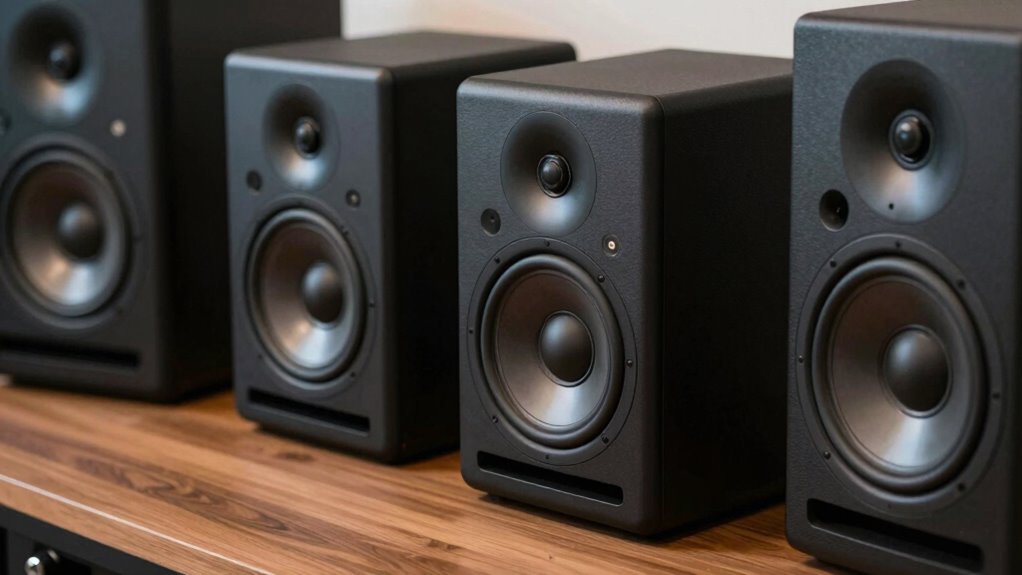
When choosing between studio monitors and home speakers, understanding your specific needs is essential. Consider how room acoustics can affect sound quality, as studio monitors are designed for flat, accurate response in treated spaces, while home speakers can compensate for less ideal environments. Power requirements also matter; studio monitors often need more power and good amplification to reveal detailed sound, whereas home speakers typically operate at lower power levels. Additionally, think about your primary use—professional mixing or casual listening. Other factors include budget, size of the space, and whether you prioritize accuracy or ambiance. Proper room acoustics and treatment can significantly improve the listening experience, especially with studio monitors. Moreover, selecting the right gear depends on understanding the differences in audio fidelity between these options. For optimal performance, it’s crucial to consider speaker placement and how it impacts sound dispersion in your environment. Being aware of microplastic contamination in dust can also influence indoor air quality, which indirectly affects your overall health and comfort during extended listening sessions. Ensuring good sound isolation can further enhance your listening experience by minimizing external noise interference.
Frequently Asked Questions
Can Studio Monitors Be Used for Casual Listening at Home?
Yes, you can use studio monitors for casual listening at home, but they might not be ideal. Studio monitors are designed for accurate sound reproduction, which can reveal every detail in your music. While they provide excellent home audio quality, their flat response might lack the warmth and bass enhancement you expect for casual listening. If you prefer a richer sound, regular speakers might be more suitable, but monitors work fine if clarity is your priority.
Are There Any Health Concerns With Prolonged Use of Studio Monitors?
Using studio monitors for hours can cause ear fatigue, so you should take breaks to protect your hearing. There’s minimal risk if you keep the volume at safe levels and consider hearing protection during extended sessions. Just like a vintage radio needs proper tuning, your ears need care. Be mindful of prolonged exposure, and you’ll enjoy your music without risking long-term hearing damage.
Do Studio Monitors Require Special Placement for Optimal Sound?
Yes, studio monitors require careful speaker placement for ideal sound. You should position them at ear level, forming an equilateral triangle with your listening position. Make sure to place them away from walls and corners to reduce reflections. Incorporate acoustic treatment like bass traps and diffusers to minimize echo and improve sound clarity. Proper speaker placement and acoustic treatment guarantee accurate audio reproduction, essential for mixing and critical listening.
How Do Studio Monitors Impact the Mixing and Production Process?
Did you know that 85% of professional producers say accurate sound is vital? Studio monitors impact your mixing and production by providing precise frequency response and sound accuracy. This lets you hear every detail, ensuring your mix sounds great on any system. By relying on monitors, you avoid misjudging bass, treble, or vocals, which leads to a more balanced, polished final product. Your mixes become more professional and consistent across different playback devices.
Are Wireless Options Available for Studio Monitors or Home Speakers?
Yes, wireless options are available for both studio monitors and home speakers. You can find models with wireless connectivity, making setup easier and reducing cable clutter. These portable options let you enjoy high-quality sound without physical connections, ideal for flexible setups or on-the-go use. Keep in mind, some wireless studio monitors might have slight latency, so choose models that suit your precise audio needs.
Conclusion
Choosing between studio monitors and home speakers is like selecting the right brush for your canvas—each has its own purpose and personality. Trust your ears, consider your goals, and don’t be swayed by looks alone. When you pick the right tool, your sound will dance with clarity and precision, turning your space into a symphony of perfect harmony. Remember, the right choice fuels your passion and makes every note count.