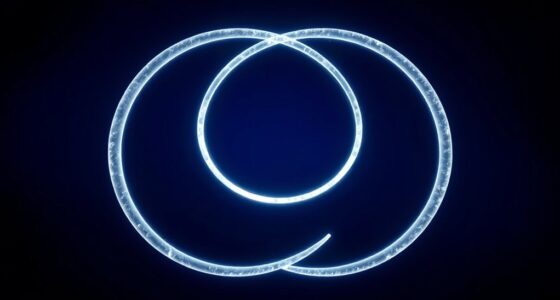
The Vesica Piscis is a sacred geometric shape formed by the intersection of two equal circles, symbolizing unity, duality, and spiritual gateways. Throughout history, it’s appeared in Egyptian, Greek, Christian art, and architecture, representing creation, harmony, and divine connection. Whether in stained glass, mosaics, or sacred buildings, it evokes cosmic order and spiritual insight. Continuing explores how this shape influences spiritual traditions and artistic expressions across cultures and centuries.
Key Takeaways
- The Vesica Piscis is a fundamental shape in sacred geometry, formed by two intersecting circles of equal radius.
- It symbolizes the union of dualities like spirit and matter, representing spiritual gateways and interconnectedness.
- Historically, it appears in ancient Egyptian, Greek, and Christian art, often symbolizing creation and divine harmony.
- In architecture, it is used in Gothic cathedrals, mosaics, and stained glass, embodying mathematical harmony and spiritual significance.
- Modern art and sacred spaces continue to utilize the Vesica Piscis, emphasizing its universal symbolic power and connection to cosmic order.
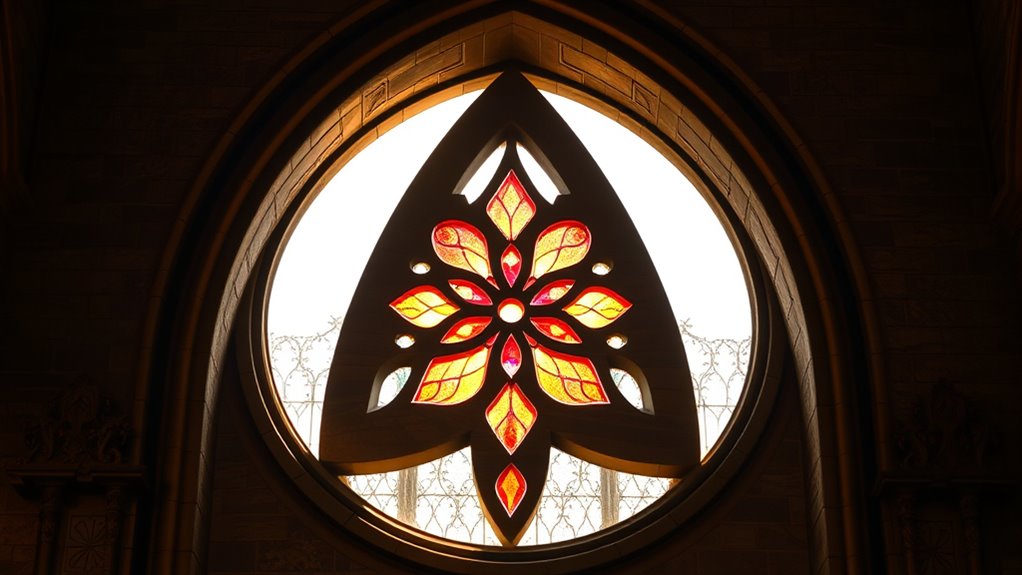
The Vesica Piscis is a geometric shape formed by the intersection of two circles with equal radii that overlap so that the center of each lies on the circumference of the other. This simple yet profound shape has been revered across cultures and eras, serving as a foundational element in sacred geometry. When you explore its symbolism in sacred geometry, you’ll find that it embodies the union of dualities—spirit and matter, heaven and earth, male and female. Its shape suggests a portal or gateway, symbolizing passage, emergence, and the interconnectedness of all things. Historically, this shape dates back thousands of years, with origins tracing to ancient civilizations such as the Egyptians, who used it in their religious iconography, and the Greeks, who associated it with the divine. The shape’s presence in early Christian art, especially in the context of the Holy Sepulchre and the Chi-Rho symbol, underscores its spiritual significance. As you investigate its historical origins, you realize that it served not only as a visual motif but also as a symbol of creation and unity. In early cultures, the Vesica Piscis appeared in sacred architecture, such as Gothic cathedrals and religious mosaics, representing the divine harmony of the universe. Its proportions were believed to embody mathematical perfection, linking the material and spiritual worlds through geometric harmony. Over the centuries, artisans and architects incorporated the Vesica Piscis into their designs, recognizing its power to evoke spiritual insight and cosmic order. You’ll notice that its shape is often used in stained glass windows, altars, and decorative motifs, emphasizing its role as a sacred symbol. The shape’s immanent spirituality and historical significance have made it a recurring motif in spiritual practices and artistic expressions. Its enduring presence across diverse cultures highlights its universal appeal and the deep human desire to understand the universe’s sacred structure. When you observe modern sacred spaces or artistic works, you may see the Vesica Piscis subtly integrated, reminding us of our connection to the divine and the harmony inherent in creation. Its symbolism in sacred geometry continues to inspire, serving as a timeless reminder of the unity underlying all existence. Understanding its historical origins enriches your appreciation of its mystical and symbolic power, demonstrating how a simple geometric shape can carry profound spiritual and cultural meanings across millennia. Recognizing the geometric harmony of this shape can deepen your understanding of the interconnectedness of all things in the universe.

Abstract cosmic art print, galactic mandala sacred geometry mural, flower of life themed wall decor, spiritual art gift, intricate pattern, home decor(L18"xW12"-CANVAS)
✨sARTISTIC DESIGN: Intricate mandala-inspired cosmic artwork featuring mesmerizing geometric patterns in rich colors of blue, red, and gold…
As an affiliate, we earn on qualifying purchases.
As an affiliate, we earn on qualifying purchases.
Frequently Asked Questions
How Does the Vesica Piscis Influence Modern Design Trends?
You see that the vesica piscis influences modern design trends by inspiring geometric patterns that add visual interest. Its timeless shape seamlessly blends into contemporary aesthetics, creating balance and harmony in architecture and art. As you incorporate this sacred intersection, you evoke a sense of unity and spirituality, making your designs stand out. The vesica piscis continues to shape innovative trends, connecting ancient symbolism with current creative expressions effortlessly.
Are There Specific Cultures That Emphasize the Vesica Piscis More?
You’ll notice that cultures like Celtic and Islamic traditions emphasize the vesica piscis more. Celtic knotwork often incorporates this shape to symbolize eternity and interconnectedness, while Islamic geometric patterns use it as a foundational motif to create intricate, harmonious designs. By exploring these traditions, you see how the vesica piscis holds spiritual and aesthetic significance, influencing their art and architecture deeply.
What Are the Symbolic Meanings Attached to the Vesica Piscis?
You see, the vesica piscis symbolizes fertility, spiritual awakening, and divine unity. It represents the intersection of dualities—male and female, heaven and earth, physical and spiritual—highlighting harmony and balance. Its shape embodies new beginnings and the potential for growth. As a powerful symbol, it invites you to explore deeper connections, inspiring spiritual insight and celebrating life’s continual cycles of renewal and transformation.
How Can Beginners Incorporate Vesica Piscis Into Their Artwork?
You can incorporate vesica piscis into your artwork by exploring simple geometric patterns. Start with basic shapes, like overlapping circles, to create the iconic intersection. Use beginner techniques such as sketching lightly with pencil before adding details or color. Experiment with symmetry and layering to make your design more dynamic. This approach helps you understand the form and symbolism while developing your skills in geometric pattern creation.
Is the Vesica Piscis Associated With Any Spiritual or Religious Practices Today?
You might be surprised to learn that the vesica piscis still holds significance today. It’s often found in meditative symbolism and spiritual circles, representing harmony and the intersection of the divine and human. Many practitioners use it as a focal point for meditation or ritual, embracing its sacred geometry to deepen their spiritual connection. Its continued presence highlights its enduring importance across various spiritual and religious practices.

Vesica Piscis Stained Glass Suncatcher Window Hanging – Custom Text Window Hanging for Man or Woman, Family & Friends, Christmas 2025 Tree Decoration 3pxW70
Custom Vesica Piscis Window Hanging – Stained-glass suncatcher personalized with Text. Perfect Christmas 2025 décor for family, friends,…
As an affiliate, we earn on qualifying purchases.
As an affiliate, we earn on qualifying purchases.
Conclusion
As you explore the Vesica Piscis, remember that beauty often lies in the intersection of different ideas and traditions. This sacred shape reminds you that unity can be found where differences meet, creating something greater than the sum of parts. Like the old saying, “Two heads are better than one,” embracing collaboration and harmony can lead to profound insights. Keep seeking connections—they hold the key to understanding and inspiration in art, architecture, and life.

Symbols and Language in Sacred Christian Architecture (Studies in Religion & Society)
As an affiliate, we earn on qualifying purchases.
As an affiliate, we earn on qualifying purchases.
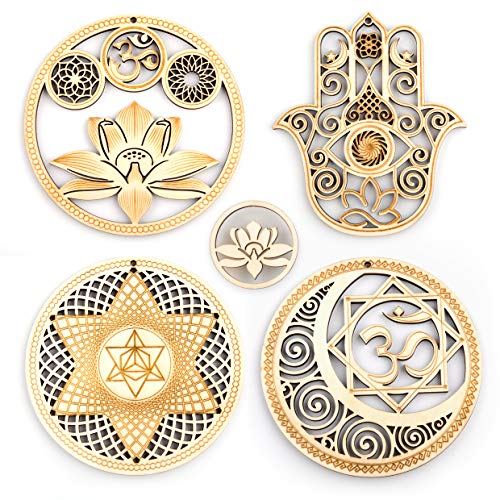
5.31" Sacred Geometry Wall Art 4 PCS Set, (Sacred Lotus, Hamsa Hand, Soul Star, Union Sun Moon) Crystal Grid Meditation Chakra Wooden Wall Art Yoga Decor Spiritual Gifts
Positive Energy & Vieration: This fine artwork of set 4 sacred geometry wall decor will turn your home…
As an affiliate, we earn on qualifying purchases.
As an affiliate, we earn on qualifying purchases.