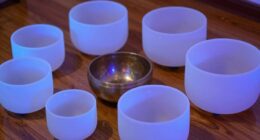
To select the right gong diameter for your space, consider your room size, acoustics, and visual harmony. Larger gongs produce deeper sounds and make a strong visual statement, but they need enough room to avoid overpowering the area. Measure your space accurately, visualize the gong’s size, and test different options if possible. By matching the gong size to your environment, you’ll guarantee ideal sound and presence—and there’s more to discover about finding the perfect fit.
Key Takeaways
- Measure your room’s dimensions to select a gong that fits comfortably without overwhelming the space.
- Consider room acoustics and volume to ensure the gong’s sound projects well without causing echo or distortion.
- Use tape or string to visualize the gong’s diameter in your space before purchasing.
- Match gong size to room purpose—larger for ceremonies, smaller for meditation or private spaces.
- Test different sizes in your space to assess resonance, clarity, and overall compatibility before making a decision.

32" to 36" Gongs on Rambo Rimbaud Stand – Includes Gong, Rope, Mallet, & Stand/Large Traditional Chinese Gong/Strong & Simple Stand/Great for Sound Baths & Healing
This combo includes the gong of your choice, the Rambo Rimbaud Gong Stand, and a traditional Chinese gong…
As an affiliate, we earn on qualifying purchases.
As an affiliate, we earn on qualifying purchases.
How Does Gong Size Affect Sound and Presence?

Larger gongs tend to produce deeper, more resonant sounds that fill a room with rich, full-bodied tones. This impact on sound enhances their presence, making them more noticeable and commanding. The size of a gong also influences its aesthetics, often emphasizing its visual grandeur and craftsmanship, which are key to its cultural significance. A bigger gong not only produces a louder, more powerful sound but also elevates its role in ceremonies and performances, reflecting tradition and respect. Its imposing appearance and deep vibrations create a sense of awe, drawing attention and emphasizing its importance. Additionally, the sound quality of a gong is directly affected by its size, which influences the richness and depth of its vibrations. When choosing a gong, understanding how size influences both sound and cultural symbolism helps you select an instrument that resonates both physically and spiritually within your space. The size-to-sound relationship also plays a crucial role in how a gong is perceived in different cultural contexts. Moreover, the material composition of the gong can further modify its tonal characteristics, complementing the effects of size. Recognizing the cultural significance of different gong sizes can help you select an instrument that aligns with your intended use and aesthetic preferences. Considering acoustic properties can also assist in choosing a gong that produces the desired tonal balance and resonance for your environment.

Feng Shui Gong Decor, Zen Brass Desktop Decor, 6.4×6.3×2 Inch Mini Sound Healing Instrument for Home, Office, Party, Yoga, Gift
[Feng Shui Desk Accent]Gracefully crafted gong believed to clear stagnant chi and promote a harmonious flow of positive…
As an affiliate, we earn on qualifying purchases.
As an affiliate, we earn on qualifying purchases.
What Factors Should You Consider When Choosing a Gong Diameter?

Choosing the right gong diameter involves considering several practical factors to guarantee it fits your space and meets your sound preferences. First, think about material considerations, as different materials like bronze or brass influence tone and durability. Next, assess your room size; larger gongs produce deeper sounds but require more space. Aesthetic harmony is also important—select a diameter that complements your decor and enhances visual balance. Additionally, understanding sound projection can help you select a size that fills your room appropriately. Considering space acoustics is crucial, as the room’s acoustical properties can significantly affect how the gong sounds. Here’s a quick guide:
| Space Size | Material Focus | Aesthetic Aspect |
|---|---|---|
| Small | Brass | Subtle harmony |
| Medium | Bronze | Visual balance |
| Large | Mixed metals | Statement piece |
| Very Large | Specialized alloys | Dominant presence |
| Studio | Lightweight metals | Functional fit |

14" Gongs on the Au Courant Gong Stand – Includes Gong of your Choice, Stand, & Mallet/Traditional Chinese Gong/Great for Meditation & Sound Healing/Bronze Gong
This combo includes the 14" gong of your choice, the Au Courant Gong Stand, and a traditional Chinese…
As an affiliate, we earn on qualifying purchases.
As an affiliate, we earn on qualifying purchases.
How to Match Gong Size to Your Room: Practical Tips and Examples

To effectively match your gong size to your room, start by measuring the available space and considering how much room you have for the gong to breathe without overwhelming the area. Larger gongs create a commanding presence, so verify your space can accommodate their size without crowding. Think about gong aesthetics—an oversized gong may dominate a small room, while a smaller one might get lost in a spacious area. Cultural symbolism also plays a role; a traditional-sized gong may be more appropriate in a culturally themed room, enhancing authenticity. For example, in a meditation space, a medium-sized gong can provide rich sound without overpowering the environment. Additionally, understanding spatial harmony can help you select a gong size that complements your room’s proportions and enhances the overall ambiance. Considering sound projection is also essential to ensure the gong’s tone fills the space appropriately. Recognizing acoustic properties of your room can further aid in choosing a size that produces clear, resonant sounds. Exploring room acoustics can give you deeper insights into how sound interacts within your space. Furthermore, understanding digital content formats can help you explore innovative ways to incorporate gong sounds into multimedia projects. Use these practical tips and examples to find a size that complements both your room and the gong’s cultural significance.

Meinl Wall Mount for Gongs
Gongs Unlimited strives to make your gong buying experience great! Contact us with questions.
As an affiliate, we earn on qualifying purchases.
As an affiliate, we earn on qualifying purchases.
Avoid These Common Mistakes When Picking Gong Sizes

One common mistake people make when selecting a gong size is ignoring the actual dimensions of their space, leading to gongs that are either too overwhelming or too subtle. To avoid this, consider the following:
- Overlooking the gong material which affects sound quality and resonance.
- Choosing a size based solely on aesthetics rather than acoustics.
- Forgetting to account for maintenance tips as larger gongs may require more upkeep.
- Ignoring the impact of ceiling height and room acoustics on sound projection.
- Not testing different sizes before purchasing, risking dissatisfaction with the resonance or volume.
- Additionally, understanding the body jewelry measurements can help in choosing appropriate sizes and ensuring proper fit for your space and sound needs. Being aware of room acoustics can also help you select a gong that complements your environment and enhances sound quality without causing disturbance. Considering spatial planning can further ensure that your gong fits comfortably and resonates optimally within your specific area. It is also beneficial to evaluate the gong diameter in relation to the overall room size to achieve the desired auditory and visual impact.
How to Measure Your Space and Test Gong Sizes Before Buying

Before purchasing a gong, accurately measuring your space is essential to guarantee it fits comfortably and sounds its best. Start by noting the available room dimensions and considering the gong’s placement, whether on a stand or wall. Understanding historical gong sizes can guide you toward authentic proportions that enhance sound quality. Test different sizes in your space if possible, listening for resonance and clarity. Keep in mind that gong craftsmanship affects sound projection, so a well-made, appropriately sized gong will produce richer tones. Use tape or string to visualize the gong’s diameter within your space before buying. This helps ensure the chosen size complements your environment, provides ideal acoustics, and avoids overwhelming the room. Proper measurement and testing lead to a satisfying, harmonious gong experience.
Frequently Asked Questions
Can Different Gong Materials Influence the Ideal Diameter Choice?
Yes, different gong materials can influence the ideal diameter you should choose. Gong craftsmanship involves selecting materials that affect sound quality and durability. For example, bronze gongs produce richer tones and are highly durable, often requiring careful size considerations to optimize sound. Thinner or softer materials might need smaller diameters to prevent damage, while sturdier materials allow for larger sizes. Your choice depends on balancing sound preferences with material durability.
How Does the Gong’s Thickness Impact Its Sound and Size Considerations?
A thicker gong dramatically enhances its resonance depth and sound quality, making it feel like an earthquake in your space. When you choose a thicker gong, you’ll notice richer, more complex tones and a more powerful vibration. Keep in mind, however, that increased thickness also means a larger size, so balance your space constraints with the desire for deep, resonant sound. Thicker gongs deliver profound, immersive experiences that captivate and energize.
Are There Specific Gong Sizes Recommended for Certain Musical Genres?
You should choose specific gong sizes based on musical genres, cultural preferences, and aesthetic considerations. For traditional Asian music, smaller gongs often suit ceremonial settings, while larger gongs create powerful sounds for contemporary performances. If you’re aiming for a visual statement, select a size that complements your space and style. Consider how the gong’s size impacts sound projection and visual harmony to find the perfect fit for your musical and aesthetic needs.
How Does Ceiling Height Limit or Enhance Gong Size Selection?
Your ceiling height affects your gong size choice because higher ceilings let you select larger gongs without echo issues, enhancing sound resonance. Conversely, low ceilings may require smaller gongs to prevent overwhelming room acoustics and avoid distorted sound. Consider your room’s acoustics and ceiling height together, as they influence how the gong’s size impacts sound quality and overall ambiance. Properly matching size and space ensures ideal audio performance.
What Safety Precautions Should I Consider With Large Gongs?
Think of your large gong as a mighty storm waiting to release its power. To stay safe, follow fire safety protocols like keeping it away from flammable materials and ensuring proper ventilation. Handle it with care, using gloves and secure mounting to prevent accidents. Always inspect for damage before playing, and never leave it unattended while in use. These precautions keep your sonic storm both awe-inspiring and safe.
Conclusion
Now, picture your space filled with the rich, resonant tones of the perfect gong, its size harmonizing effortlessly with your surroundings. When you choose wisely, each note resonates deeply, creating an immersive atmosphere that elevates your sanctuary. Trust your space, test different sizes, and avoid common pitfalls. With the right diameter, you’ll transform your environment into a haven of sound, where every vibration feels like a gentle wave flowing through your room.