Bridges symbolize your journey of progression and connection, representing more than just structures. They embody your desire to overcome obstacles, move forward, and link different aspects of life. Each bridge reflects cultural values, human ingenuity, and societal progress, inspiring hope and unity. As you explore their symbolism, you’ll discover how bridges serve as powerful metaphors for embracing change and fostering connection—an idea that’s deeper than it first appears.
Key Takeaways
- Bridges symbolize transition, representing moving from one phase or state to another in personal or societal journeys.
- They embody connection, linking separate places, communities, and ideas to foster unity and shared progress.
- Architecturally, bridges reflect technological advancement and cultural identity, highlighting societal values and innovation.
- Crossing a bridge often evokes hope, anticipation, and the embracing of change or new opportunities.
- As metaphors, bridges emphasize overcoming obstacles and the human desire for connection, resilience, and harmony.
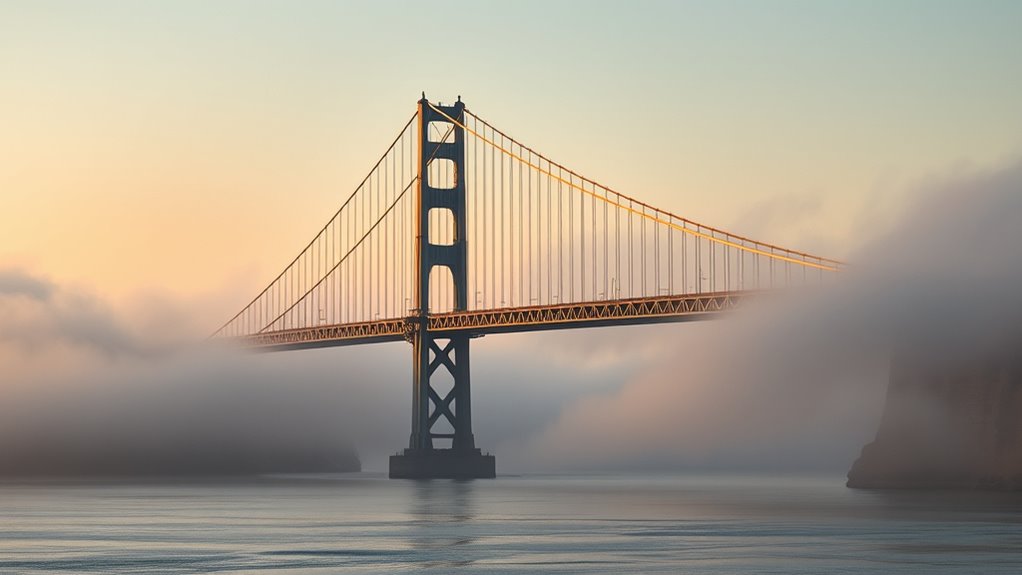
Have you ever wondered what bridges truly symbolize beyond their practical function? These structures do more than span rivers or valleys; they embody powerful ideas of passage and connection that resonate across cultures and histories. When you look at a bridge, you’re witnessing a proof to human ingenuity, but also a symbol filled with deeper meanings. The architectural significance of bridges isn’t just about engineering marvels; it reflects the cultural values and societal aspirations of the communities that build them. For example, famous suspension bridges often symbolize progress, innovation, and the desire to connect distant places. They stand as monuments to human achievement, showcasing how design and engineering can create enduring symbols of unity. The way bridges are constructed often mirrors a culture’s approach to problem-solving, emphasizing strength, resilience, and harmony. In many societies, the shape and style of a bridge echo local traditions, religious beliefs, or historical narratives, making each one a unique expression of cultural identity. Additionally, the structural design of bridges can reveal insights into the technological advancements and priorities of a society at a given time.
Cultural interpretations of bridges deepen this symbolism. In some traditions, a bridge represents a spiritual journey, a passage from one state of being to another. Think of the way ancient cultures saw bridges as gateways between worlds or domains, symbolizing transition through life’s various phases. In Chinese culture, for example, bridges often symbolize harmony and balance, serving as links that foster community and unity. Meanwhile, in Western stories and folklore, crossing a bridge can signify overcoming obstacles or entering a new chapter in life. These interpretations highlight how bridges serve as metaphors for overcoming challenges and embracing change. They’re seen as connectors not just of physical places, but also of ideas, emotions, and human experiences.
The act of crossing a bridge can evoke feelings of hope, anticipation, or even nostalgia. It’s a moment that often signifies leaving behind the old and stepping into the new. Whether it’s a literal crossing or a symbolic one in stories and art, bridges remind us of the importance of connection—between people, places, and ideas. Their presence in history and culture underscores their role as symbols of unity and passage. Ultimately, when you consider a bridge, you’re recognizing it as more than just a structure — it’s a powerful emblem of human desire to connect, to move forward, and to find common ground amidst differences. That’s the true essence of what bridges symbolize beyond their practical purpose.
Frequently Asked Questions
How Do Different Cultures Interpret Bridge Symbolism?
Different cultures interpret bridge symbolism in unique ways. You’ll find that many see bridges as symbols of progression, representing crossing from one life stage to another, or spiritual growth. In some cultures, they embody mythological symbolism, serving as gateways between worlds or domains. These cultural interpretations highlight the bridge’s role as a powerful symbol of connection, transformation, and passage, emphasizing its significance across diverse traditions and beliefs.
What Are the Psychological Effects of Crossing Bridges?
Crossing bridges can have a profound psychological impact, making you feel a sense of accomplishment, relief, or even anxiety. The emotional significance varies; some see it as a symbol of progression, fostering hope or reflection, while others might feel apprehensive about change. This experience often boosts confidence, encouraging you to face new challenges, or it can evoke nostalgia, reminding you of past journeys and personal growth.
Can Bridges Symbolize Emotional Journeys?
Yes, bridges can symbolize emotional journeys, representing your emotional transformation and personal growth. As you cross a bridge, you move through a phase of change, leaving behind old feelings and embracing new understanding. This act mirrors your inner development, signifying progress and resilience. Bridges remind you that even difficult passages can lead to growth, helping you see challenges as opportunities for emotional evolution and self-discovery.
How Do Bridge Designs Influence Their Symbolic Meaning?
You notice how bridge designs influence their symbolic meaning through architectural aesthetics and structural symbolism. When a bridge features elegant arches, it suggests harmony and stability, while a sleek, modern structure might symbolize progress. Coincidentally, these designs often reflect the cultural values and emotional intentions behind their construction, subtly shaping your perception of connection and passage. The design choices speak volumes about the message the bridge aims to convey, guiding your emotional journey.
Are There Historical Events Linked to Symbolic Bridge Crossings?
Yes, many historic crossings are linked to significant events. For instance, the Brooklyn Bridge symbolizes innovation during the 19th century, connecting New York City’s boroughs. During WWII, the Millau Viaduct in France represented resilience and recovery. As you learn about bridge construction, you’ll see how these crossings mark pivotal moments, serving as symbols of unity, progress, and hope in times of change and challenge throughout history.
Conclusion
As you reflect on the symbolism of bridges, remember that they represent both passage and connection in your life. They remind you to embrace change and build meaningful relationships. Like the saying goes, “A journey of a thousand miles begins with a single step.” So, step confidently across your bridges, knowing they’re there to lead you toward growth and unity. Embrace each crossing as an opportunity to transform and connect, shaping your path forward.

Under Kirsti’s gentle guidance, each insight and interpretation is thoughtfully crafted to uplift, educate, and encourage personal transformation. Whether you’re a dedicated seeker on a lifelong spiritual quest or taking your very first step into the mystical, we offer a wealth of knowledge and supportive community to illuminate your unique journey.