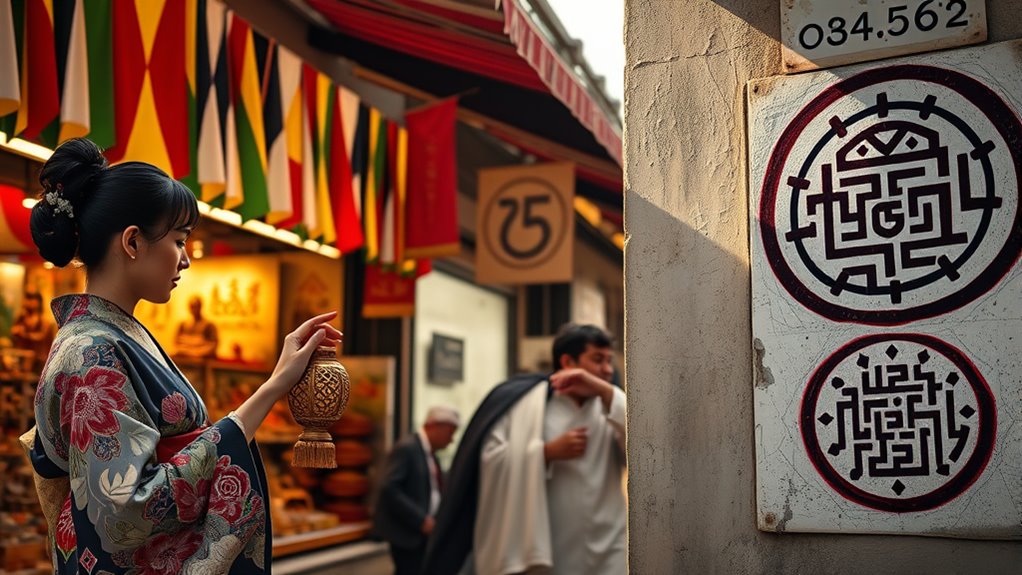

Understanding cultural differences in symbol interpretation helps you communicate more effectively across diverse backgrounds. Symbols can have varied meanings, emotions, and associations depending on cultural contexts. For example, gestures or colors that signify good luck in one culture might be offensive in another. Recognizing these differences prevents misunderstandings or offenses. If you pay attention, you’ll see how these subtle nuances influence interactions, and exploring further will reveal even more about maneuvering intercultural exchanges successfully.
Key Takeaways
- Symbols can have vastly different meanings across cultures, affecting communication and understanding.
- Rituals and cultural practices embed symbols that reinforce community values and may be misunderstood if misinterpreted.
- Colors, animals, and gestures carry varied connotations, requiring awareness of cultural context to avoid offense.
- Symbols evolve over time, reflecting societal changes and intercultural influences, which shape their interpretation.
- Transparency and cultural sensitivity in symbolic communication foster trust and reduce cross-cultural misunderstandings.

Symbols carry meaning, but their interpretation varies widely across cultures, shaping how people understand and respond to shared signs. When you encounter a symbol in one culture, it might evoke a specific emotion or tradition that doesn’t translate directly elsewhere. This disparity can lead to cross cultural misunderstandings, especially when symbols are embedded deeply in rituals and everyday communication. For instance, a gesture or color that signifies good luck in one country might be offensive or meaningless in another. Recognizing these differences is essential to avoid miscommunication, particularly in international settings or multicultural interactions.
One of the most prominent areas where symbolism plays a crucial role is in rituals, which serve as tangible expressions of cultural values and history. In these contexts, symbols are not just decorative; they carry layered meanings that reinforce community bonds and shared identities. When you participate in a ritual from a different culture, understanding the symbolism involved becomes vital. For example, in some cultures, the lighting of candles during ceremonies signifies hope and remembrance, while in others, it symbolizes spiritual enlightenment. If you misinterpret these symbols, you risk misunderstanding the ritual’s intent or even offending participants. This is why learning the symbolism in rituals helps foster respect and deeper engagement with diverse cultures.
Additionally, the use of affiliate links in cultural exchanges can influence perceptions and interactions, emphasizing the importance of transparency and understanding in cross-cultural communication.
Moreover, cross cultural misunderstandings often stem from differing associations with symbols. A particular animal, object, or gesture might have positive connotations in one culture but negative or neutral ones elsewhere. For example, the color white is associated with purity and weddings in many Western countries, but it’s linked to mourning in some Asian cultures. When you’re aware of these nuances, you can navigate conversations and interactions more thoughtfully, avoiding unintended offense or confusion. Recognizing that symbols are culturally constructed helps you appreciate the complexity behind seemingly simple signs.
Understanding symbolism in rituals also offers insights into how cultures encode their values and beliefs. It reveals that symbols aren’t static; they evolve with history, social changes, and intercultural exchanges. When you explore these layers, you gain a richer perspective on why certain symbols hold power and how they shape collective identities. This awareness allows you to approach unfamiliar symbols with curiosity rather than judgment, fostering cross-cultural respect and reducing misunderstandings. Ultimately, appreciating the diversity of symbolism in rituals enriches your intercultural experiences and broadens your understanding of the myriad ways humans communicate their deepest meanings through shared signs.

Intercultural Communication: A Practical Guide
As an affiliate, we earn on qualifying purchases.
As an affiliate, we earn on qualifying purchases.
Frequently Asked Questions
How Do Symbols Evolve Over Time Across Cultures?
You see symbols evolve through symbol adaptation as they move across cultures. When a symbol enters a new cultural context, people reinterpret its meaning based on local beliefs, values, and traditions. This process often involves modifying or blending symbols to fit new cultural narratives. Over time, these adaptations create diverse interpretations, making symbols dynamic and reflective of cultural exchange and historical change.
What Role Does Language Play in Symbol Interpretation?
Language shapes how you interpret symbols by highlighting linguistic nuances and semantic variations. When you understand the subtle differences in words and meanings across languages, you can grasp the deeper significance of symbols within different cultures. Your perception is influenced by these nuances, which can alter the symbol’s interpretation. Ultimately, language acts as a bridge, helping you decode symbolic meanings that might otherwise be misunderstood or overlooked.
Are There Universal Symbols Recognized Worldwide?
You’ll find some iconic representations, like the peace sign or heart, recognized worldwide, but most symbols are shaped by cultural symbolism. While certain images gain universal recognition, many rely on cultural context for meaning. Your understanding of these symbols depends on your cultural background, and what’s iconic in one society might not be in another. Recognizing this helps you appreciate both shared and diverse interpretations of symbols globally.
How Can Misinterpretations Be Minimized in Intercultural Communication?
To minimize misinterpretations, you should research cultural nuances, especially regarding gestural misunderstandings and color symbolism, before communicating. Use clear, simple language and confirm understanding through feedback. Avoid ambiguous gestures or colors that might carry different meanings across cultures. By respecting these differences, you foster effective intercultural communication, reduce confusion, and build trust. Your proactive approach guarantees your messages are accurately interpreted, strengthening international relationships.
Do Symbols Have Different Meanings Within Subcultures?
Yes, symbols can have different meanings within subcultures due to subcultural variations. You should recognize that the contextual significance of a symbol differs across groups, influencing how it’s understood. When communicating, you can minimize misunderstandings by learning about these subcultural nuances, respecting their unique interpretations, and asking clarifying questions. This approach helps guarantee your message resonates accurately within diverse subcultural contexts.

Dream Interpretation Decoded: Explore Science, Spirituality & Cultural Influences When Understanding Signs and Symbols in Your Dreams
As an affiliate, we earn on qualifying purchases.
As an affiliate, we earn on qualifying purchases.
Conclusion
You must recognize that symbols mean different things across cultures, that what’s positive in one place can be negative in another, and that understanding these differences deepens connections. By being aware of cultural contexts, by respecting diverse interpretations, and by embracing new perspectives, you foster better communication and stronger relationships. Remember, appreciating these differences isn’t just about avoiding misunderstandings; it’s about enriching your global awareness and cultivating meaningful intercultural exchanges.

52 Activities for Improving Cross-Cultural Communication
Used Book in Good Condition
As an affiliate, we earn on qualifying purchases.
As an affiliate, we earn on qualifying purchases.

Igbo-English Numbers Flashcards, Educational Language Learning Cards, Bilingual Teaching Resource, Language Teaching Aid, Cultural Learning, Learn to Count in Igbo & English
LEARN TO COUNT IN TWO LANGUAGES – Help children and beginners learn numbers in both Igbo and English…
As an affiliate, we earn on qualifying purchases.
As an affiliate, we earn on qualifying purchases.