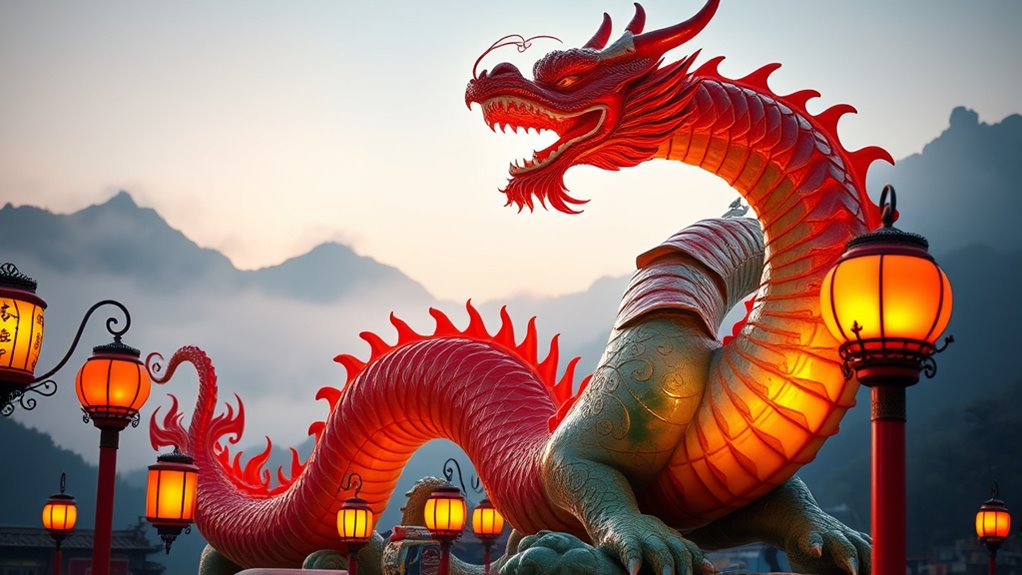

Dragon symbolism varies widely across cultures, embodying power, wisdom, and fear. In Chinese tradition, dragons are benevolent guardians of nature and symbols of good luck and strength, while in Western stories, they often represent destructive forces or fierce protectors of treasure. These myths reflect deep-rooted values and fears, shaping how societies view chaos and order. To uncover how these meanings evolve and influence modern culture, keep exploring these fascinating mythic symbols.
Key Takeaways
- Dragons symbolize power and strength, often representing authority or divine protection in various cultures.
- In Chinese tradition, dragons embody wisdom, good luck, and benevolence, contrasting with Western views of them as fierce beasts.
- They evoke fear through their mythic abilities like fiery breath and size, symbolizing chaos and destructive potential.
- Dragons serve as metaphors for personal growth, resilience, and overcoming fears across cultural narratives.
- Their dual symbolism reflects human values, fears, and aspirations, connecting ancient myths to modern interpretations of power and wisdom.
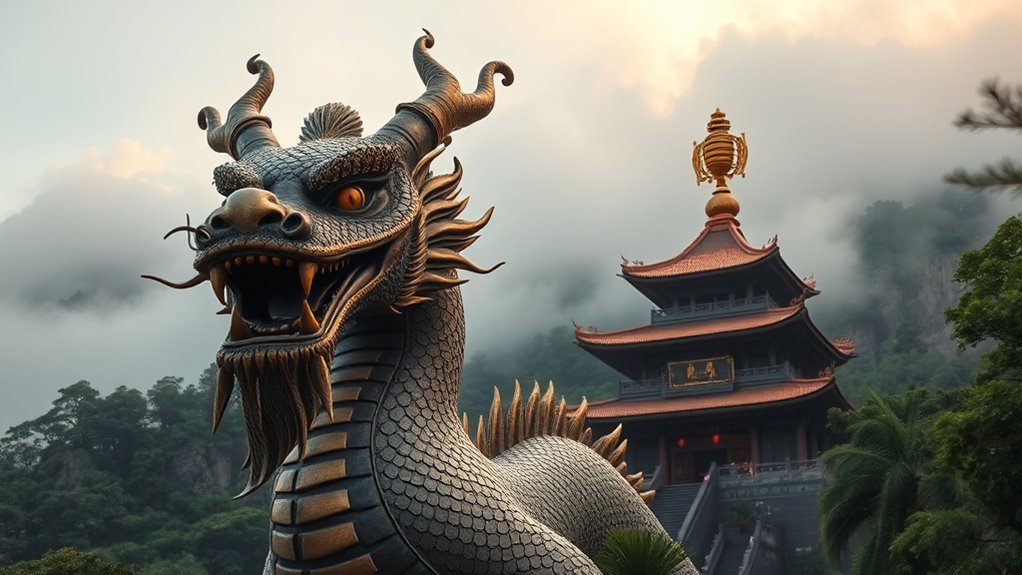
Have you ever wondered what dragons represent across different cultures? These mythical creatures have fascinated humans for centuries, embodying a complex mix of power, wisdom, and fear. In ancient mythology, dragons often appeared as mighty guardians or destructive forces, symbolizing both creation and chaos. For example, in Chinese culture, dragons are revered as benevolent beings that bring good luck, wisdom, and strength. They’re seen as protectors of nature and symbols of imperial authority, embodying harmony between humanity and the universe. Conversely, Western legends often portray dragons as fierce beasts guarding treasure or terrorizing villages, representing raw destructive power that must be subdued. This duality highlights how different cultures interpret the same creature through their unique lenses, assigning them roles that reflect their values and fears. Additionally, the symbolic significance of dragons has been shaped by historical narratives and cultural myths, influencing how societies perceive these creatures. Today, dragons continue to flourish in modern pop culture, maintaining their status as icons of power and mystique. Movies, books, and video games feature dragons as formidable adversaries or wise allies, often embodying traits like courage, resilience, and wisdom. Think of the dragons in fantasy series like “Game of Thrones” or “The Hobbit”—they’re not just beasts to be slain but symbols of legacy and strength. In this context, dragons often symbolize personal growth, mastery, and the pursuit of greatness. They serve as metaphors for overcoming challenges, inspiring audiences to face their own fears with courage and determination. This evolution from ancient myth to modern entertainment underscores how deeply ingrained the symbolism of dragons is in our collective consciousness. Despite their portrayal as mighty creatures, dragons also evoke fear. Their formidable size, fiery breath, and mythic powers remind us of the unpredictable forces of nature. Across cultures, the fear of dragons often stems from their association with chaos or destructive potential, serving as warnings or tests of bravery. Yet, this fear is balanced by admiration and reverence, recognizing their role as custodians of wisdom or symbols of transformation. Whether depicted as benevolent or terrifying, dragons hold a mirror to human fears and aspirations, embodying the tension between chaos and order, destruction and protection. In essence, dragons symbolize a spectrum of meanings that resonate deeply across time and cultures. They represent the power we aim to harness, the wisdom we seek, and the fears we endeavor to understand. From ancient mythology to modern pop culture, these creatures continue to captivate us, reminding us of our own duality and potential.
Frequently Asked Questions
How Do Dragons Symbolize Rebirth Across Different Cultures?
You see dragons symbolize rebirth through their mythological transformation, representing renewal and new beginnings. In many cultures, dragons undergo a metamorphosis, shedding old forms to emerge stronger, embodying mythological renewal. This transformation highlights their role as symbols of rebirth, inspiring hope and resilience. By illustrating the cycle of death and renewal, dragons remind you that change is a natural part of growth and spiritual evolution across diverse cultural stories.
What Are the Origins of Dragon Myths in Ancient Civilizations?
You’re standing at the dawn of civilization, where mythical creatures like dragons sparked legends that echo through time. The origins of dragon myths trace back to ancient legends from cultures like China, Mesopotamia, and Europe, where these awe-inspiring beings symbolized chaos, power, and protection. These stories, passed down through generations, reflect humanity’s fascination with nature’s mysteries and the desire to explain the unexplainable, fueling the mythic imagination for thousands of years.
How Do Modern Societies Interpret Dragon Symbolism Today?
Today, you see modern symbolism of dragons as representations of strength, wisdom, and protection. Societal perceptions often depict dragons as positive symbols, inspiring creativity and courage. In pop culture, they embody power and mystery, while in some traditions, they symbolize good fortune. You might also notice that dragons now serve as icons of individuality and resilience, reflecting contemporary values and inspiring personal growth and empowerment.
Are There Any Cultural Taboos Associated With Dragons?
You should know that cultural taboos around dragons often restrict how and where you can depict them. In some traditions, showing a dragon in certain colors or positions might be taboo, as it could symbolize chaos or disrespect. These dragon restrictions remind you to approach their imagery with reverence, especially in sacred spaces or rituals. Ignoring these taboos risks offending cultural beliefs or losing the dragon’s revered power.
How Do Dragons Influence Contemporary Art and Literature?
Dragons greatly influence contemporary art and literature by inspiring fantasy illustrations and shaping literary archetypes. You see them in books, movies, and games, where they symbolize power, wisdom, or fear. Their vivid imagery sparks your imagination, allowing artists and writers to explore themes of strength and mystery. By integrating dragons into modern stories, creators connect with ancient symbolism while enthralling audiences with fresh, dynamic interpretations.
Conclusion
Now that you’ve explored the rich tapestry of dragon symbolism, you see how these creatures embody power, wisdom, and fear across cultures. Like a mirror reflecting human fears and aspirations, dragons remind you that strength lies not just in might but in understanding and respect. So, next time you encounter a dragon’s legend, remember—it’s not just a beast but a symbol of your own inner potential waiting to be released.