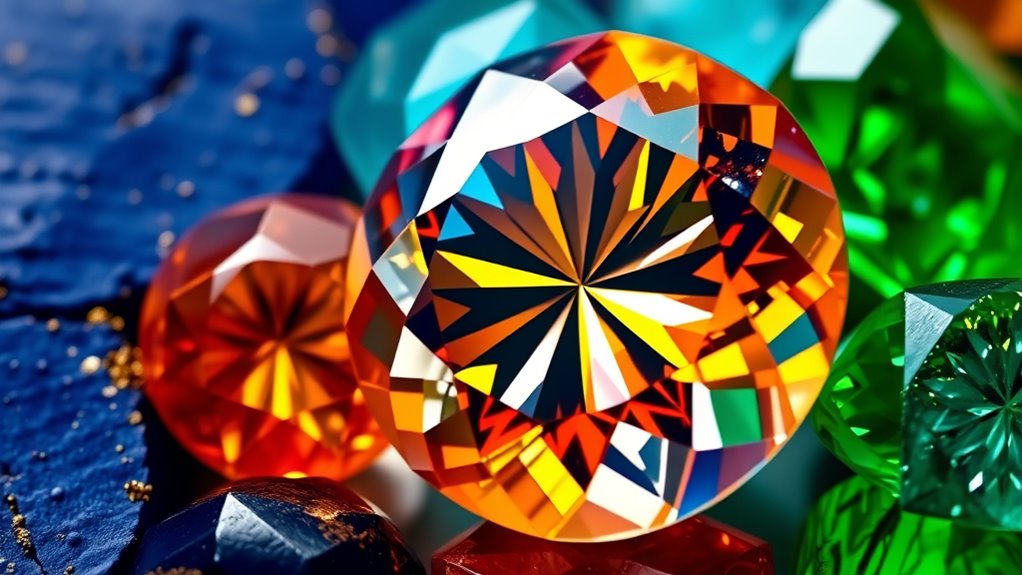

Gemstone symbolism connects you to centuries of cultural stories and spiritual beliefs. Like lapis lazuli, believed to bring protection and divine communication, or ruby, symbolizing passion and courage in Indian traditions, each stone carries a unique meaning. From jade promoting harmony to diamonds representing eternal love, these gems serve as powerful symbols of protection, wisdom, and personal growth. If you keep exploring, you’ll uncover even more fascinating stories behind these treasured stones.
Key Takeaways
- Gemstones like lapis lazuli and diamonds symbolize specific meanings such as protection and eternal love across cultures.
- Lapis lazuli was historically valued for divine communication and safeguarding against evil in ancient Egypt.
- Diamonds traditionally represent eternal love, strength, and clarity, often used in engagement and wedding jewelry.
- Cultural traditions assign unique energies to gemstones—rubies for passion in India, jade for harmony in China.
- The deeper symbolism of gemstones connects to their cultural heritage, spiritual significance, and personal growth.

Gemstone symbolism has fascinated people for centuries, with each stone believed to carry unique meanings and energies. You might be surprised to learn how deeply these stones are woven into human history, often representing more than just beauty. Many believe that gemstones possess healing properties that can influence your physical, emotional, and spiritual well-being. For example, amethyst is thought to promote calmness and clarity, while turquoise is associated with protection and good fortune. These beliefs aren’t just modern ideas—they’re rooted in centuries of cultural significance, where stones served as talismans, symbols of status, or spiritual tools.
Throughout history, various cultures have assigned specific meanings to different gemstones, shaping their significance across the globe. In ancient Egypt, lapis lazuli was highly valued, not only for its vibrant blue color but also for its believed ability to guard against evil and facilitate communication with divine forces. Similarly, in Indian tradition, rubies symbolize passion and vitality, often worn to ignite courage and strength. These cultural associations have helped elevate gemstones from mere adornment to powerful symbols of identity, spirituality, and protection. You can see this influence reflected in jewelry, ceremonial objects, and even modern healing practices.
When you wear or hold a gemstone, you’re connecting with a long history of cultural significance that’s been passed down through generations. Many cultures believed that gemstones carried specific energies that could influence your health and emotional state. For instance, jade was treasured in Chinese culture not only for its beauty but also for its supposed ability to promote harmony and balance within the body. This idea of healing properties extends beyond physical health, touching on emotional resilience and mental clarity. You might choose a stone like carnelian to boost your confidence or a moonstone to enhance intuition, trusting that these symbols carry the energy to support your well-being. Recognizing the cultural significance of gemstones deepens your appreciation and connection to their enduring symbolism.
Understanding the cultural significance of gemstones adds a layer of meaning to their beauty. It’s not just about aesthetics; it’s about connecting to a deeper story. Whether you see a diamond as a symbol of eternal love or a sapphire as a representation of wisdom, these stones carry centuries of symbolism that resonate with your personal journey. Recognizing their cultural roots can deepen your appreciation and help you select stones that align with your intentions. In this way, gemstones become more than decorative objects—they transform into powerful symbols of healing, protection, and cultural heritage.
Top picks for "gemstone symbolism lapi"
Open Amazon search results for this keyword.
As an affiliate, we earn on qualifying purchases.
Frequently Asked Questions
How Are Gemstone Symbols Determined Across Different Cultures?
You determine gemstone symbols through their cultural significance and mythological associations. Different cultures attribute unique meanings based on history, beliefs, and stories linked to each stone. For example, a gemstone’s color, rarity, or supposed powers influence its symbolism. These associations evolve over time, reflecting societal values and spiritual beliefs, which shape how people interpret and assign meaning to each gemstone across various cultures.
Do Gemstone Meanings Change Over Time or Remain Constant?
You might think gemstone meanings stay the same, but they actually change over time. Cultural variations influence their symbolic evolution, reflecting shifting values, beliefs, and traditions. While some meanings remain consistent, many gemstones adapt in significance, making their symbolism dynamic rather than fixed. This evolution allows gemstones to carry different cultural stories, ensuring their symbolic power stays relevant across generations and societies.
Can Gemstone Symbolism Influence Personal or Spiritual Development?
Yes, gemstone symbolism can influence your personal growth and spiritual enlightenment. When you connect with a gemstone’s meaning, it can serve as a reminder of your goals or values, strengthening your intentions. Wearing or meditating with specific stones helps you focus on your journey, fostering inner peace and clarity. Over time, this symbolism supports your spiritual development and encourages positive change, making gemstones powerful tools for your personal evolution.
Are There Rare Gemstones With Unique Symbolic Meanings?
Absolutely, rare gemstones possess unique, often misunderstood symbolic meanings. You’ll find cultural variations and mythological associations woven into their stories, making each gem special. For example, the rare Alexandrite symbolizes transformation, while the vibrant Tanzanite represents spiritual awakening. These gemstones carry fascinating stories across cultures, enriching your understanding. Their rarity amplifies their allure, inviting you to explore their enchanting, extraordinary symbolism and deepen your personal or spiritual journey.
How Do Modern Interpretations of Gemstone Symbolism Differ From Historical Ones?
Modern interpretations of gemstone symbolism often differ from historical ones through cultural reinterpretations and contemporary symbolism. You might see a gemstone representing personal growth or self-love today, whereas in the past, it symbolized status or spiritual protection. These shifts reflect changing values and societal perspectives. You’re encouraged to explore how current symbolism aligns with your personal meaning, making gemstones more relevant and meaningful beyond traditional associations.
Conclusion
Now that you know the rich symbolism behind gemstones like lapis lazuli and diamonds, you might wonder how these stones can influence your own life. Whether seeking wisdom, love, or strength, each gem carries a meaning that can inspire your journey. So, next time you choose a gemstone, ask yourself: isn’t it amazing how a simple stone can hold so much power and significance? Embrace its story and let it guide you.