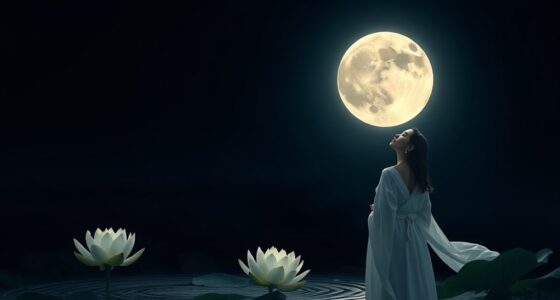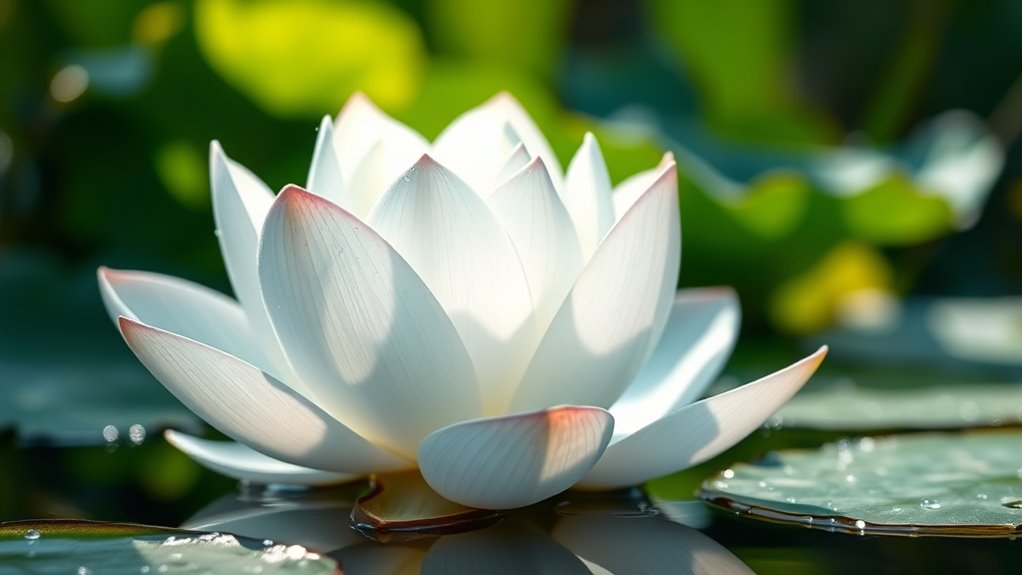
The lotus flower symbolizes purity and spiritual enlightenment in many Eastern traditions, representing resilience and transformation. As it rises from muddy waters to bloom beautifully, it reminds you that growth often comes from hardship. The lotus is often shown as a throne for deities or as a symbol of inner purity. If you explore further, you’ll discover how deeply this beautiful flower connects to spiritual awakening and inner resilience across cultures.
Key Takeaways
- The lotus symbolizes spiritual purity and awakening, rising pristine from muddy waters in Eastern traditions.
- In Buddhism and Hinduism, it often serves as a throne for deities, representing divine purity and enlightenment.
- The flower embodies resilience and transformation, illustrating the journey from darkness to spiritual illumination.
- Its recurring presence in art and religious iconography emphasizes inner growth and the pursuit of enlightenment.
- The lotus encourages hope, persistence, and viewing challenges as steps toward spiritual development.
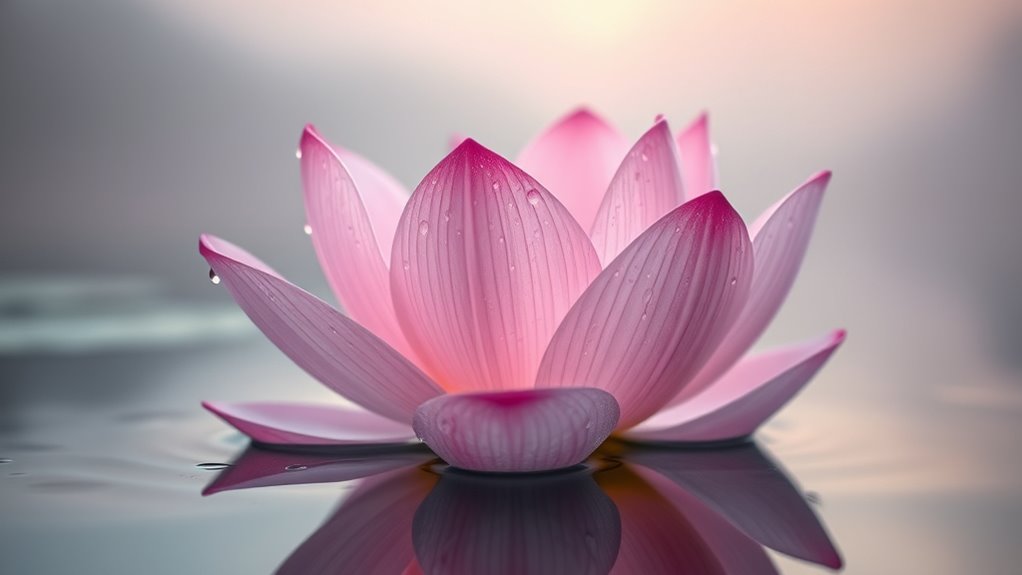
Have you ever wondered why the lotus blossom holds such profound significance across civilizations? It’s more than just a stunning flower; it’s a compelling emblem that resonates deeply within many spiritual traditions. The lotus’s capacity to ascend from muddy waters and bloom immaculate and pure makes it an ideal symbol of purity and enlightenment. In meditative exercises, the lotus often acts as a visual anchor, helping practitioners align their minds with ideals of spiritual awakening. Its presence in cultural representations highlights its importance—appearing in art, sculpture, and religious iconography as a reminder of the journey from darkness to illumination. The lotus’s ability to thrive in muddy waters also serves as a lasting metaphor—no matter how difficult circumstances may be, you can still rise above them and attain spiritual clarity. Its symbolism in this context encourages you to view challenges as essential steps toward spiritual awakening, fostering a sense of hope and persistence.
The lotus symbolizes purity and spiritual awakening, rising from darkness to illuminate inner growth and resilience.
Cultural depictions of the lotus are widespread across Eastern traditions like Buddhism and Hinduism. In these traditions, the lotus is often portrayed as a throne for deities or as a pedestal for sacred objects. Its depiction signifies divine purity, transcending the impurities of the material realm. For example, in Buddhist art, the Buddha is frequently shown seated or standing on a lotus pedestal, signifying his enlightenment and purity. Similarly, Hindu gods such as Lakshmi and Saraswati are linked with the lotus, emphasizing beauty, purity, and wisdom. These representations serve as visual reminders of spiritual ideals and the path toward enlightenment.
The symbolism of the lotus also extends into everyday cultural representations. In many Asian societies, motifs of the lotus appear in textiles, architecture, and jewelry, illustrating its importance in daily life. These visual cues keep the symbolism alive, inspiring individuals to cultivate purity of mind and heart amid their routines. The lotus’s ability to thrive in muddy waters serves as a lasting metaphor—no matter how difficult circumstances may be, you can still rise above them and attain spiritual clarity. Its beauty and resilience remind you that enlightenment isn’t about escaping the world but transforming it from within. By understanding the symbolic significance of the lotus, you can deepen your appreciation for its role in fostering inner growth and spiritual resilience.

Nitelat Lotus Flower Meditation Decor Signs, Just Breathe Lily Lotus Flower Room Decorations, Meditation Wood Decoration Home Decor For Zen Yoga Room Bedroom Desk Table Shelf 5×5 Inch
【Dimension】The wooden box is 5" x 11" in size, which is a good size and easy to move…
As an affiliate, we earn on qualifying purchases.
As an affiliate, we earn on qualifying purchases.
Frequently Asked Questions
How Does the Lotus Flower Influence Modern Western Art?
You see the lotus flower influence modern Western art through its stunning aesthetics and symbolism. Artists incorporate its elegant shapes, vibrant colors, and spiritual meaning to evoke purity and growth. The flower’s serene presence inspires contemporary art pieces, blending Eastern symbolism with Western creativity. By using the lotus as a motif, artists connect viewers to themes of enlightenment, renewal, and beauty, making it a powerful source of contemporary art inspiration.
Are There Specific Rituals Involving Lotus Flowers in Eastern Ceremonies?
Sure, because who wouldn’t want to join a ritual purification ceremony involving delicate lotus flower offerings? You’re expected to present fresh lotus blooms, symbolizing purity, during sacred ceremonies. These rituals often include bathing in holy waters or meditative practices, with the lotus acting as a bridge to enlightenment. So, next time you see a lotus in an Eastern ceremony, remember, it’s more than just pretty—it’s a spiritual VIP.
What Are the Differences in Lotus Symbolism Among Asian Cultures?
You’ll notice that cultural interpretations and regional symbolism shape how different Asian cultures view the lotus. In India, it represents spiritual awakening and purity, while in China, it symbolizes harmony and beauty. Japan associates the lotus with rebirth and resilience, and Southeast Asian traditions often see it as a symbol of enlightenment. These regional differences highlight how the lotus’s meaning varies, reflecting each culture’s values and spiritual beliefs.
Can Lotus Flowers Be Used for Medicinal Purposes?
Yes, lotus flowers can be used for medicinal purposes. You can find their medicinal properties in herbal remedies, especially in traditional Asian medicine. The roots, seeds, and leaves are often used to treat ailments like inflammation, digestive issues, and fever. By incorporating lotus parts into your herbal remedies, you benefit from their natural healing qualities, making them a valuable addition to holistic health practices.
How Does Climate Affect the Growth of Sacred Lotus Plants?
Oh, lucky you, living where climate impact is the secret recipe for sacred lotus growth! Climate dramatically influences growth conditions, so if it’s too cold, the lotus chills out and stalls. Too hot, and it might overheat. Rain, humidity, and sunlight all play their part, making the environment either a perfect nursery or a harsh challenge. Basically, your climate decides whether these divine flowers thrive or just dream of enlightenment.

MyGift Black Buddha Head Sculpture Zen Garden Set with Lotus Tealight Candle Holders and Wooden Display Tray, Decorative Tabletop Home Accent
Complete Zen Garden Set – Includes a black Buddha head sculpture, two lotus tealight candle holders, and a…
As an affiliate, we earn on qualifying purchases.
As an affiliate, we earn on qualifying purchases.
Conclusion
As you learn about the lotus flower’s deep symbolism, it’s no surprise that many are drawn to its beauty and meaning. Sometimes, life’s little coincidences—like spotting a lotus in a serene pond—remind you of purity and enlightenment just when you need it most. These moments seem meant to happen, guiding you toward inner peace and spiritual growth. Keep your eyes open; the lotus’s quiet message might be just what you need to find your own way.

UNIFT Lotus Flower Om Necklace for Women Stainless Steel Chic Aum Om Ohm Lotus Flower Pendant Necklace Hindu Meditation Jewelry Gift (gold 1)
Design : necklace is composed of lotus flower combined with the Sanskrit symbol "om", which symbolizes that you…
As an affiliate, we earn on qualifying purchases.
As an affiliate, we earn on qualifying purchases.

Lotus Flower Wall Decor – Black Metal Yoga Wall Art with Lotus Design, Spiritual Home Décor Sculpture for Meditation Spaces, Living Room, Bedroom, Office
Perfect Size for Versatile Placement: Measuring 34.8 x 26.7 cm, this lotus wall decor is compact yet impactful,…
As an affiliate, we earn on qualifying purchases.
As an affiliate, we earn on qualifying purchases.