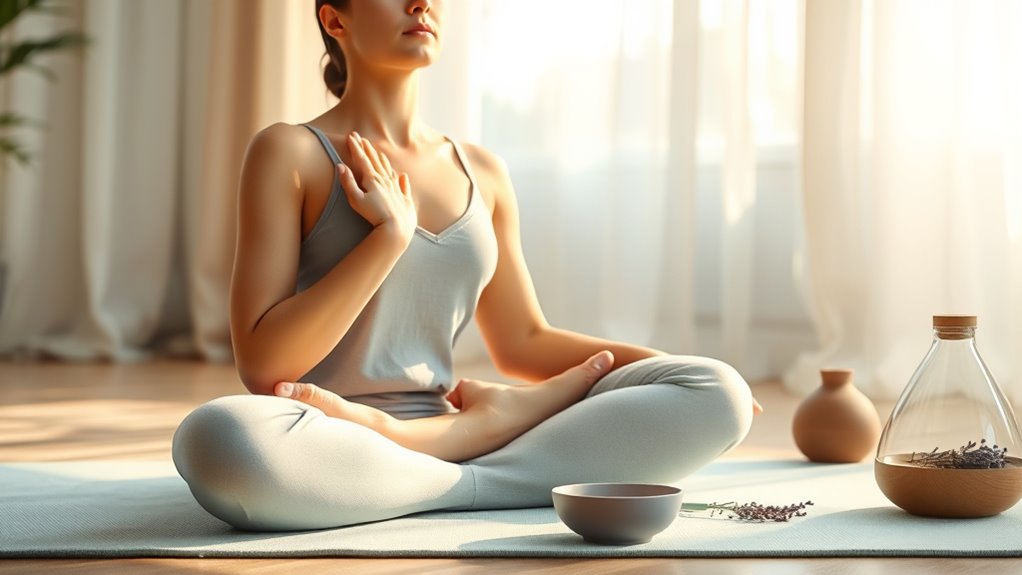

To ease stress by stimulating your vagus nerve, try deep, slow breathing exercises like diaphragmatic or box breathing, which activate your parasympathetic nervous system and promote relaxation. Cold exposure, such as cold showers or splashing cold water on your face, also triggers this reflex and enhances vagal tone over time. Incorporating these simple techniques regularly can markedly improve resilience and calmness—keep exploring to learn how to maximize their benefits.

Get art and craft supplies delivered free with Prime
- Fast, free delivery on millions of items
- Prime Video, Amazon Music and more included
- Member-only deals all year
Key Takeaways
- Practice slow, deep breathing exercises like diaphragmatic or box breathing to activate the vagus nerve and promote relaxation.
- Incorporate cold exposure, such as cold showers or splashes, to stimulate the vagus nerve and reduce stress.
- Engage in regular mindfulness or meditation practices to enhance vagal tone and improve stress resilience.
- Use diaphragmatic breathing during stressful situations for quick calming effects.
- Gradually increase cold exposure duration to strengthen vagus nerve function over time.

The vagus nerve plays a crucial role in regulating your body’s stress response, digestion, and heart rate. When you engage in specific techniques like breathing exercises or cold exposure, you can stimulate this nerve, helping to calm your nervous system and reduce stress levels. Breathing exercises, particularly slow, deep breaths, activate the parasympathetic nervous system, which counteracts the fight-or-flight response. By deliberately slowing your inhale and exhale, you signal your vagus nerve to send calming signals throughout your body. Practices like diaphragmatic breathing or box breathing are especially effective, as they promote relaxation and help lower heart rate and blood pressure. Consistent practice can make these techniques a natural way to manage anxiety or stress during challenging moments. Additionally, engaging in regular vagal stimulation routines can strengthen the nerve’s responsiveness over time, leading to more sustained stress resilience.
Cold exposure is another powerful method to stimulate your vagus nerve. Briefly immersing your face or body in cold water triggers a reflex that activates the vagus nerve, promoting a sense of calm. When you expose yourself to cold, your body reacts by increasing vagal tone, which can improve your mood and resilience to stress. This could be as simple as splashing cold water on your face, taking cold showers, or even practicing cold plunges if you’re more adventurous. The shock of cold activates a vagal response that helps regulate your nervous system and enhances your overall feeling of well-being. Over time, regular cold exposure can strengthen your vagus nerve’s function, making you more resistant to stress and better equipped to handle daily pressures.
Both breathing exercises and cold exposure are accessible, low-cost techniques that you can incorporate into your daily routine. You don’t need special equipment or a lot of time; even a few minutes each day can create significant benefits. When you focus on your breath, ensure you’re taking slow, controlled inhales and exhales to maximize vagal stimulation. Similarly, start with shorter cold exposures and gradually increase the duration as you become more comfortable. These practices work synergistically to enhance your vagal tone, which in turn improves your capacity to relax, recover quickly from stress, and maintain a balanced nervous system. By regularly engaging in breathing exercises and cold exposure, you’re actively nurturing your vagus nerve, ultimately fostering a calmer, more resilient body and mind.
diaphragmatic breathing exercises
As an affiliate, we earn on qualifying purchases.
As an affiliate, we earn on qualifying purchases.
Frequently Asked Questions
Can Vagus Nerve Stimulation Improve Mental Health Conditions?
Yes, stimulating the vagus nerve can improve mental health conditions by enhancing psychological benefits. It works by activating neural pathways that regulate mood, reduce anxiety, and lower stress levels. When you stimulate your vagus nerve through techniques like deep breathing or meditation, you can experience a calmer mind and better emotional resilience. This natural approach supports your mental well-being by strengthening the connection between your nervous system and brain functions.
Are There Any Risks Associated With Vagus Nerve Stimulation?
Think of vagus nerve stimulation as steering a delicate ship through calm waters. While generally safe, you should be aware of safety precautions to avoid potential side effects like hoarseness, dizziness, or tingling. It’s wise to consult a healthcare provider before proceeding, ensuring proper guidance. Conscious navigation minimizes risks, allowing you to harness the nerve’s calming power without unintended storms.
How Long Does It Take to Notice Benefits From Vagus Nerve Techniques?
You might start noticing symptom improvement within days to a few weeks of practicing vagus nerve techniques, but timing expectations can vary. Consistent practice boosts the chances of experiencing benefits sooner. Some people feel calmer and less stressed after a single session, while others notice gradual improvements over time. Stay patient and persistent, as regular engagement increases the likelihood of achieving meaningful results in your stress relief journey.
Is Vagus Nerve Stimulation Effective for Everyone?
Ever wonder if vagus nerve stimulation works for everyone? It really depends on individual variability, so the technique’s efficacy can differ from person to person. Some find immediate relief, while others see gradual benefits. You might need to try different methods to discover what works best for you. Keep experimenting with deep breathing, cold exposure, or meditation, and stay patient to find the most effective approach tailored to your needs.
Can Lifestyle Changes Enhance Vagus Nerve Health?
Yes, lifestyle changes can enhance your vagus nerve health. Focus on diet modifications by eating anti-inflammatory foods rich in omega-3s, and improve your sleep hygiene by establishing a consistent sleep schedule and avoiding screens before bed. These habits help activate your vagus nerve, reducing stress and promoting overall well-being. Incorporating these simple adjustments into your daily routine can make a significant difference in nerve function and stress management.
Conclusion
By activating your vagus nerve, you can transform stress into calm, chaos into clarity. It’s like switching from a noisy, crowded room to a peaceful sanctuary with just a few simple techniques. As you breathe deeply or hum softly, you shift from tension to relaxation, turning inner turmoil into tranquility. Embrace these methods, and you’ll discover that easing stress isn’t just a practice—it’s a powerful way to reclaim your peace amidst life’s chaos.
Fall Picks
fall essentials
As an affiliate, we earn on qualifying purchases.