
Exposure to natural sunlight helps regulate your body’s internal clock, known as the circadian rhythm, by signaling your brain’s master clock, the SCN. Morning light promotes wakefulness and syncs your sleep-wake cycle, while evening light can disrupt it. Sunlight also suppresses melatonin during the day and boosts Vitamin D production, supporting immunity and mood. Understanding how light influences your health can help you optimize your daily routine — learn more about how to harness this powerful natural resource.
Key Takeaways
- Morning sunlight signals the brain’s master clock (SCN), helping synchronize the body’s circadian rhythm with the natural day-night cycle.
- Exposure to natural light suppresses melatonin during the day, promoting alertness and better sleep at night.
- Proper light timing, especially morning sunlight, reinforces healthy sleep-wake patterns and overall circadian alignment.
- Insufficient or late-night artificial light exposure can disrupt circadian rhythms, leading to sleep disturbances and health issues.
- Sunlight supports physiological processes like Vitamin D synthesis, which is vital for immune function and overall health.
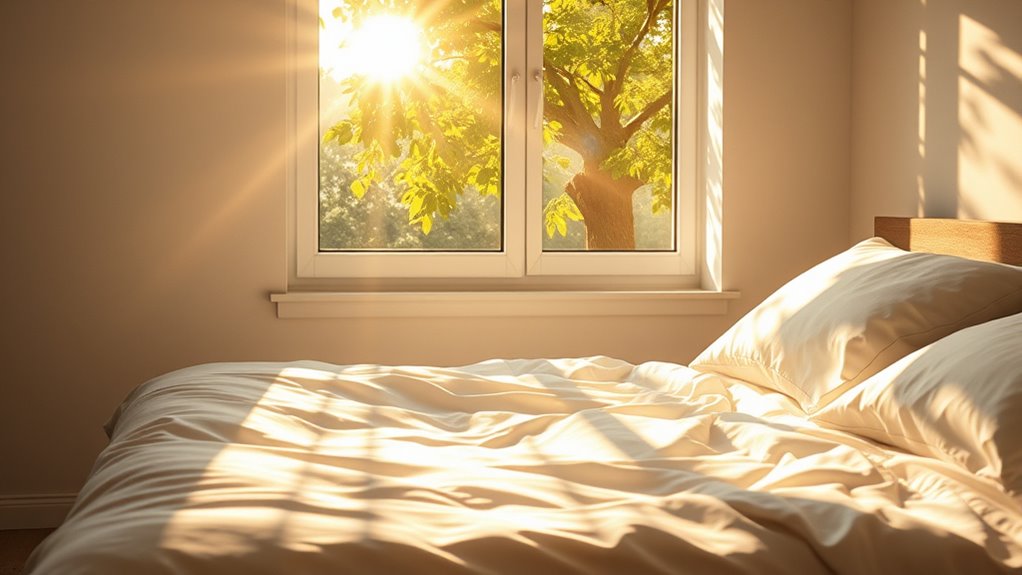
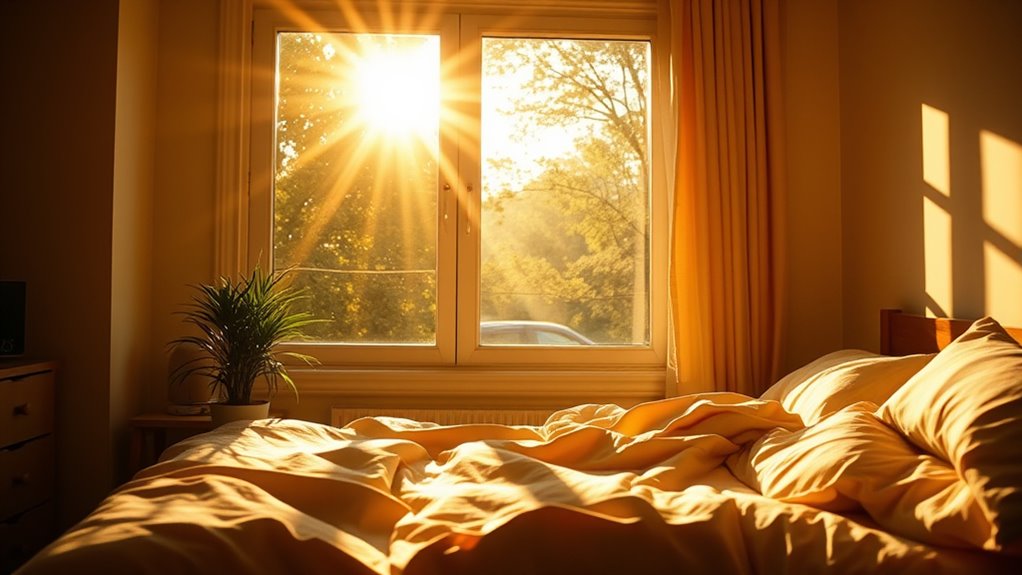
Have you ever wondered how sunlight influences your body’s internal clock? It’s a fascinating connection that impacts your overall well-being in ways you might not fully realize. When your eyes are exposed to natural light, especially in the morning, it sends signals to your brain’s master clock—the suprachiasmatic nucleus (SCN). This master clock helps synchronize your circadian rhythm, which is your internal 24-hour cycle regulating sleep, alertness, and various bodily functions. One of the key ways sunlight influences this cycle is through melatonin regulation. Melatonin is a hormone that promotes sleepiness, and its production is suppressed when you’re exposed to light. During the day, sunlight inhibits melatonin secretion, helping you stay alert and awake. As evening approaches and natural light diminishes, melatonin levels rise, preparing your body for rest.
But sunlight’s role isn’t limited to sleep regulation. It also plays a pivotal part in Vitamin D synthesis, an essential nutrient responsible for bone health, immune function, and mood regulation. When sunlight hits your skin, it triggers a chemical reaction converting a precursor molecule into Vitamin D3. This process is most efficient during midday sun exposure, so getting outside during those hours can greatly enhance your Vitamin D levels. Without enough sunlight, your body struggles to produce sufficient Vitamin D, which can lead to deficiencies affecting your skeletal system and immune defenses. This highlights how natural light not only helps you sleep better but also supports essential physiological processes.
Furthermore, the timing and intensity of sunlight exposure influence how well your circadian rhythm functions. Consistent morning light exposure helps reinforce your body’s natural cycle, making it easier to wake up feeling refreshed and alert. Conversely, exposure to bright artificial light late in the evening can disrupt your internal clock, making it difficult to fall asleep and reducing sleep quality. It’s important to strike a balance—getting enough natural light during the day to promote Vitamin D synthesis and melatonin regulation, while avoiding excessive artificial light at night.
In essence, sunlight acts as a natural regulator, aligning your internal clock with the external environment. It helps maintain a healthy circadian rhythm, optimizes sleep patterns, and supports your immune system through Vitamin D production. Being mindful of your light exposure—seeking morning sunlight and limiting bright screens before bed—can profoundly improve your health and daily functioning. Your body’s internal clock is finely tuned to the cycles of day and night, and sunlight is the key to keeping it in harmony.

LanSuper Light Therapy Lamp, 10000 Lux UV-Free Happy Therapy Lamp, Full Spectrum Sunlight Lamp with Remote Control, Light Therapy Floor Lamp with 10 Color Temperature & 6 Brightness & Timer-White
UV-FREE & FULL SPECTRUM: Light therapy lamp can effectively regulate body's internal clock, allow you to fall asleep…
As an affiliate, we earn on qualifying purchases.
As an affiliate, we earn on qualifying purchases.
Frequently Asked Questions
How Does Artificial Light Affect Our Circadian Rhythms?
Artificial light can disrupt your circadian rhythms by interfering with melatonin production, leading to disrupted melatonin levels. When you’re exposed to artificial light at night, you might experience circadian misalignment, which can affect sleep quality and overall health. This disruption makes it harder for your body to follow its natural sleep-wake cycle, causing fatigue and other health issues over time. Reducing artificial light exposure before bed helps maintain your circadian health.
Can Sunlight Exposure Improve Mental Health?
Yes, sunlight exposure can improve your mental health by boosting Vitamin D levels, which are linked to better mood regulation. When you spend time outside, your body produces more Vitamin D, helping to reduce feelings of depression and anxiety. Regular sunlight exposure also supports your circadian rhythm, improving sleep quality and overall mental well-being. So, make time for sunlight to help lift your mood naturally.
What Are Optimal Sunlight Exposure Durations for Health?
You should aim for about 15-30 minutes of sunlight daily—it’s like giving your health a superpower! This exposure helps your body produce Vitamin D, boosting your mood and immunity, while also supporting skin health. Keep in mind, too much can harm your skin, so balance is key. Regular, moderate sunlight not only enhances your well-being but also keeps your skin healthy and vibrant.
How Does Seasonal Sunlight Variation Impact Sleep Patterns?
Seasonal sunlight variation can disrupt your sleep patterns, especially during shorter winter days. Reduced sunlight may lead to Seasonal Affective Disorder, affecting your mood and sleep quality. It also impacts Vitamin D synthesis, which supports overall health. To combat these effects, try to get outside during daylight hours, use light therapy if needed, and maintain a consistent sleep schedule to help your body adapt to seasonal changes.
Are There Risks Associated With Too Much Sunlight Exposure?
Think of sunlight as a double-edged sword wielded by a vigilant guardian. Too much exposure can lead to skin damage, like a relentless fire searing your skin, and harm your eye health, risking conditions like cataracts. While sunlight offers essential benefits, overdoing it exposes you to these risks. Protect yourself with sunscreen, sunglasses, and moderation to harness its power safely and keep your health intact.

Sleep ZM Blue Light Blocking Glasses for Women + Men – Better Sleep + Anti Eye Strain Protection – Computer Screens & Gaming – Black Wayfarer – 99% Night-time Amber Lens
WIND DOWN BEFORE BED — SleepAid orange lenses filter 99% of blue light so your brain starts its…
As an affiliate, we earn on qualifying purchases.
As an affiliate, we earn on qualifying purchases.
Conclusion
By embracing sunlight daily, you help keep your circadian rhythm balanced, much like a finely tuned orchestra. Light acts as a natural conductor, guiding your sleep, mood, and overall health. When you prioritize natural light, you support your body’s internal clock, preventing disruptions that can lead to health issues. So step outside, soak in the sunlight, and let it harmonize your body’s rhythm—because, just like a sunrise, good health begins with the right light.

Nordic Naturals Vitamin D3 5000, Orange – 120 Mini Soft Gels – 5000 IU Vitamin D3 – Supports Healthy Bones, Mood & Immune System Function – Non-GMO – 120 Servings
WHY VITAMIN D3 – Vitamin D plays an important role in building strong bones, and helping to regulate…
As an affiliate, we earn on qualifying purchases.
As an affiliate, we earn on qualifying purchases.

JALL Full-Screen Wake Up Light Sunrise Alarm Clocks for Bedrooms, White Noise Machine for Heavy Sleepers, 25 Natural Sounds, Dual Alarms, FM Radio, 17 Dimmable Colors, Bluetooth Speaker
【Full-Screen Sunrise Simulation for Heavy Sleepers】 This sunrise alarm clock mimics natural dawn, glowing from dark to full…
As an affiliate, we earn on qualifying purchases.
As an affiliate, we earn on qualifying purchases.