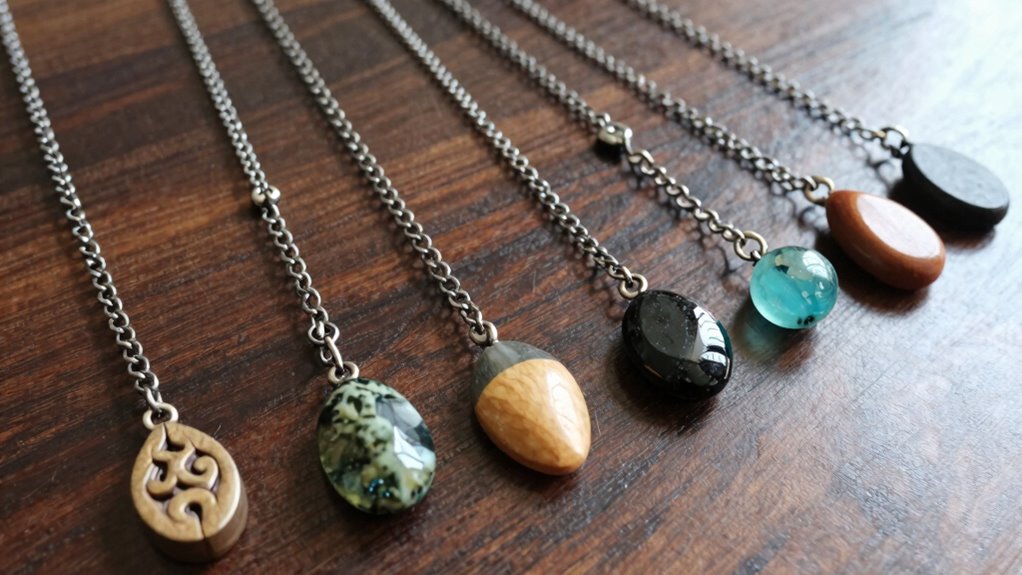

When exploring pendulum sets, you’ll notice they can be made from various materials like brass, wood, glass, or crystal. These choices affect how the pendulum swings, its accuracy, and appearance. Denser materials like metal or stone provide stability, while lighter ones may vary in motion. Decorative pieces often use translucent or textured materials for visual appeal. Understanding these materials helps you appreciate both their functionality and beauty—keep going to discover more about how each impacts pendulum design.
Key Takeaways
- Common pendulum materials include brass, wood, glass, copper, and silver, each offering different aesthetic and functional qualities.
- Dense metals like brass and copper provide stability and accuracy for scientific experiments.
- Wood and lightweight materials are often used in decorative or educational pendulums for visual appeal.
- Material surface texture affects air resistance and swing consistency, influencing measurement precision.
- Modern materials such as plastics and composites are designed to reduce friction and improve pendulum performance.
If you’re new to creating pendulums, understanding the common materials used in pendulum sets is essential. The materials you choose can influence not only the appearance of your pendulum but also its functionality and connection to historical uses and scientific principles. Historically, pendulums have been crafted from a variety of materials, each chosen for their availability, durability, and aesthetic qualities. Early pendulums, dating back to the 17th century, often used brass or wood, reflecting the materials readily available at the time. These materials were chosen because they were easy to carve, shape, or cast, allowing for precision and craftsmanship. Over time, other materials like glass, crystal, and metals such as copper and silver became popular, especially in decorative or ceremonial contexts. These historical uses underline how materials were often selected not just for function but also for symbolism, beauty, and status.
From a scientific perspective, the choice of material directly impacts the pendulum’s performance by affecting its weight, swing, and accuracy. The core scientific principle behind a pendulum is simple harmonic motion, which relies on gravity and the mass distribution of the pendulum. Materials that are dense and uniform, like metal or heavy stone, tend to produce more consistent and stable swings because they add weight without compromising balance. Conversely, lightweight materials like plastic or thin wood may introduce variability, making the pendulum less precise. The scientific principle also emphasizes that the length of the string or rod, combined with the material’s weight distribution, determines the period of swing. For example, a metal pendulum with a smooth, polished surface can reduce air resistance, allowing for more accurate time measurement. Additionally, the material’s surface texture can influence how air interacts with the pendulum during its swing. Selecting appropriate materials for specific purposes ensures optimal functionality, whether for precise measurement or aesthetic display. Interestingly, advancements in material science have led to the development of specialized materials that minimize air resistance and friction, further enhancing accuracy. Furthermore, understanding historical material choices allows enthusiasts and scientists alike to appreciate the evolution of pendulum design and its implications for accuracy and symbolism.
Choosing materials like polished brass or crystal can also enhance the visual appeal, making the pendulum not only a scientific instrument but also a decorative piece. If you’re designing a pendulum for scientific experiments, prioritize dense, smooth materials that promote consistent swings. If aesthetics are your goal, consider materials with unique textures or translucent qualities. Ultimately, understanding historical uses and scientific principles behind different materials helps you select the right components for your project, whether for precision, decoration, or educational purposes. The right choice of material ensures your pendulum functions effectively while also reflecting its intended purpose and historical context.

Hicarer 4 Pieces Copper Metal Dowsing Spiritual Point Pendulum Copper Pointed Pendant Meditation Sets for Healing, Chakra, Balance Meditation, Scrying, Dowsing Divination(Classic,Gold)
- Material: Copper metal, durable and rust-resistant
- Size: Pendant: 1.5 x 0.6 inches; Chain: 7.2 inches
- Weight: Approximately 21 grams
As an affiliate, we earn on qualifying purchases.
As an affiliate, we earn on qualifying purchases.
Frequently Asked Questions
How Do I Choose the Right Pendulum Set for My Needs?
To choose the right pendulum set, consider the material weight and your aesthetic preferences. You want a set with a weight that feels comfortable and balanced in your hand, neither too heavy nor too light. Also, pick materials that match your style—wood offers a classic look, while metal provides a sleek, modern vibe. Ultimately, select a pendulum set that resonates with your needs and appeals to your visual taste.
Are There Safety Concerns With Using Different Materials?
Think of choosing pendulum materials like selecting a safe playground for your kids—material safety is key. Some materials, like certain woods or metals, are non-toxic and safe to handle, but others might contain toxic substances. Always check for toxic material considerations and avoid any with harmful chemicals. If you’re unsure, opt for hypoallergenic, non-toxic options like polished wood or stainless steel, ensuring your experience remains safe and enjoyable.
Can I Customize or Make My Own Pendulum Set?
Yes, you can definitely customize or make your own pendulum set. This DIY project allows you to experiment with different materials, like metal, wood, or glass, giving you a unique experience. By comparing materials, you can choose what best suits your needs and aesthetic. Just make sure you compare the weight, durability, and safety of each material, and follow safety guidelines during your material comparison to create a functional, personalized pendulum.
How Do Different Materials Affect Pendulum Accuracy?
Think of your pendulum as a dancer whose rhythm depends on its costume. Different materials influence accuracy like costumes alter dance moves. Durable materials like metal maintain steady swings, while softer ones like wood might wobble under environmental effects like humidity. Environmental factors can sway your pendulum’s precision, making some materials more reliable than others. Choose wisely, and your pendulum will perform its dance with grace and accuracy.
What Maintenance Is Required for Various Pendulum Materials?
You need to regularly check and clean your pendulum, especially if it’s made from sensitive materials like wood or certain metals, which can be affected by humidity or temperature changes. For durable materials like brass or steel, maintenance is minimal—just occasional cleaning. Keep your pendulum in a stable environment, avoid exposure to extreme conditions, and inspect for wear or corrosion. Proper care guarantees consistent accuracy and prolongs its lifespan.
Conclusion
Think of choosing your pendulum set like selecting a trusty compass for a journey. Each material is a different map, guiding you through the landscape of your intuition. As you explore, trust your instincts to pick the one that resonates most. Remember, your pendulum is your faithful guide—like a compass pointing true north—helping you navigate your personal path with clarity and confidence. Embrace the adventure, and let your chosen materials lead the way.