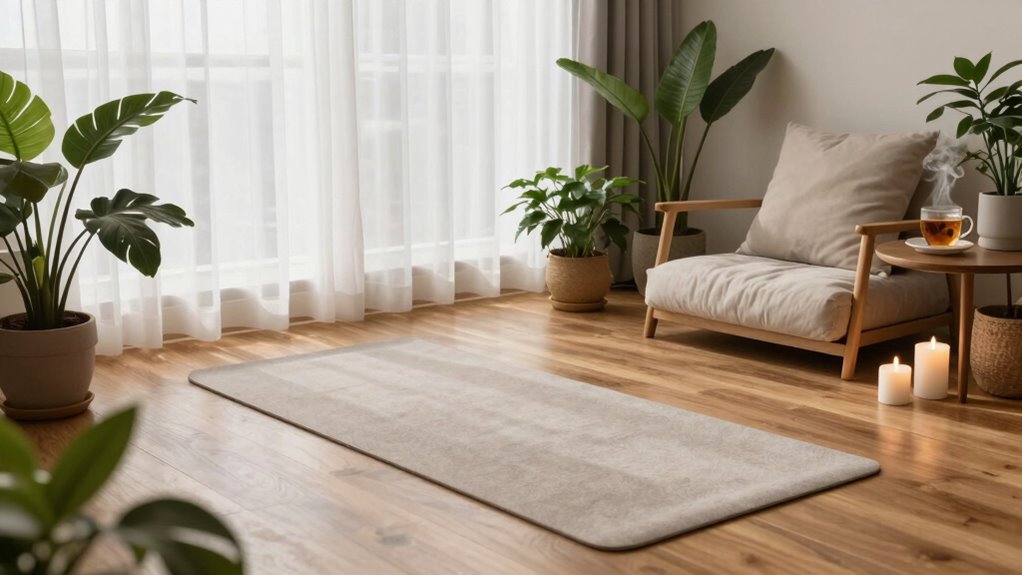

To create a wellness space at home, choose a quiet, clutter-free corner and add soft lighting like lamps or candles for coziness. Incorporate natural elements such as plants or stones, and use soothing scents like lavender or chamomile through diffusers or candles. Set up a comfortable spot for meditation or breathing exercises, and include sensory tools like textures or sounds. Keep the environment clean and ventilated, making it a inviting sanctuary for relaxation and mindfulness practices. Learn more about designing your perfect space.

Get art and craft supplies delivered free with Prime
- Fast, free delivery on millions of items
- Prime Video, Amazon Music and more included
- Member-only deals all year
Key Takeaways
- Choose a quiet, clutter-free area with soft lighting and natural elements to foster calm and tranquility.
- Dedicate space for mindful breathing, meditation, and gentle stretching to promote relaxation.
- Incorporate aromatherapy, scented candles, and textured sensory tools to enhance sensory engagement.
- Use mindfulness and relaxation techniques regularly to deepen mental well-being and presence.
- Ensure good air quality and maintain cleanliness to create a healthy, inviting sanctuary for unwinding.
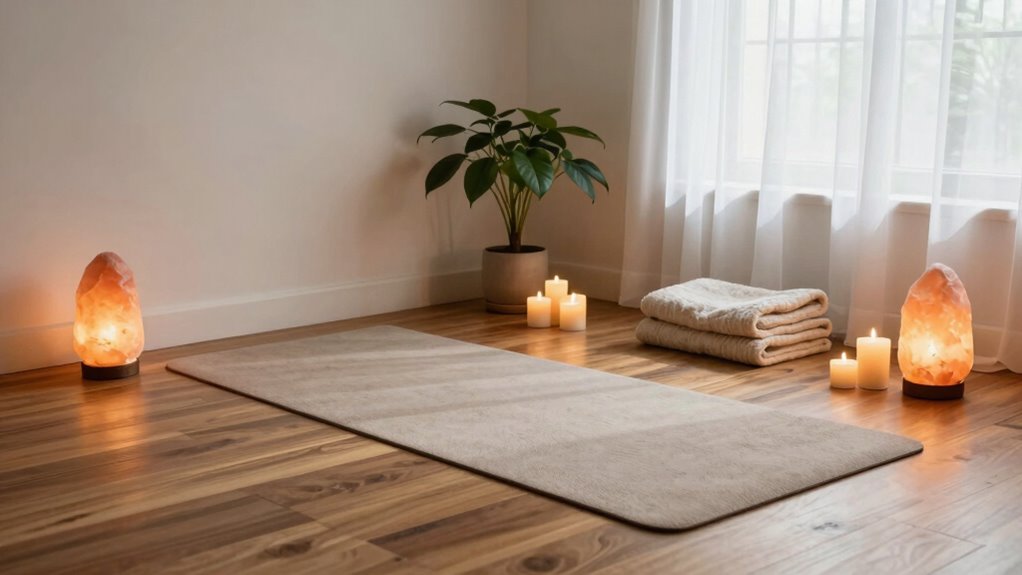
Creating a wellness space at home can substantially boost your mental and physical health, especially when your environment supports relaxation and self-care. The goal is to craft a sanctuary where you can unwind, reconnect, and recharge. To start, choose a quiet corner or a dedicated room that feels inviting and free from distractions. Declutter the space to create a calming atmosphere—less clutter means less stress. Incorporate soft lighting, such as warm lamps or candles, to foster a cozy ambiance. Natural elements like plants or stones can also enhance the sense of tranquility, grounding you in nature even indoors. Including biodiversity, such as a variety of indoor plants, can further enrich your wellness environment by promoting a connection to nature and supporting mental well-being.
A key element of your wellness space should be a focus on mindful breathing. This simple but powerful practice helps center your mind and reduce anxiety. Dedicate a small area for seated meditation or breathing exercises. You can sit comfortably on a cushion or chair, close your eyes, and take slow, deep breaths, paying attention to the sensation of air entering and leaving your body. Practicing mindful breathing regularly in this space trains your mind to stay present and calm, which benefits your overall mental health. Incorporating relaxation techniques can also deepen your relaxation, such as gentle stretching or progressive muscle relaxation. Engaging in mindfulness practices can further enhance your sense of calm and presence. Additionally, incorporate aromatherapy practices. Diffusing essential oils like lavender, chamomile, or eucalyptus can create a soothing environment. The gentle scent not only relaxes your senses but also enhances your meditation or breathing exercises. You might also keep a small bowl of dried herbs or scented candles nearby, adding to the sensory experience. The aroma can serve as a gentle reminder to pause, breathe deeply, and reconnect with yourself. Including sensory elements like textures or sounds can also enrich your overall experience in this space. Integrating air quality considerations, such as ensuring good ventilation or using air purifiers, can further promote a healthy environment for your wellness routines.
essential oil diffuser for relaxation
As an affiliate, we earn on qualifying purchases.
As an affiliate, we earn on qualifying purchases.
Frequently Asked Questions
What Is the Ideal Size for a Wellness Space?
The ideal size for your wellness space depends on your needs, but generally, allocate at least 4×4 feet for a meditation corner and aromatherapy setup. This size allows enough room for a comfortable cushion, small table, and essential oils without feeling cramped. If you want a broader area for movement or yoga, consider a dedicated 6×6 feet or larger space. Prioritize comfort and tranquility over size to create an effective wellness zone.
How Much Should I Spend on Creating a Wellness Area?
Did you know that a dedicated wellness space can boost your mental health by up to 30%? You should allocate a realistic budget based on your space and needs. Start with cost-effective ideas like repurposing existing furniture or using affordable decor. Budget planning helps you avoid overspending while creating a calming environment. Typically, spending between $100 to $500 can set up a cozy, functional wellness space without breaking the bank.
Can I Incorporate Technology Into My Wellness Space?
Yes, you can definitely incorporate technology into your wellness space. Use smart lighting to create calming, adjustable atmospheres, enhancing relaxation. Meditation apps can guide your mindfulness practices, making it easier to focus and de-stress. Integrate these tools seamlessly, so your space feels modern yet peaceful. Technology enhances your wellness routine without overpowering the tranquility, helping you stay consistent and motivated in your self-care journey.
How Often Should I Update or Refresh My Wellness Space?
You should refresh your wellness space every few months, because who doesn’t love the thrill of change? Keep it personal with updated personalized decor and new scent selections to maintain your sanctuary’s calming vibe. Regular updates prevent your space from feeling stale, ensuring it stays inspiring and fresh. Plus, a little shift in decor or scent can rejuvenate your mindset, making your wellness space a true reflection of your evolving self.
Is It Better to Create a Designated Room or a Corner?
A corner often works better if you want flexibility and budget considerations, while a designated room offers more personalization options for your wellness space. If you have limited space or want a temporary setup, a corner is ideal. However, if you seek a dedicated retreat, investing in a specific room allows for more personalization options to tailor the environment exactly to your needs.
Conclusion
Creating a wellness space at home is a powerful way to prioritize your mental and physical health. Just dedicating even 10 minutes a day can considerably reduce stress and boost your mood. Did you know that according to a recent study, individuals who incorporate mindfulness spaces into their homes report a 30% increase in overall well-being? So, take the time to design your sanctuary — it’s an investment in your happiness and resilience.
Fall Picks
fall essentials
As an affiliate, we earn on qualifying purchases.