
The Djed pillar reveals that true stability combines strength, support, and resilience. Its broad base and layered design symbolize a foundation that endures through change, emphasizing the importance of balance and unwavering support. This ancient symbol shows that stability isn’t just physical but also cultural and spiritual, embodying endurance and continuity. If you want to understand how these principles shape both ancient and modern ideas of resilience, keep exploring to uncover more.
Key Takeaways
- The Djed Pillar symbolizes enduring stability and resilience in both spiritual and physical contexts.
- Its design, with a broad base and narrowing top, exemplifies effective weight distribution and structural support.
- As a religious symbol, it emphasizes the importance of a solid foundation for longevity and cultural continuity.
- Inspires modern architecture through principles of support, balance, and permanence.
- Represents trust, durability, and resilience, highlighting the significance of stability in life and culture.
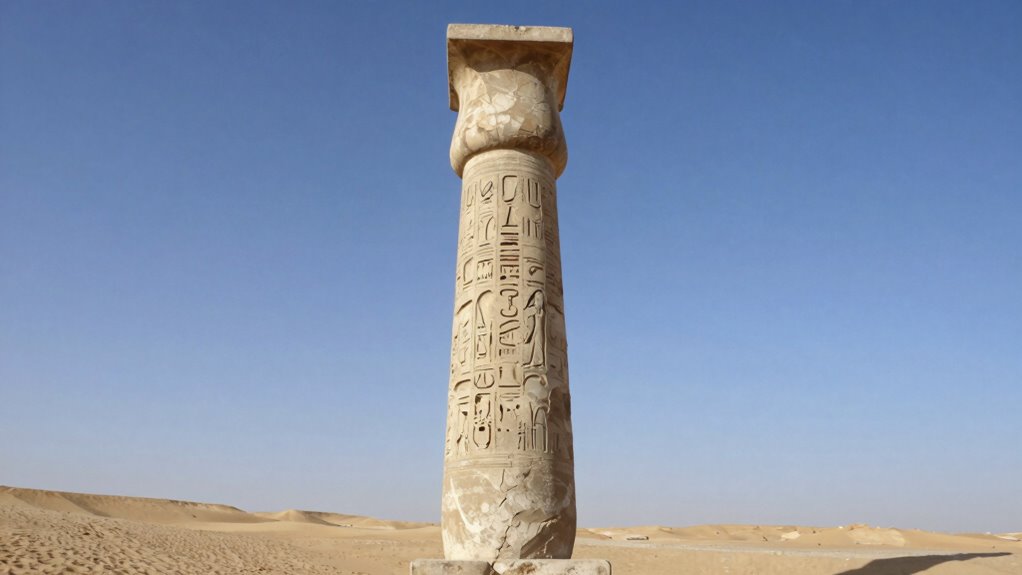
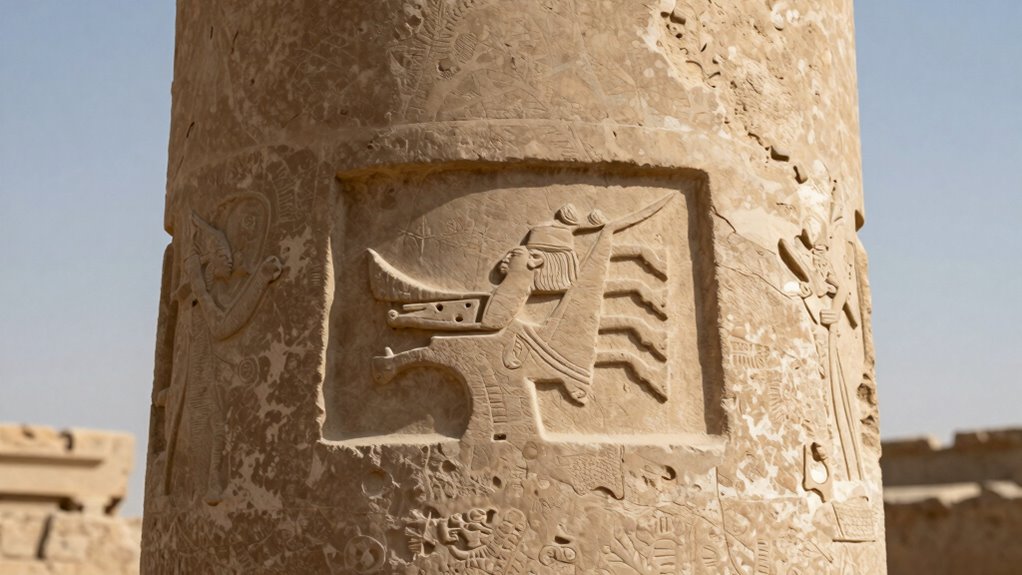
The Djed Pillar, an ancient Egyptian symbol, is widely recognized for representing stability and endurance. When you look at this iconic monument, you’re not just seeing a piece of ancient art—you’re witnessing a symbol packed with deep meaning rooted in ancient symbolism. The pillar’s design, with its broad base narrowing toward the top and topped with a series of horizontal lines, embodies the idea of unwavering strength. It’s a visual expression of stability that transcends time, reminding you of the importance of a solid foundation in both physical and spiritual domains. This symbolism was central to Egyptian culture, where the Djed served as a powerful emblem of resilience and continuity, reinforcing the idea that stability is essential to enduring success. The design principles of the Djed also demonstrate an understanding of structural stability, which continues to influence architectural practices today. In terms of architectural significance, the Djed Pillar holds more than symbolic weight; it also influences how you might think about structural design. The ancient Egyptians understood that a wide base provides support for what’s above, an idea that’s still relevant in modern architecture. When you consider the design of the Djed, it’s clear that it reflects a sophisticated understanding of structural stability—distributing weight evenly and creating a sense of grounded permanence. This understanding influenced not only religious monuments but also practical architectural practices in Egypt. The Djed’s enduring presence in temples and tombs highlights its role as a stabilizing element, both physically and spiritually, serving as a cornerstone of ancient architecture that prioritized longevity and durability. It’s no accident that the symbol became associated with Osiris, the god of rebirth and resurrection, emphasizing that true stability involves resilience through change. As you explore the role of the Djed Pillar, you realize that it’s more than just an artifact; it’s a testimony to how ancient cultures conceptualized stability as a fundamental part of life. The symbol’s layered meanings—spiritual endurance, structural support, cultural continuity—offer insights into how the Egyptians viewed their world. In architecture, the Djed’s design principles remind you that stability isn’t just about physical strength but also about creating a sense of trust and permanence. Additionally, the symbolic significance of the Djed has helped shape modern interpretations of resilience and endurance in various fields. Recognizing the symbol’s enduring influence can deepen your understanding of how ancient symbols continue to shape today’s ideas of strength and resilience. When you reflect on this, it becomes clear that the Djed Pillar exemplifies how ancient symbolism can inform contemporary understanding of structural and spiritual resilience, making it a timeless symbol of enduring strength. Moreover, studying the Djed can provide valuable insights into cultural symbolism that remain relevant for understanding human history and psychology.
As an affiliate, we earn on qualifying purchases.
Frequently Asked Questions
How Was the Djed Pillar Originally Used in Ancient Egyptian Rituals?
You see, in ancient Egyptian rituals, the Djed Pillar was used as a powerful symbol of stability and endurance. During Egyptian ceremonial practices, people believed it represented Osiris, the god of resurrection and eternal life. You’d often see it in temples and rituals to invoke divine stability, strength, and renewal. Its presence reinforced the idea that spiritual and cosmic order was maintained through these ancient religious symbols, ensuring societal harmony.
What Materials Were Used to Construct the Original Djed Pillar?
You learn that the original Djed Pillar was constructed with materials like limestone, wood, and sometimes sandstone, reflecting ancient construction techniques. These materials were carefully chosen for their durability and symbolic significance in Egyptian culture. The pillar’s design embodies religious symbolism, representing stability and the god Osiris. By using these materials, the ancient Egyptians emphasized the pillar’s sacred role in rituals, symbolizing eternal life and spiritual endurance.
Are There Modern Symbolic Equivalents to the Djed Pillar’s Stability?
Modern psychological resilience and corporate branding symbolism serve as equivalents to the djed pillar’s stability. You see these in logos and practices that emphasize strength, endurance, and unwavering support. Just like the ancient pillar, they represent a foundation you can rely on during challenges. These symbols remind you to stay grounded, resilient, and consistent, reinforcing stability in personal and professional life.
How Does the Djed Pillar Influence Contemporary Architectural Design?
The djed pillar profoundly influences contemporary architectural design, serving as a powerful symbol of modern stability. You’ll see it inspire structural elements that emphasize resilience, like supporting columns and foundations that embody strength and endurance. Its architectural symbolism encourages architects to create buildings that not only stand the test of time but also convey a sense of unwavering stability, making structures feel as enduring as the ancient pillar itself.
What Other Ancient Artifacts Symbolize Stability Similar to the Djed Pillar?
You’ll find that artifacts like the Greek column or the Chinese dragon also symbolize stability through mythical symbolism and cultural significance. Greek columns, especially the Doric style, embody strength and durability, while Chinese dragons represent protection and balance. These symbols connect deeply with their cultures’ values, much like the Djed Pillar, highlighting stability’s universal importance across different civilizations.
Conclusion
By examining the Djed pillar, you see how ancient Egyptians symbolized stability and resilience. This powerful image encourages you to reflect on how foundational principles can support strength through change. The pillar’s enduring presence in history suggests that true stability comes from a solid core—whether in beliefs, structures, or life itself. So, let this ancient symbol remind you to build your life on firm, lasting values that can withstand the tests of time.