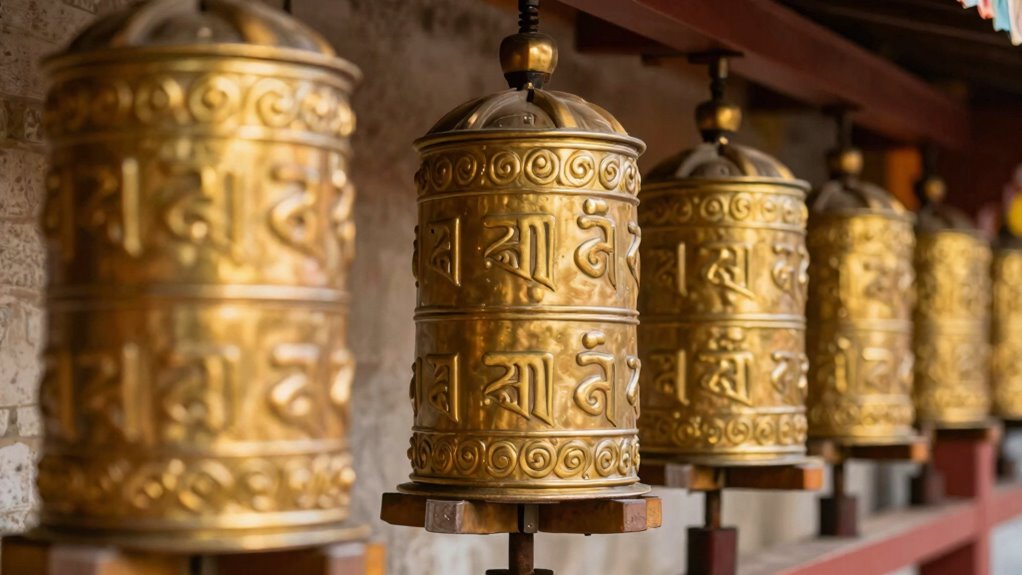

Prayer wheels are powerful symbols of spiritual energy that turn motion into devotion and compassion. When you spin a wheel, you align your body and mind with sacred mantras, such as Om Mani Padme Hum, invoking blessings. The act of turning represents the cycle of life and enlightenment, while your intention spreads positive energy to all beings. Keep exploring to discover more about how this simple gesture embodies profound spiritual meaning.
Key Takeaways
- Prayer wheels symbolize the Wheel of Dharma, representing Buddha’s teachings and the cycle of life, death, and rebirth.
- Spinning the wheel embodies the motion of spiritual energy, mantra recitation, and interconnectedness with the universe.
- The act of turning the wheel aligns physical movement with mental focus, fostering mindfulness and devotion.
- Repetition of mantras during spinning invokes blessings, compassion, and purifies negative karma.
- The gesture of spinning signifies active participation in spiritual practice and universal harmony.
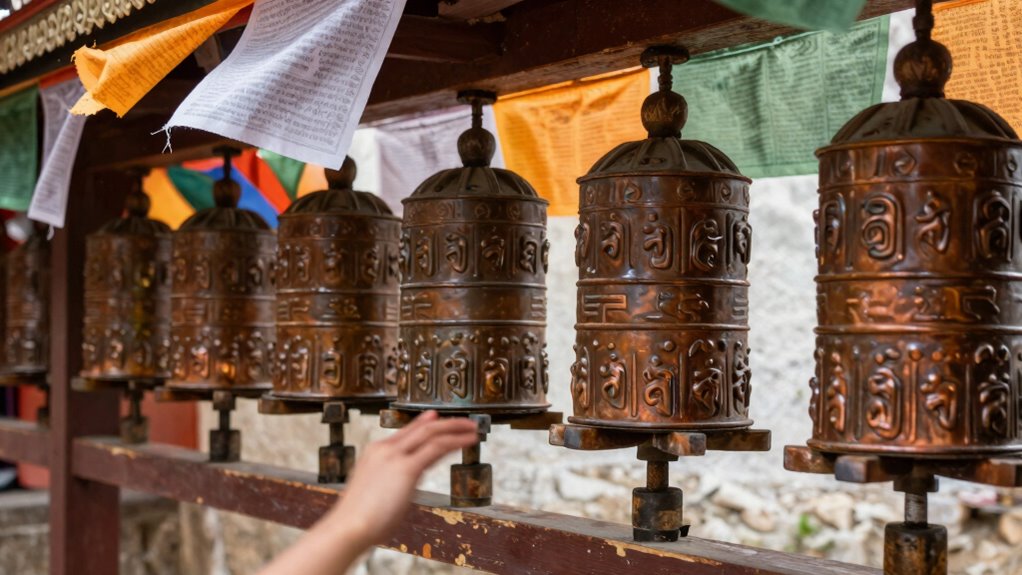
Have you ever wondered how prayer wheels work to spread blessings and compassion? These cylindrical devices, often spun clockwise, serve as powerful tools in spiritual practice, especially within Tibetan Buddhism. When you turn a prayer wheel, you’re not just moving a physical object—you’re engaging in a profound act of mantra repetition. Each rotation is believed to release spiritual blessings, purify negative karma, and generate compassion for all beings. The practice transforms physical motion into a symbol of the universe’s interconnectedness, turning repetitive prayer into a dynamic act of devotion.
Spinning prayer wheels transforms physical motion into powerful acts of blessing, compassion, and interconnectedness.
The motion of spinning the prayer wheel is deeply rooted in ritual significance. It’s more than just a mechanical action; it’s a sacred gesture that embodies the flow of spiritual energy. As you turn the wheel, you participate in a ritual that aligns your mind and body with the divine. The rhythmic turning becomes a meditative act, helping you focus your intentions and cultivate mindfulness. In many traditions, the act of spinning the wheel is seen as a way to amplify the power of the prayers inscribed on its surface, often written in the form of mantras—sacred sounds or phrases repeated to invoke spiritual blessings. The repetition of these mantras, whether Om Mani Padme Hum or others, is believed to generate spiritual merit, which accumulates with each rotation. Additionally, the symbolism of the wheel enhances the spiritual significance of the practice, reminding practitioners of the cycles of life and enlightenment. Recognizing the interconnectedness of all beings deepens the practitioner’s understanding of universal compassion and the importance of compassionate action.
The ritual significance of prayer wheels extends beyond their physical form. They symbolize the Wheel of Dharma, representing the teachings of Buddha and the ongoing cycle of life, death, and rebirth. By turning the wheel, you’re participating in this eternal cycle, aligning your spiritual journey with the universal flow of compassion and wisdom. This act of devotion isn’t limited to individual benefit; it’s meant to benefit all sentient beings. The continuous motion echoes the endless nature of compassion and the perpetual spread of blessings. Incorporating the concept of interconnectedness, the practice illustrates how individual actions can contribute to universal harmony and spiritual growth.
Ultimately, prayer wheels are a tangible reminder that spiritual practice isn’t just about silent meditation; it’s about embodying your intentions through action. Whether you spin a wheel at a monastery, in a personal prayer corner, or along a sacred trail, you’re actively participating in a ritual that combines mantra repetition with symbolic motion. Another aspect of spiritual practice is that it can be adapted for personal use, making these ancient traditions accessible to anyone seeking mindfulness and compassion. In doing so, you connect with a tradition that transforms simple physical acts into powerful expressions of faith, compassion, and the pursuit of enlightenment.
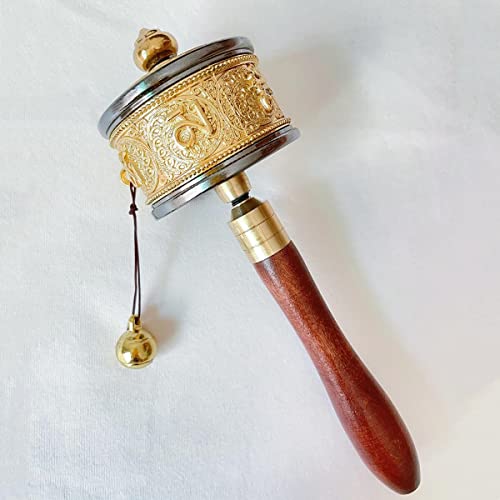
Copper Hand Held Prayer Wheel with Tibetan Buddhist Six-Character Truth Premium Buddha Scriptures, Wooden Handle Prayer Wheel for Praying, blessing, Meditation, Healing, Relaxing, Yoga
- Size and Dimensions: 7 inches long, 2.36 inches wide
- No Batteries Needed: Manual operation, portable design
- Material: Wooden handle, copper/alloy parts
As an affiliate, we earn on qualifying purchases.
As an affiliate, we earn on qualifying purchases.
Frequently Asked Questions
What Materials Are Prayer Wheels Typically Made Of?
You’ll find prayer wheels are usually made from materials like metal, wood, and sometimes precious metals for special occasions. These materials enhance the meditative practice by providing a tangible connection to spiritual symbolism. As you spin the wheel, it’s believed to amplify your intentions and prayers. The choice of material often reflects the wheel’s significance, helping you focus your mind and deepen your spiritual connection during the ritual.
How Old Are Prayer Wheels in Spiritual History?
You’re holding a spiritual relic that’s over a thousand years old, making prayer wheels ancient custodians of faith. Their historical origins trace back to 11th-century Tibet, and they hold profound cultural significance, believed to amplify prayers and blessings. These sacred objects have traveled through centuries, embodying devotion and tradition, and continue to inspire millions today. Their age and enduring presence make them powerful symbols of spiritual continuity across generations.
Can Non-Buddhists Use Prayer Wheels?
Yes, non-Buddhists can use prayer wheels, especially in interfaith practices and cultural adaptations. They often see prayer wheels as symbols of peace or meditation tools beyond their original spiritual context. When using them, you participate in a shared practice that promotes mindfulness and compassion. Respect the tradition, but feel free to incorporate prayer wheels into your personal or interfaith spiritual exploration, honoring their significance across cultures.
Do Different Cultures Have Unique Prayer Wheel Designs?
Different cultures do have unique prayer wheel designs, each a brushstroke on a vast canvas of spiritual expression. These variations reflect cultural symbolism, embodying local beliefs and artistic styles. You’ll find designs ranging from simple spun cylinders to ornate, jewel-encrusted structures. This diversity reminds us that spiritual tools adapt to cultural landscapes, yet all serve a shared purpose: turning intention into action, like a river flowing toward enlightenment.
Are There Specific Prayers or Mantras for Prayer Wheels?
Yes, specific prayers or mantras are often inscribed or recited with prayer wheels. You might focus on mantra repetition, like “Om Mani Padme Hum,” believed to invoke compassion. These mantras carry spiritual symbolism, representing deep intentions for compassion, wisdom, or protection. As you spin the wheel, you’re believed to amplify your prayers, connecting with spiritual energy through the motion and meaning behind each inscription, enhancing your spiritual practice.
Conclusion
As you spin a prayer wheel, imagine it as a river flowing with blessings, carrying your intentions far and wide. Each rotation transforms your thoughts into a powerful act of compassion and hope. By engaging in this simple yet profound practice, you become part of a timeless cycle of spiritual energy—like a gentle breeze spreading ripples across a tranquil lake. Embrace the motion, and let your prayers resonate beyond the present moment.