
Engaging with a Zen sand garden through touch and raking helps you find calm and stay present. The tactile act of moving your fingers through the sand anchors your focus and soothes your mind. Creating patterns reflects your inner state and promotes mental clarity. This simple, mindful practice reduces stress and encourages emotional balance. If you explore further, you’ll discover how this quiet ritual fosters deeper tranquility and personal harmony.
Key Takeaways
- Tactile engagement with sand in Zen gardens promotes mindfulness and helps calm the mind through sensory connection.
- Raking patterns fosters present-moment awareness, reducing stress and enhancing emotional balance.
- The physical act of shaping sand offers a meditative practice that cultivates mental clarity and tranquility.
- Working with sand connects individuals to their emotions, allowing personal expression and inner harmony.
- Incorporating tactile routines from Zen gardens extends calmness and mindfulness into daily life.
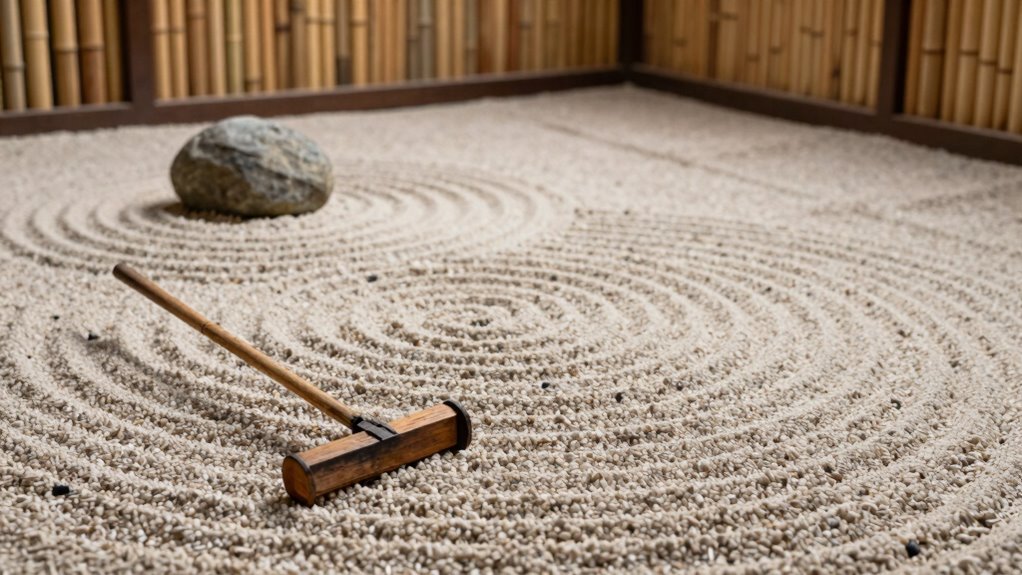
Zen sand gardens, also known as karesansui, are minimalist landscapes designed to evoke tranquility and contemplation. When you approach these carefully crafted spaces, you’re invited into a world where simplicity fosters deep reflection. As you run your fingers through the textured sand or rake intricate patterns, you engage in meditative mindfulness—an act that grounds you in the present moment. This tactile interaction isn’t just about aesthetics; it’s a deliberate practice that calms your mind and sharpens your focus. You find yourself letting go of distractions, allowing your thoughts to settle as you create or restore the patterns. In these quiet moments, the garden becomes more than visual beauty; it transforms into a tool for mental clarity and emotional balance. Incorporating mindfulness practices like raking can deepen your connection to both nature and inner peace.
Your engagement with a Zen sand garden is also a form of artistic expression. Each stroke of the rake, each pattern you form, reflects your inner state and personal interpretation of harmony. You’re not simply recreating nature’s elements but translating your sense of calm into visual forms. This act of shaping the sand offers a creative outlet that’s both spontaneous and intentional. It’s an opportunity to explore your own sense of balance and order, expressing feelings that words might fail to capture. As you shape the landscape, you participate in a centuries-old tradition of merging art with spiritual practice, making every pattern uniquely yours. The process encourages patience and mindfulness, reminding you that beauty often lies in simplicity and deliberate effort. Recognizing the importance of tactile engagement can enhance your overall sense of well-being and mindfulness.
Furthermore, working with the sand awakens a tactile appreciation for calmness. The texture beneath your fingertips connects you to the present, grounding your thoughts in physical sensation. This sensory experience heightens your awareness of the here and now, reinforcing the meditative quality of your practice. It’s a gentle reminder that tranquility isn’t just a mental state but also something you can cultivate through touch and intentional action. The act of raking and shaping becomes a ritual that slows down your busy mind, fostering a sense of calm that extends beyond the garden itself. Over time, this tactile engagement helps you develop a deeper appreciation for the quiet power of mindfulness and artistic expression, enriching your daily life with moments of serene clarity. Incorporating sensory awareness into your practice can further deepen your connection to the calming effects of touch.
As an affiliate, we earn on qualifying purchases.
Frequently Asked Questions
How Do Zen Sand Gardens Influence Mental Health?
Zen sand gardens help improve your mental health by promoting mindfulness meditation and stress relief techniques. As you rake the sand, you focus on the present moment, calming your mind and reducing anxiety. The tactile experience offers a soothing escape from daily worries, encouraging relaxation. Regularly engaging with sand gardens can enhance your emotional resilience, foster clarity, and create a peaceful space for mental rejuvenation amidst life’s chaos.
What Are the Origins of Zen Sand Gardens?
You might find it fascinating that Zen sand gardens originated in Japan during the Muromachi period, around the 15th century. These gardens symbolize natural elements like mountains and rivers through carefully raked sand and rocks. Their historical symbolism and cultural influence have spread globally, representing tranquility and mindfulness. You can see their roots in Zen Buddhism, emphasizing meditation and inner peace, which continues to inspire calming practices today.
Can Zen Sand Gardens Be Customized for Personal Spaces?
Yes, you can customize zen sand gardens for your personal space. You have plenty of personalization options, like choosing different stones, plants, or miniature figurines. Design variations allow you to create a garden that reflects your style, whether minimalist or elaborate. Adjusting the size, layout, or theme helps make the garden uniquely yours, offering a calming, tactile experience tailored to your preferences.
How Often Should the Sand Be Raked in a Zen Garden?
You should rake your Zen garden daily to maintain those perfect meditative patterns and keep the sand texture pristine. Skipping a day risks turning your tranquil oasis into a chaotic battlefield, where rakes are abandoned and serenity is lost. Think of it as a daily mindfulness ritual—less about the sand and more about your sanity. Regular raking keeps your garden inviting and your mind calm, one swirl at a time.
Are There Specific Tools Recommended for Maintaining Zen Sand Gardens?
For maintaining your Zen sand garden, you should use specific tools like a rake with evenly spaced tines, a small shovel or scoop, and a brush for edges. These tools help you keep the sand smooth and your patterns tidy, making maintenance easier. Regular use of these tools guarantees your garden stays peaceful and well-groomed. Invest in quality tools to make maintenance smoother and maintain the calming aesthetic you desire.
Conclusion
As you settle into the gentle rhythm of a Zen sand garden, you realize it’s more than just raking patterns—it’s a way to find peace amidst chaos. Like a quiet whisper in a noisy world, these tactile moments anchor your mind and soothe your soul. Embrace the simplicity, the calm, and let the smooth grains remind you that even in stillness, there’s profound strength. Sometimes, the tiniest grains hold the power to restore your entire spirit.