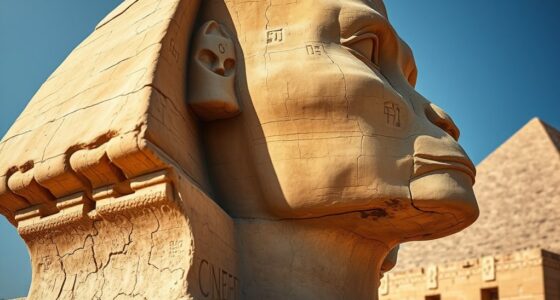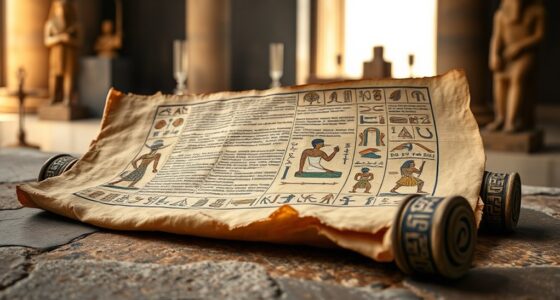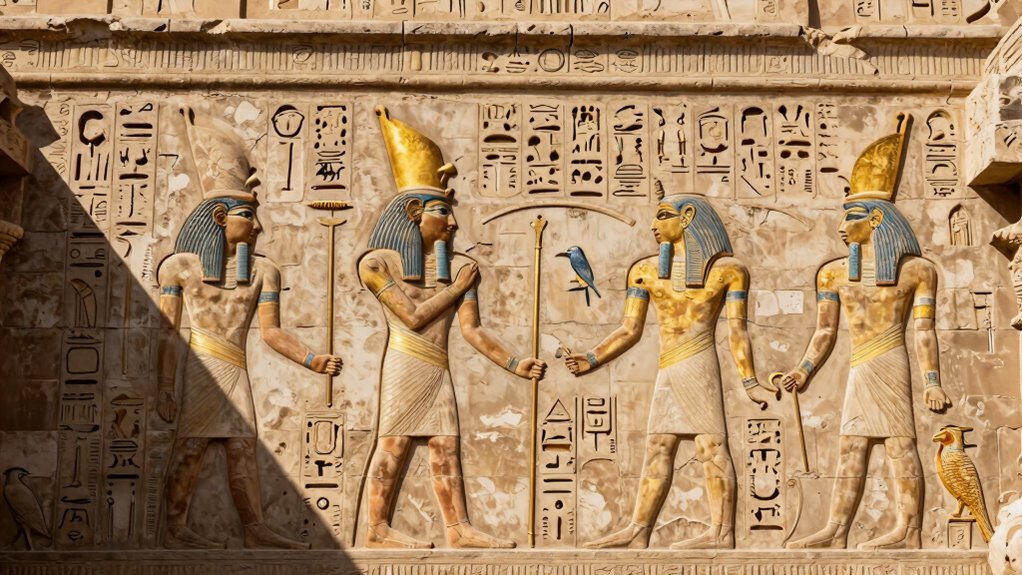

Ancient Egypt used symbols like hieroglyphs, crowns, and royal insignia to show power and divine authority. You’ll see images of gods, pharaohs, and sacred objects in art and architecture that reinforce their role as divine rulers. Symbols like the crook and flail highlight their protector role. These visual cues were carefully designed to communicate strength, legitimacy, and connection to the gods. If you keep exploring, you’ll discover even more ways they expressed their authority.

Get art and craft supplies delivered free with Prime
- Fast, free delivery on millions of items
- Prime Video, Amazon Music and more included
- Member-only deals all year
Key Takeaways
- Symbols like the crook and flail depicted the king’s divine authority and role as protector and shepherd.
- Hieroglyphs and motifs on monuments conveyed messages of power, divine favor, and legitimacy.
- Large statues and architectural elements showcased symbols like the double crown to unify and legitimize rule.
- Sacred symbols during rituals reinforced the divine origin and inviolability of the pharaoh’s authority.
- Visual language of symbols in art and inscriptions maintained societal stability and emphasized the divine right to rule.
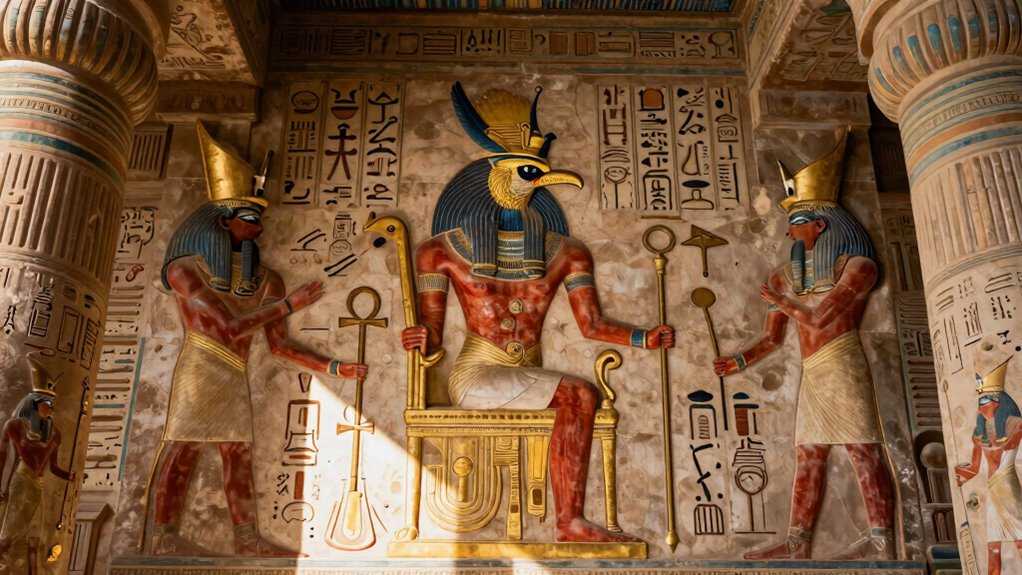
In ancient Egypt, symbols of power served as visual representations of authority, divine connection, and societal hierarchy. These symbols weren’t just decorative; they conveyed complex messages about who held power and their divine right to rule. When you look at hieroglyphic meanings, you see how each symbol carried specific significance, often linked to gods, kings, or important concepts. For instance, the ankh represented life, while the scarab signified rebirth and protection. These hieroglyphs weren’t random; they were carefully chosen to communicate authority and divine favor, making them essential in royal inscriptions and official texts.
Royal insignia played a vital role in expressing power. You can think of them as visual stamps of authority, often displayed on thrones, jewelry, or temple walls. The crook and flail, common royal insignia, symbolize the king’s role as shepherd and protector of his people. When you see these symbols, they immediately evoke the king’s divine right to rule, reinforced by their association with gods like Osiris or Horus. Such insignia weren’t just decorative; they served as tools of propaganda, reminding everyone that the pharaoh’s authority was sanctioned by the gods. Additionally, the royal iconography often incorporated specific motifs to emphasize legitimacy and divine approval. The careful placement of these symbols in art and architecture further underscores their importance in conveying power.
The use of symbols in art and architecture further emphasizes power. Large statues of pharaohs, often depicted wearing the double crown, combine various symbols to reinforce their divine status. The double crown itself merges the Upper and Lower Egypt crowns, symbolizing the unification of the land under one ruler. Carvings of gods and kings often include hieroglyphic inscriptions that specify their divine qualities and achievements, making it clear that their authority is rooted in divine will. These symbols serve as a visual language that communicates strength, legitimacy, and divine connection to anyone who sees them. The symbolic language created through these artistic elements was essential for maintaining social order and reinforcing the divine right of kings.
You can also observe how royal insignia and hieroglyphic meanings were used in rituals and ceremonies. They act as symbols of divine endorsement, making the king’s authority sacred and inviolable. When you encounter these symbols, they remind you of the intricate relationship between religion, politics, and societal order in ancient Egypt. The divine right to rule was often reinforced through the use of sacred symbols and hieroglyphs, emphasizing the divine origin of the pharaoh’s authority. By mastering the use of hieroglyphs and royal insignia, the Egyptians crafted a visual narrative that reinforced the power structure and guaranteed the pharaoh’s eternal place in the divine realm. All of these symbols worked together to maintain social stability and project authority across the land.
Ancient Egyptian hieroglyphic wall art
As an affiliate, we earn on qualifying purchases.
As an affiliate, we earn on qualifying purchases.
Frequently Asked Questions
How Did Egyptian Symbols Influence Neighboring Cultures?
You see Egyptian symbols influence neighboring cultures through their hieroglyphic art and religious symbolism. These symbols spread via trade, conquest, and cultural exchanges, inspiring art and writing systems beyond Egypt. As you observe, neighboring civilizations adopted Egyptian motifs to convey divine authority and spiritual beliefs, integrating hieroglyphic elements into their own cultural expressions. This exchange helped shape regional identity, blending Egyptian symbolism with local traditions, creating a shared visual language of power and spirituality.
Were Symbols Used Exclusively by Royalty in Egypt?
Symbols weren’t used exclusively by royalty in Egypt; common people also used them, though royal symbolism held more significance. The royalty employed exclusive symbols to emphasize their divine authority and power, but everyday individuals used simpler symbols for protection or identity. This symbol exclusivity helped distinguish social classes. So, while symbols played an essential role in expressing power, their use wasn’t limited solely to the royal elite.
How Did Symbols Evolve Over Different Egyptian Dynasties?
Like a river flowing through time, Egyptian symbols evolved across dynasties, reflecting shifts in power and belief. You see, hieroglyphic evolution transformed from simple carvings to complex symbolic artistry, adapting to rulers’ needs for authority. Kings and priests refined symbols, making them more intricate and meaningful, which helped reinforce their divine status. This ongoing change shows how Egypt’s visual language was a mirror of its political and spiritual progress.
What Materials Were Used to Create Egyptian Power Symbols?
You see, ancient Egyptian power symbols were crafted from materials like gold, faience, and lapis lazuli, which signified wealth and divine status. Ancient amulets and sacred hieroglyphs often featured these materials, highlighting their spiritual importance. These symbols, carved or inscribed onto jewelry, statues, and amulets, served to protect, empower, and communicate authority, reflecting the deep connection between material value and spiritual symbolism in ancient Egyptian culture.
Did Common People Use Symbols to Express Power?
You might think only pharaohs and scribes used symbols to show power, but common people embraced everyday symbolism too. Symbols were accessible and often painted or carved on household items, jewelry, and amulets, making them part of daily life. These symbols helped ordinary Egyptians express social status, religious beliefs, or protective charms, allowing everyone to participate in the visual language of power and spirituality in their society.
Conclusion
You might think symbols alone were enough to convey power, but their true strength lies in how they shaped beliefs and reinforced authority. By consistently using symbols, ancient Egyptians created a shared visual language that transcended individuals, uniting society under a common understanding of divine rule. So, even if symbols seem simple, they’re powerful tools that built and sustained one of history’s greatest civilizations—proving that symbols are more than just images; they’re the foundation of power itself.
Halloween Picks
halloween
As an affiliate, we earn on qualifying purchases.