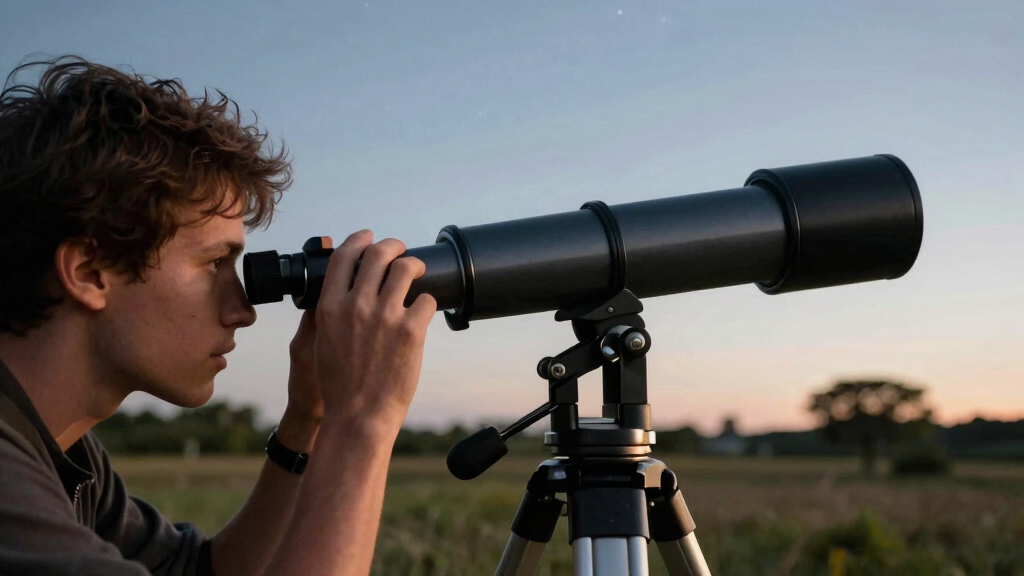

Starting with astrology telescopes can be exciting but also overwhelming due to the variety of options available. The best overall choice is the Celestron StarSense Explorer LT 80AZ, thanks to its guided smartphone features that simplify star identification. For those seeking affordability, the Gskyer 70mm Aperture Telescope offers solid optics at a budget-friendly price, while the Celestron AstroMaster 130EQ provides greater aperture and detailed views for more serious beginners. Each option balances ease of use, image quality, and price, but tradeoffs like portability versus detail and tech features versus simplicity are common. Keep reading for a full breakdown of what makes each telescope suitable for different types of stargazing newcomers.

Get art and craft supplies delivered free with Prime
- Fast, free delivery on millions of items
- Prime Video, Amazon Music and more included
- Member-only deals all year
Key Takeaways
- The top-ranking telescopes combine ease of setup with smartphone compatibility for guided stargazing.
- Aperture size is a key factor—larger apertures reveal more detail but often come with increased weight and complexity.
- Budget options like the Gskyer 70mm perform well for beginners but may lack advanced features found in pricier models.
- Tech-enabled guided telescopes are best for absolute beginners, while traditional reflectors suit those ready for more hands-on learning.
- Tradeoffs often involve portability versus optical performance—consider your typical stargazing location.




| astrology telescope for stargazing beginner | Aperture | Mount | Focal Length | Eyepieces |
|---|---|---|---|---|
| Celestron StarSense Explorer L | 80mm | — | — | — |
| Celestron AstroMaster 130EQ Te | — | Equatorial | — | 20mm, 10mm |
| Gskyer 70mm Aperture 400mm AZ | 70mm | — | 400mm | — |
| Gskyer 130EQ Professional Astr | 130mm | German equatorial | 650mm | — |
| HETEKAN Telescope for Adults | 90 mm | Altazimuth | 900 mm | 25 mm, 10 mm, 6 mm |
| MEEZAA 90mm Aperture 800mm Ref | 90mm | — | 800mm | 10mm and 25mm |
| Celestron Inspire 100AZ Beginn | 100mm | Altazimuth | — | — |
| Koolpte Telescope for Adults & | 80mm | Altazimuth | 600mm | — |
| Celestron StarSense Explorer L | 114mm | Manual altazimuth | — | — |
| Celestron AstroMaster 70AZ Ref | — | — | 700mm | 20mm, 10mm |
| 90mm Telescope for Adults High | 90mm | — | 600mm | 25mm and 10mm |
| Telescope for Kids and Adults | 70mm | Altazimuth | 300mm | 6mm & 20mm |
| Celestron StarSense Explorer D | 130mm | Manual altazimuth | — | 10mm and 25mm |
| MEEZAA 150EQ Newtonian Reflect | 150mm | German Equatorial | 650mm | 25mm & 10mm |
More Details on Our Top Picks
Celestron StarSense Explorer LT 80AZ Smartphone Guided Refractor Telescope
This model stands out for integrating smartphone technology to simplify sky navigation, making it an ideal choice for absolute beginners. Compared with the Gskyer 70mm AZ Mount, it offers more advanced sky recognition technology, reducing the learning curve. While its 80mm aperture delivers bright, detailed views of the Moon, planets, and some deep-sky objects, it’s limited by its manual tracking, which may frustrate those wanting more automated control. Its full-height tripod and multiple eyepieces add versatility, but it relies heavily on a compatible smartphone for guiding, which could exclude some users. Nonetheless, for those seeking a guided, user-friendly experience, this pick provides a solid foundation.
Pros:- Easy smartphone-guided navigation simplifies learning sky patterns
- Bright, detailed views of the Moon, planets, and deep-sky objects
- Includes multiple eyepieces and a full-height tripod for versatility
Cons:- Requires a compatible smartphone for full functionality
- Manual tracking may not satisfy those wanting automated control
Best for: Beginners who want an easy-to-use, smartphone-guided telescope without complex setup
Not ideal for: Advanced astronomers or users seeking fully automatic tracking and astrophotography capabilities
- Telescope Type:Refractor
- Aperture:80mm
- Mount Type:Altazimuth
- Included Eyepieces:10mm and 25mm
- Finder Scope:Red dot
- Compatibility:Android 12+, iOS 18+
Our verdict“Best suited for absolute beginners who want guided viewing with minimal technical fuss.”
Celestron AstroMaster 130EQ Telescope for Beginners
This telescope offers a 130mm Newtonian reflector that delivers brighter, sharper images than smaller refractors like the Gskyer 70mm, making it ideal for exploring planets and some deep-sky objects. Its stable equatorial mount with smooth manual controls provides a more precise tracking experience, which is a step up from simpler altazimuth mounts, though it requires a bit of learning for newcomers. The quick assembly and included accessories make it accessible for beginners, but its manual operation might challenge those who prefer fully automated or smartphone-controlled models. Overall, this option balances quality optics with an approachable setup for those ready to learn the basics of star tracking.
Pros:- High-quality 130mm optics for bright, detailed celestial images
- Stable equatorial mount allows precise manual tracking
- Quick setup with included accessories simplifies initial use
Cons:- Manual controls may require some learning curve for beginners
- Limited advanced features for experienced astronomers
Best for: Beginners interested in learning manual tracking and high-quality visual astronomy
Not ideal for: Users expecting automatic tracking or astrophotography without additional modifications
- Optics:130mm Newtonian reflector
- Mount:Equatorial
- Eyepieces:20mm, 10mm
- Finderscope:StarPointer red dot
- Setup:Quick assembly, no tools required
Our verdict“Ideal for newcomers eager to understand manual star tracking with quality optics.”
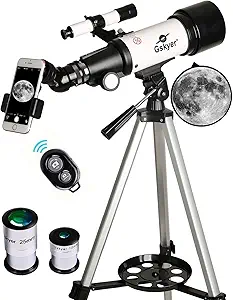
Gskyer 70mm Aperture 400mm AZ Mount Astronomical Refracting Telescope for Kids and Beginners
This 70mm refractor excels in portability and ease of use, making it perfect for kids and casual stargazers who want to explore the night sky without fuss. Compared with the HETEKAN 90mm for adults, it offers a lighter, more manageable size, though with a slightly lower light-gathering ability. Its fully coated optics provide clear images of the Moon and planets, but the magnification depends heavily on the eyepieces and Barlow lens, which may require additional purchases for higher power. The included smartphone adapter and wireless remote make it suitable for simple astrophotography and sharing views with friends. It’s a solid choice for beginners prioritizing portability and straightforward operation.
Pros:- Portable design with carry bag and adjustable tripod
- Includes smartphone adapter and wireless remote for easy photography
- Fully coated optics for clear lunar and planetary views
Cons:- Magnification depends on eyepieces and Barlow lens, limiting high-power views
- Not suitable for advanced astrophotography or deep-sky exploration
Best for: Beginners or children seeking an easy-to-carry, simple telescope for casual celestial viewing
Not ideal for: Serious amateur astronomers wanting high magnification and advanced features
- Aperture:70mm
- Focal Length:400mm
- Magnification:Variable
- Finder Scope:5×24
- Accessories:Phone adapter, wireless remote
Our verdict“Perfect for portable, beginner-friendly sky watching, especially for kids or casual users.”
Gskyer 130EQ Professional Astronomical Reflector Telescope
Compared to the AstroMaster 130EQ, this Gskyer model provides a larger 130mm aperture and high-quality all-glass optics, resulting in brighter, more detailed images of the Moon, planets, and deep-sky objects. Its German equatorial mount offers precise tracking, making it suitable for budding astrophotographers and more serious hobbyists. The full accessory set, including a Barlow lens and wireless remote, enhances its versatility, but its substantial weight and more complex setup might challenge those entirely new to astronomy. This telescope balances beginner-friendly features with the potential for more advanced exploration, especially for those willing to invest extra effort.
Pros:- High-quality all-glass optics with excellent brightness
- German equatorial mount for accurate tracking
- Complete set of accessories including Barlow lens and wireless remote
Cons:- Heavy weight over 30 pounds, less portable
- Assembly and setup are more involved for newcomers
Best for: Beginners who want a step towards astrophotography and better tracking capabilities
Not ideal for: Those seeking lightweight, quick-setup telescopes or simple manual models
- Aperture:130mm
- Focal Length:650mm
- Focal Ratio:f/5
- Mount:German equatorial
- Maximum Magnification:307X
- Accessories:3 eyepieces, Barlow lens, wireless remote
Our verdict“Designed for beginners ready to progress into more detailed sky observation and astrophotography.”
HETEKAN Telescope for Adults, 90mm Aperture, 900mm Refractor
This telescope combines power and versatility, with a 90mm aperture and up to 450X magnification, making it suitable for both casual and more detailed lunar or planetary views. It surpasses smaller models like the Gskyer 70mm in brightness and detail, offering a broader magnification range and a sturdy adjustable tripod. Its simple setup appeals to adults and motivated beginners, but the high maximum magnification depends on good atmospheric conditions and quality eyepieces. While it lacks the automated guiding of more advanced models, it offers a good balance for those who want to explore beyond basic stargazing without complex equipment.
Pros:- Powerful 90mm aperture for detailed lunar and planetary views
- Wide magnification range up to 450X for varied observations
- Includes finder scope and mobile phone adapter for easy observation
Cons:- Setup can be challenging for true newcomers
- Magnification is dependent on conditions and eyepiece quality
Best for: Adults or motivated beginners wanting a powerful, versatile telescope with manual control
Not ideal for: Absolute beginners expecting plug-and-play operation or those seeking lightweight portability
- Aperture:90 mm
- Focal Length:900 mm
- Magnification:36X-450X
- Eyepieces:25 mm, 10 mm, 6 mm
- Mount:Altazimuth
Our verdict“Great for those seeking a larger aperture and flexible viewing experience with some setup effort.”
MEEZAA 90mm Aperture 800mm Refractor Telescope for Adults
The MEEZAA 90mm Aperture Telescope stands out for its combination of high-quality optics and user-friendly features, making it a strong choice for beginners who want clear, detailed views of the night sky. Its 90mm aperture surpasses smaller models like the Celestron AstroMaster 70AZ, delivering brighter images and better planetary detail. The included multiple eyepieces and a Barlow lens provide flexible magnification options, though some may find assembly takes a bit longer than simpler models. The phone adapter is a bonus for capturing images, but the telescope’s magnification range (32X-240X) might be limiting for more advanced users aiming for deep-sky exploration. Overall, this scope offers a solid entry point that balances performance and portability, suitable for outdoor stargazing and casual astrophotography.
Pros:- Bright, detailed images thanks to 90mm aperture
- Includes multiple eyepieces and a Barlow lens for versatile magnification
- Portable with adjustable tripod and carry bag
- Phone adapter enables easy photo and video capture
Cons:- Assembly may be time-consuming for some users
- Magnification range could be limiting for advanced deep-sky observations
Best for: Beginners who want a versatile, portable telescope capable of both planetary views and basic astrophotography.
Not ideal for: Advanced astronomers seeking high-magnification deep-sky imaging or extensive astrophotography options.
- Aperture:90mm
- Focal Length:800mm
- Magnification:32X-240X
- Eyepieces:10mm and 25mm
- Barlow Lens:3X
- Tripod Height Range:28 to 46 inches
Our verdict“This pick suits beginners who want a well-rounded, portable telescope with good imaging capabilities and expandability.”
Celestron Inspire 100AZ Beginner Refractor Telescope with Phone Adapter
The Celestron Inspire 100AZ is designed specifically for newcomers, offering straightforward setup with a folding tripod and a built-in smartphone adapter for quick astrophotography. Compared with the Koolpte 80mm Telescope, which is more portable and easier to carry, the Inspire 100AZ provides a larger 100mm aperture that yields brighter, sharper images of planets and the Moon. Its lightweight, stable mount allows for stable terrestrial and celestial viewing, but it lacks advanced features like motorized tracking, making it less ideal for longer observation sessions or deep-sky photography. While it doesn’t include extensive accessories, its focus on ease of use makes it ideal for those just starting out and wanting to capture moments on their phones without fuss.
Pros:- Simple, quick setup with folding tripod
- Built-in smartphone adapter facilitates astrophotography
- Stable, lightweight, and easy to carry
- Includes a red LED flashlight and focus micrometer
Cons:- Limited to beginner level, not suitable for advanced users
- Lacks motorized tracking for prolonged observations
Best for: Beginners interested in quick setup and basic astrophotography with smartphones.
Not ideal for: Users seeking advanced astrophotography features or deep-sky imaging capabilities.
- Type:Refractor
- Aperture:100mm
- Mount:Altazimuth
- Features:Smartphone Adapter, Red LED Flashlight, Focus Micrometer
- Warranty:2 Years
Our verdict“Ideal for beginners who want an easy-to-use telescope for quick terrestrial and lunar views, plus simple phone astrophotography.”
Koolpte Telescope for Adults & Beginners – 80mm Aperture, 600mm Focal Length
The Koolpte 80mm Telescope offers a compact, feature-rich package that appeals to those who prioritize portability and straightforward setup. Its 80mm aperture produces bright images, comparable to the Celestron AstroMaster 70AZ, but with a slightly larger optics diameter for better overall brightness and clarity. The addition of a wireless remote control and a phone adapter adds convenience, especially for casual astrophotography and quick setup in outdoor settings. Compared with larger scopes, its 600mm focal length and manual focus may limit detailed deep-sky viewing, but for beginners interested in planetary and lunar observation, it hits a sweet spot. The build quality depends on user handling, and the remote control can be less reliable in windy conditions.
Pros:- Fully multi-coated optics for bright, sharp images
- Wireless remote control for easy operation
- Portable with adjustable tripod and carrying bag
- Easy no-tool setup suitable for beginners
Cons:- Magnification may be limited for deep-sky objects
- Manual focus can be tricky for sharp images
Best for: Beginners who want a lightweight, portable scope with wireless control and good imaging for planetary and lunar views.
Not ideal for: Those looking for a more robust or advanced astrophotography setup or deep-sky exploration.
- Aperture:80mm
- Focal Length:600mm
- Mount:Altazimuth
- Coating:Fully Multi-Coated
- Features:Wireless Remote, Phone Adapter, Carrying Bag
- Optical Tube Length:60 centimeters
Our verdict“This model makes the most sense for beginners seeking a portable, easy-to-use telescope with remote control features for planetary and lunar viewing.”
Celestron StarSense Explorer LT 114AZ Newtonian Smartphone Guided Telescope
The Celestron StarSense Explorer LT 114AZ shines for its innovative smartphone-guided sky mapping, making celestial object location accessible for beginners. Its 114mm aperture offers vivid views of the Moon, planets, and brighter deep-sky objects, outperforming smaller refractors like the Gskyer 70mm. The manual altazimuth mount is straightforward but may require a steady hand for tracking, especially in longer sessions. The reliance on the smartphone app for locating objects is a major advantage, reducing the time spent searching and increasing observing time. However, this technology depends on a compatible device and stable internet connection, which could be a limitation for some users. This telescope is ideal for those who want guided sky tours combined with decent viewing capacity.
Pros:- Smartphone-guided star locating simplifies setup
- High-quality 114mm aperture for bright views
- Easy manual tracking with smooth movement
- Warranty and support included
Cons:- Manual mount requires steady hands for prolonged viewing
- Dependent on smartphone app for optimal experience
Best for: Beginners wanting guided object location and a good balance of aperture and portability.
Not ideal for: Users seeking motorized tracking or advanced deep-sky imaging capabilities.
- Aperture:114mm
- Type:Newtonian reflector
- Mount:Manual altazimuth
- Connectivity:Smartphone app
- Warranty:2 years
Our verdict“This telescope suits beginners eager for guided sky exploration and easy-to-see celestial objects with decent aperture size.”
Celestron AstroMaster 70AZ Refractor Telescope for Moon & Planet Viewing
The Celestron AstroMaster 70AZ offers an accessible and straightforward option for those focusing on lunar and planetary observation. Its 70mm achromatic lens provides crisp, bright images, surpassing smaller telescopes like the Gskyer 70mm in brightness and clarity. Its simple alt-azimuth mount and quick setup make it attractive for beginners who want immediate results. However, the smaller aperture limits deep-sky exploration, and the lack of motorized tracking makes prolonged observation of planets more challenging. This scope is ideal for casual moon and planet viewing, especially when portability and ease of use are priorities, but less suited for those wanting to explore faint deep-sky objects or engage in astrophotography.
Pros:- Easy to assemble and operate
- Bright, detailed images of Moon and planets
- Includes essential accessories and software
- Sturdy, adjustable tripod for comfort
Cons:- Limited to basic alt-azimuth mount, no tracking
- Optics size may limit deep-sky viewing
Best for: Beginners interested in lunar and planetary viewing with quick setup and basic features.
Not ideal for: Advanced users seeking deep-sky imaging or long-exposure astrophotography.
- Optical Diameter:70mm
- Focal Length:700mm
- Eyepieces:20mm, 10mm
- Magnification:45x, 90x
- Mount Type:Alt-azimuth
- Included Accessories:StarPointer finderscope, erect image diagonal, software
Our verdict“This telescope makes the most sense for beginners primarily interested in lunar and planetary observing with a simple, portable setup.”
90mm Telescope for Adults High Powered, Magnification 180X
This 90mm aperture telescope stands out for its impressive high magnification range up to 180X, making it versatile for lunar, planetary, and landscape viewing. Unlike the Celestron StarSense Explorer DX 130AZ, which emphasizes smartphone-guided stargazing, this model offers more flexibility in handheld and terrestrial observations. Its optical quality delivers crisp, high-contrast images, but the setup requires some patience and adjustment, especially for beginners unfamiliar with focusing mechanisms. Although it’s portable and includes a phone adapter for capturing moments, its basic design may not satisfy users seeking advanced astrophotography capabilities. This makes it a strong choice for those wanting a portable, multi-purpose telescope with decent power, but not for deep-sky astrophotographers.
Pros:- High-quality optical system with crisp, high-contrast views
- Versatile magnification options suitable for various observations
- Portable with adjustable tripod and carrying case for easy transport
- Includes phone adapter for capturing photos and videos
Cons:- Requires some assembly and adjustment for optimal use
- Magnification may be limited for deep-sky astrophotography
- Design may be basic for experienced astronomers
Best for: Beginners and hobbyists who want a versatile, portable telescope for terrestrial and lunar viewing, with the ability to capture images on the go.
Not ideal for: Advanced astronomers seeking deep-sky astrophotography or highly precise tracking, due to limited stability and modest optics.
- Aperture:90mm
- Focal Length:600mm
- Magnification:24×–180×
- Eyepieces:25mm and 10mm
- Barlow Lens:3×
- Tripod Height Range:29–49 inches
Our verdict“Ideal for beginners seeking a portable, high-magnification telescope for terrestrial and lunar viewing with photo capabilities.”
Telescope for Kids and Adults, 15X-150X Refracting Telescope with 70mm Aperture and Phone Adapter
This 70mm refracting telescope makes a compelling choice for total beginners, especially families or young explorers. Its simple, tool-free setup and manual focus allow quick adjustments, contrasting with the more complex assembly of the MEEZAA 150EQ. The fully multi-coated optics produce bright, sharp images of the Moon and planets, suitable for casual stargazing and outdoor adventures. While its inverted image in the finderscope can frustrate some, and manual focus might require steadiness, it offers a versatile magnification range for lunar and planetary details. The lightweight design and included phone adapter enable easy photo capturing, but its smaller aperture limits deep-sky viewing. This pick suits newcomers who want straightforward operation and portability without sacrificing image quality.
Pros:- Easy to assemble without tools, suitable for kids and beginners
- Versatile magnification range for lunar and planetary viewing
- Includes phone adapter for easy image capture
- Lightweight and portable for outdoor use
Cons:- Inverted image in finderscope may need adjustment
- Limited to manual focus, which can be challenging for some users
- Optics may require steady mounting for clear images
Best for: Families or beginners who want an easy-to-use, portable telescope for moon and planet viewing with photo features.
Not ideal for: Serious amateur astronomers seeking detailed deep-sky observation or larger apertures for astrophotography, as it’s designed mainly for quick, casual use.
- Aperture:70mm
- Focal Length:300mm
- Magnification Range:15X-150X
- Eyepieces:6mm & 20mm
- Mount:Altazimuth
- Tripod Height:Up to 45 inches
Our verdict“Perfect for newcomers seeking a straightforward, portable telescope for moon and planet viewing with photo capabilities.”
Celestron StarSense Explorer DX 130AZ Smartphone Guided Newtonian Telescope
The Celestron StarSense Explorer DX 130AZ combines ease of use with innovative smartphone guidance, making it an attractive option for absolute beginners. Its 130mm Newtonian reflector delivers bright, detailed views of the Moon, planets, and some deep-sky objects, rivaling larger apertures like the MEEZAA 150EQ, but with less manual setup. The star alignment app simplifies locating objects, which can be a game-changer for novices who find star-hopping intimidating. However, the reliance on a compatible smartphone limits its use for those without the latest devices, and the manual mount doesn’t track objects automatically, so steady viewing can be tricky. While it’s less suited for deep astrophotography, this model excels for guided stargazing and quick setup.
Pros:- Easy to use with smartphone guidance technology
- Bright, detailed views of planets and deep-sky objects
- Includes multiple eyepieces and accessories
- Relatively simple setup for beginners
Cons:- Requires smartphone compatibility, limiting some users
- Manual mount may be less stable for prolonged viewing
- Lacks automatic tracking for precise follow-up
Best for: Beginners who want an easy, guided experience using their smartphone to find and view celestial objects without complex adjustments.
Not ideal for: Advanced users or those seeking detailed astrophotography, as its tracking and manual mount are basic and smartphone-dependent.
- Aperture:130mm
- Type:Newtonian reflector
- Mount:Manual altazimuth
- Eyepieces:10mm and 25mm
- Compatibility:Android 12+, iOS 18+
- Warranty:2-year US warranty
Our verdict“Ideal for absolute beginners wanting guided, smartphone-assisted stargazing with decent optics.”
MEEZAA 150EQ Newtonian Reflector Telescope for Adults and Beginners
The MEEZAA 150EQ offers a substantial 150mm aperture, making it a standout for those wanting brighter, more detailed images of the Moon, planets, and even some deep-sky objects. Its sturdy German equatorial mount provides smoother, more precise tracking compared to the altazimuth mounts on the other models, like the StarSense Explorer DX 130AZ. This makes it more suitable for users interested in longer observation sessions and basic astrophotography. However, the increased size and complexity mean it takes more time and effort to set up, which could be daunting for absolute beginners. The manual focus and assembly process may also pose challenges for those unfamiliar with telescope operation. Still, for those willing to put in a bit more effort, this telescope offers impressive image quality and tracking capabilities.
Pros:- Large 150mm aperture for bright, detailed images
- Stable German equatorial mount with smooth tracking
- Complete set of accessories, including moon filter and phone adapter
- Portable with a carry bag for travel
Cons:- Assembly may require some initial effort and familiarity
- Manual focus less convenient for quick adjustments
- More complex setup might be intimidating for absolute beginners
Best for: Beginners ready to invest time in setup and interested in brighter, detailed views and basic tracking for lunar and planetary observation.
Not ideal for: Casual users or those seeking an ultra-portable, quick-to-use telescope, due to its size and assembly requirements.
- Aperture:150mm
- Focal Length:650mm
- Eyepieces:25mm & 10mm
- Magnification Range:26X to 130X
- Mount:German Equatorial
- Additional Accessories:Barlow lens, moon filter, phone adapter, carry bag
Our verdict“Best suited for beginners willing to learn setup procedures and seeking brighter, more detailed lunar and planetary views with tracking.”

How We Picked
I evaluated these telescopes based on several criteria that matter most to beginners: ease of setup and use, image quality, build durability, and value for price. I prioritized models with intuitive features like smartphone integration or simple manual controls, as these reduce frustration. Durability and ease of transport were also considered, especially for those who may want to stargaze outdoors or travel with their telescope. The ranking reflects a balance between affordability and functionality, ensuring each pick offers distinct advantages for different beginner needs while avoiding overly complex or fragile designs.| astrology telescope for stargazing beginner | Mount |
|---|---|
| Celestron StarSense Explorer L | — |
| Celestron AstroMaster 130EQ Te | Equatorial |
| Gskyer 70mm Aperture 400mm AZ | — |
| Gskyer 130EQ Professional Astr | German equatorial |
| HETEKAN Telescope for Adults | Altazimuth |
| MEEZAA 90mm Aperture 800mm Ref | — |
| Celestron Inspire 100AZ Beginn | Altazimuth |
| Koolpte Telescope for Adults & | Altazimuth |
| Celestron StarSense Explorer L | Manual altazimuth |
| Celestron AstroMaster 70AZ Ref | — |
| 90mm Telescope for Adults High | — |
| Telescope for Kids and Adults | Altazimuth |
| Celestron StarSense Explorer D | Manual altazimuth |
| MEEZAA 150EQ Newtonian Reflect | German Equatorial |