
TL;DR

Get art and craft supplies delivered free — and shop member deals
- Fast, free delivery on millions of items
- Access to Prime Big Deal Days deals on October 6–7
- Prime Video, Amazon Music and more included
Tomás Saraceno’s exhibition “Ancestral Futures” is on view at Haus der Kunst in Munich through February 7, 2027, presenting work spanning more than two decades. It includes projects developed with Indigenous communities in Argentina’s Salinas Grandes basin, where residents are resisting lithium mining; the exhibition links that struggle with questions of water, land and inherited knowledge.
Tomás Saraceno’s “Ancestral Futures”, a solo exhibition spanning more than two decades of his work, is on view at Haus der Kunst in Munich through February 7, 2027. The presentation includes projects developed with Indigenous communities in Argentina’s Salinas Grandes basin, connecting the artist’s ecological practice with local resistance to lithium mining and debates over who bears the costs of resource extraction.
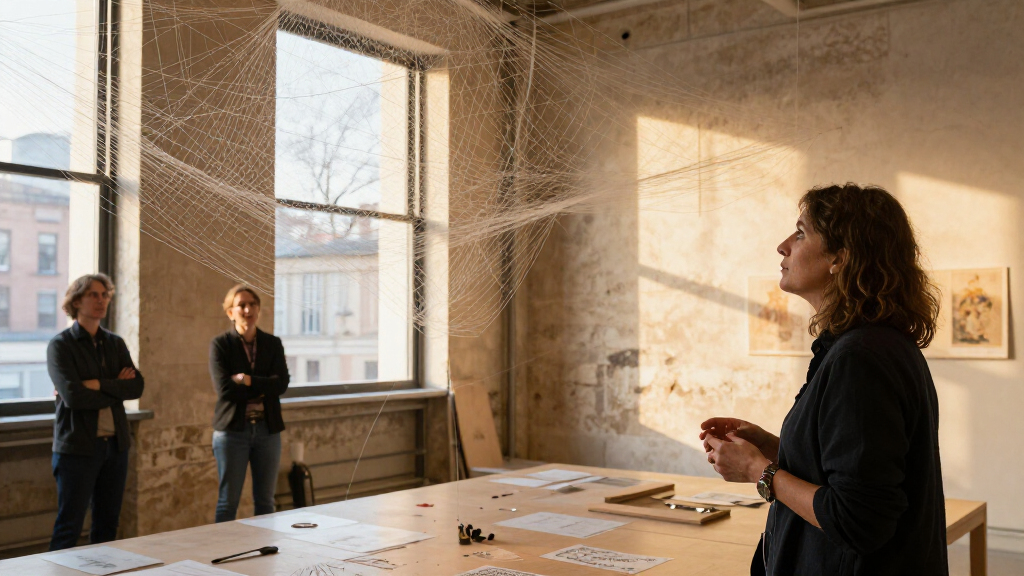
The exhibition brings together installations about interdependence, ecosystems and natural cycles. Saraceno, an Argentine-born artist based in Berlin, frequently uses spider webs as both material and metaphor. The “Webs of At-tent(s)ion” series, developed over a decade, brings several spider species into the museum to spin webs inside boxes. Other works invite visitors to move through large structures, making participation part of the encounter.
Another installation uses plastic bags collected from the public to form an immersive cavern. Visitors pedal stationary bicycles to help inflate it, while others can walk inside the patchwork structure. The work connects a participatory museum experience with the material traces of consumer culture and discarded packaging.
The exhibition’s Salinas Grandes projects grew from Saraceno’s ongoing collaboration with Indigenous communities of Red Atacama. Eleven weavers lent handmade blankets for an installation arranged as a space where visitors could lounge. Nearby galleries evoke the basin through materials including sand, water and salt. The presentation also refers to “The Sanctuary of Water,” a collaborative project described by the museum as standing in solidarity with communities resisting lithium mining in the region.
Art Meets the Lithium Dispute
The exhibition connects art and environmental questions to a specific dispute over land and resources. Lithium is used in technologies including electric cars, while the Haus der Kunst account says international corporations profit from extraction and local communities face environmental and social costs. That framing comes from the museum’s description of the collaboration; the supplied material does not provide independent evidence or detailed accounts from the affected communities.
By presenting locally made blankets alongside landscapes and installations about water, the exhibition places community knowledge and material conditions within a museum setting. Its relevance extends beyond the artworks: it asks visitors to consider how demand for technologies described as clean or sustainable can intersect with contested extraction and the rights of communities living where resources are found.
indigenous community blankets handmade
As an affiliate, we earn on qualifying purchases.
As an affiliate, we earn on qualifying purchases.
From Spider Webs to Salinas Grandes
Saraceno’s practice brings together art, architecture and science and often uses scale and spectacle to make large systems tangible. Spider webs recur in his work as examples of networks that sustain life. The exhibition’s title, “Ancestral Futures,” reflects its stated premise that inherited knowledge can help people understand and shape a shared future.
Salinas Grandes is a basin in northwestern Argentina and one of the world’s lithium-rich regions, according to the museum’s exhibition description. “The Sanctuary of Water” is presented as a continuing collaboration between Saraceno and people from Salinas Grandes. A project account describes Pacha as the inseparable weave of space, time and matter, sustained by water. The planned land artwork is organized around a reflective pond that mirrors the sky.
“The collaboration “emerges in solidarity with the communities’ resistance to lithium mining in one of the world’s largest lithium-rich regions.””
— Haus der Kunst
What the Exhibition Account Leaves Open
The supplied report does not specify which Indigenous communities or representatives took part in each work, how decisions and authorship were shared, or what the participants say about the exhibition. It identifies eleven weavers who lent blankets but does not give their names or explain the terms of the loan.
The account also does not provide details on current mining proposals, permits, companies involved, or the scale of environmental impacts in the basin. The museum’s description characterizes the project as solidarity with resistance to lithium mining; the source material does not independently verify particular allegations or outline responses from mining companies or public authorities.
Exhibition Runs Through February 7
“Ancestral Futures” remains on view at Haus der Kunst through February 7, 2027. Visitors in Munich can see the installations and collaborative works in person. The source report also directs readers to the “Sanctuary of Water” project website for more information about Saraceno’s work with communities in Salinas Grandes.
No further exhibition dates, public events or project milestones are specified in the source material. The status and timeline of the permanent land artwork, as well as developments in the region’s lithium-mining dispute, remain outside the information provided.
Key Questions
Where can visitors see “Ancestral Futures”?
The exhibition is at Haus der Kunst in Munich and is scheduled to run through February 7, 2027.
What is “The Sanctuary of Water”?
It is a continuing project involving Saraceno and people from Salinas Grandes in northwestern Argentina. The project is described as a permanent land artwork organized around a reflective pond and connected to local resistance to lithium mining.
How does the exhibition address environmental issues?
Its works include an installation made from publicly collected plastic bags, participatory pieces about natural networks, and projects concerning water, land and lithium extraction in Salinas Grandes.
What remains unknown about the collaboration?
The source account does not detail how authorship and decisions were shared, provide direct statements from participating community members, or give updated information about mining permits, companies or project milestones.
Source: rss
Fall Picks
fall essentials
As an affiliate, we earn on qualifying purchases.