
TL;DR

Get art and craft supplies delivered free with Prime
- Fast, free delivery on millions of items
- Prime Video, Amazon Music and more included
- Member-only deals all year
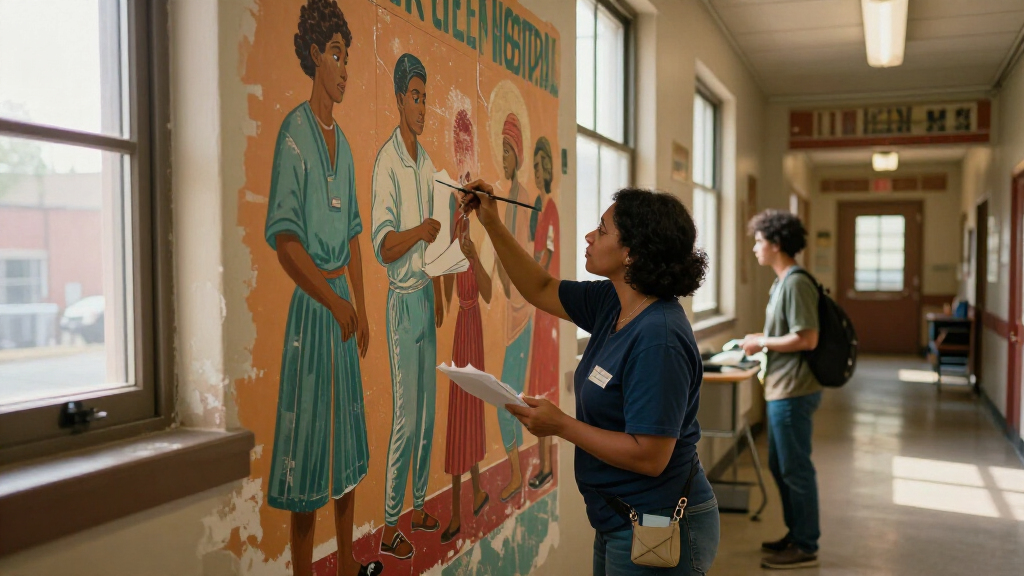
NYC Health + Hospitals completed conservation work on three New Deal-era murals and a John Rhoden sculpture at Harlem Hospital on October 14. The murals include works by Charles Alston and Vertis Hayes, created during a period when Black artists sought greater access to public commissions.
NYC Health + Hospitals completed conservation work on three New Deal-era murals and a sculpture at Harlem Hospital on Wednesday, October 14, restoring artworks made during the Works Progress Administration’s Federal Art Project. The project preserves work by Charles Alston and Vertis Hayes, created when Black artists were gaining access to major public commissions.
The conservation project covered Alston’s companion murals, Magic in Medicine and Modern Medicine, both dated 1940, and Hayes’s eight-panel mural, Pursuit of Happiness, dated 1937. The works are located in the hospital’s indoor mural pavilion. The project also included a sculpture by John Rhoden, another artist whose work is held at the hospital.
Harlem Hospital’s Arts in Medicine department carried out the work, according to Hyperallergic’s report. The source describes the effort as conservation and restoration but does not detail the techniques used, the condition of each artwork before treatment, or the total cost. The completed project brings attention to a group of public artworks made during the Great Depression and preserved within an active hospital.
Preserving Harlem Hospital’s Public Art
The restored works represent more than a record of medicine: they are public commissions made by Black artists during a period when access to such opportunities was contested. Keeping them conserved at Harlem Hospital retains that history in the institution and neighborhood for patients, staff and visitors, rather than treating the murals solely as objects of historical study.
The effort also shows how public art can require ongoing institutional care. Conservation allows the hospital to maintain artworks that are part of its site and history, though the source does not state whether the project included new interpretation, public programming or changes to visitor access.
As an affiliate, we earn on qualifying purchases.
A Disputed 1936 Commission
The murals were commissioned through the WPA Federal Art Project, part of the New Deal-era effort that supported artists during the Great Depression. The program provided opportunities for Black artists to receive public commissions at a time when they had been excluded from many such projects. Alston’s two murals and Hayes’s multi-panel work were created within that broader shift.
According to Larissa Trinder, head of Harlem Hospital’s Arts in Medicine program, administrators objected to Hayes’s designs when they were submitted in 1936, saying there was “too much black subject matter.” Artists publicly protested the decision, and the hospital commissioner reversed it, Trinder told Hyperallergic. That account places the murals’ creation within a specific dispute over whose lives and experiences could be represented in public art.
““too much black subject matter””
— Larissa Trinder, head of the Arts in Medicine program at Harlem Hospital
Restoration Details Not Released
The source confirms that conservation work was completed, but it does not identify the year of the October 14 completion date. It also does not specify the restoration methods, the amount spent, who performed the individual treatments, or whether the works had been closed to visitors during the project. The condition of the Rhoden sculpture and its title are not given.
The report describes the artworks as restored, but offers no technical assessment or conservation documentation to clarify what was repaired or how closely the finished appearance corresponds to the artists’ original materials and colors. No further details about public access or related programming are provided.
Hospital Care After Conservation
The conservation work is reported as complete, and the artworks remain associated with Harlem Hospital’s indoor mural pavilion. The source does not announce a forthcoming exhibition, ceremony, publication or additional restoration phase. Any plans for ongoing maintenance, interpretive material or expanded public access have not been stated.
Further information from NYC Health + Hospitals could clarify the project’s methods, cost and schedule, as well as how the hospital plans to care for the murals and sculpture over time. Until then, the confirmed development is the completion of conservation on the three murals and Rhoden sculpture.
Key Questions
Which murals were restored at Harlem Hospital?
The project covered Charles Alston’s Magic in Medicine and Modern Medicine, both dated 1940, and Vertis Hayes’s eight-panel Pursuit of Happiness, dated 1937.
Was any work besides the murals included?
Yes. The conservation project also included a sculpture by John Rhoden. The source does not provide its title or further details.
Why are the artworks historically significant?
They were made through the WPA’s Federal Art Project during a period when Black artists were gaining access to major public commissions. The history of Hayes’s mural also includes a dispute over its subject matter that, according to Arts in Medicine head Larissa Trinder, ended after public protest and intervention by the hospital commissioner.
When was the restoration completed?
NYC Health + Hospitals’ Arts in Medicine department completed the work on Wednesday, October 14. The source report does not specify the year.
What restoration methods were used?
The available report does not describe the conservation techniques, project cost, or condition of the works before treatment. Those details have not been confirmed in the source material.
Source: rss
Fall Picks
fall essentials
As an affiliate, we earn on qualifying purchases.