
TL;DR

Get art and craft supplies delivered free with Prime
- Fast, free delivery on millions of items
- Prime Video, Amazon Music and more included
- Member-only deals all year
The 2026 monograph Beverly Buchanan: Ruination and Regeneration brings together 18 contributors and a wide selection of the late artist’s work. The book traces her practice across sculpture, photography, land art, writing and video, and argues for fuller recognition of an artist whose legacy has been underexplored.
The book spans Buchanan’s artistic practice and her connections to Abstract Expressionism and Post-minimalism, while also tracing her activity in Atlanta, Macon and Athens, Georgia, and her later move to Michigan. Its contents include early paintings, zines, sketches, works on paper, environmental installations and sculptures. The essays and interviews are accompanied by poems, including one by Alice Walker.
Contributors include friends, dealers, historians, curators and contemporaries. The monograph begins with an introduction by Andrew Edlin, a longtime dealer and supporter of Buchanan’s work. Its broad range of voices reflects the book’s aim to present a more layered account of an artist whose practice extended beyond any single medium or movement.
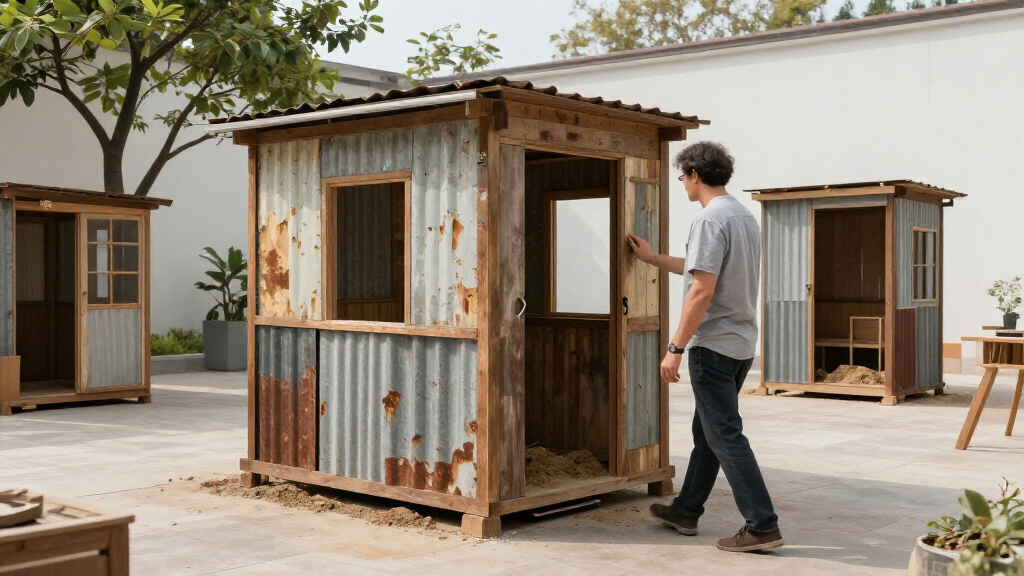
Buchanan’s “shack sculptures” draw on the architecture of her childhood in the South. The source report highlights Orangeburg County Family House (1993), a work made with paint, marker, found and personal objects, and other materials arranged on wood. The assembled objects include bark, buttons, bottle caps, a license plate, a glass bottle and thread, giving the piece a materially varied surface and a direct connection to the built forms that informed her art.
A Broader Record of Buchanan’s Art
The monograph matters because it makes a case for seeing Buchanan’s work as a connected, multidisciplinary practice, rather than treating her sculptures or regional references as isolated features. By putting writing, zines, paintings, environmental work and video in the same account, the book gives readers a fuller way to understand the range of her production.
Its contributors also address how racism, anti-Blackness, misogyny and regional bias can shape which artists receive sustained attention. That is the book’s stated interpretive argument, not a claim that the new volume alone resolves those forces. Its documentation and varied perspectives provide a basis for further study and for reconsidering Buchanan’s place in accounts of modern and contemporary art.
Popular right now

Shark Navigator Robot Vacuum with 30-Day Self-Emptying Base, White (AV2110S)

Dyson Cyclone V10 Origin Cordless Vacuum

Dyson Car+Boat Cordless Handheld Vacuum
As an affiliate, we earn on qualifying purchases.
From Southern Roots to Wider Recognition
Buchanan was born in North Carolina and carried aspects of the South into her art and writing rather than leaving them behind, according to the source report. Her work drew on childhood architecture, while her career included activity in several Georgia cities before a later move to Michigan. The monograph places these biographical and regional details alongside formal discussions of her work.
The report notes that Buchanan was mentored by Norman Lewis and Romare Bearden and was a contemporary of Ana Mendieta and Eva Hesse. It also says her work was featured in the 61st Venice Biennale, in Koyo Kouoh’s exhibition In Minor Keys. Those associations offer context for renewed attention, but do not replace the book’s focus on Buchanan’s own art and intellectual range.
““Instead of leaving the South behind, the polymath artist carried it into her writings, zines, paintings, and ‘shack sculptures’ that echo the architecture of her childhood.””
— Hyperallergic’s review of the monograph
What the Review Leaves Open
The source report does not give the book’s release date beyond identifying it as a 2026 publication, nor does it provide details on price, availability or the full list of contributors. It also does not describe the volume’s distribution or specify how its account compares with earlier scholarship in detail.
The claim that Buchanan’s work has been underexplored is presented in the review as the rationale for the book. The supplied material does not quantify the extent of that gap or establish how the monograph may affect museum exhibitions, collections or future research. Those outcomes remain unknown.
Where Buchanan’s Work Goes From Here
The immediate development is the publication of Beverly Buchanan: Ruination and Regeneration and its effort to put a wider record of Buchanan’s work before readers. The book’s essays, interviews, poems and visual material offer researchers and audiences a resource for examining her practice across media and geography.
Further developments would depend on how museums, scholars and publishers engage with the material. The source report does not announce a related exhibition, event or follow-up project, so no additional public programming can be confirmed from the information available.
Key Questions
What is Beverly Buchanan: Ruination and Regeneration?
It is a 2026 monograph about the late artist Beverly Buchanan, edited by Aurélie Bernard Wortsman. It includes essays, interviews, poems and images by 18 contributors.
What kinds of work by Buchanan does the book cover?
The volume includes material on sculpture, photography, land art, video, paintings, zines and works on paper, as well as environmental installations.
What are Buchanan’s “shack sculptures”?
They are sculptures that echo architectural forms associated with Buchanan’s childhood. The review points to Orangeburg County Family House (1993), an assemblage incorporating paint and a range of found and personal objects on wood.
Who contributed to the monograph?
The book brings together 18 contributors, including friends, dealers, historians, curators and contemporaries. Its essays and interviews are accompanied by poems, including one by Alice Walker.
Does the source confirm an exhibition or event tied to the book?
No related exhibition or event is identified in the source report. It notes Buchanan’s inclusion in the 61st Venice Biennale, but does not say that this presentation is a book launch or a new event connected to the monograph.
Source: hyperallergic.com