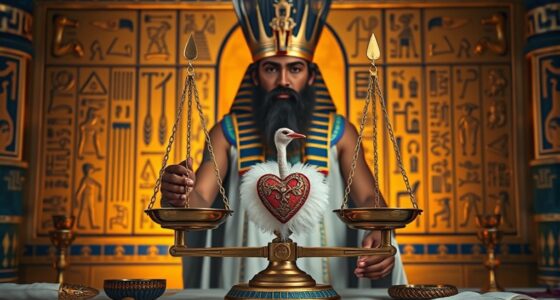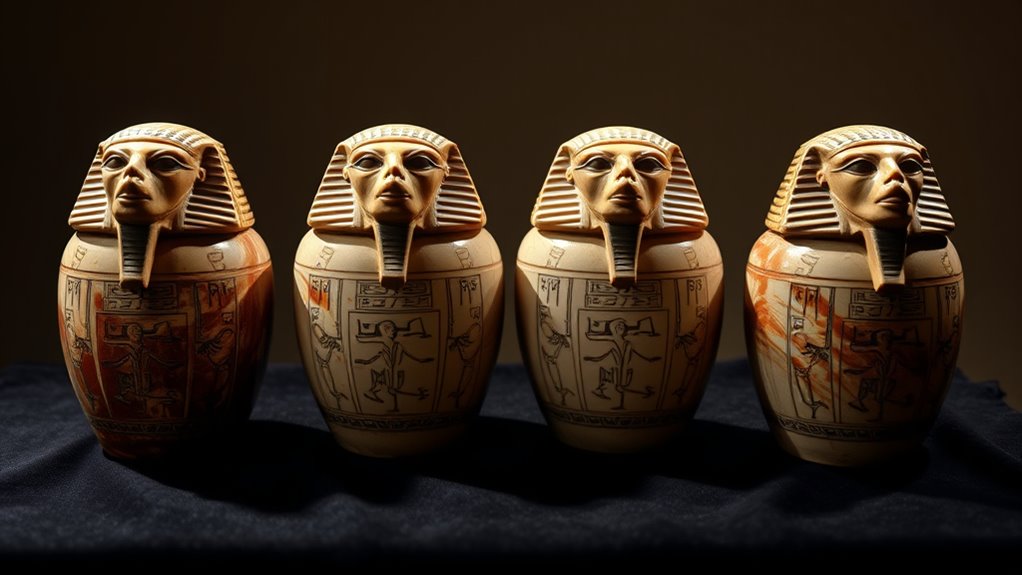

In ancient Egypt, each canopic jar held a specific organ to guarantee safe passage to the afterlife, and each was protected by a dedicated god. Qebehsenuef guarded the stomach, Hapi protected the intestines, Duamutef watched over the lungs, and Imsety guarded the liver. These gods symbolized divine guardianship and offered spiritual protection in burial rituals. If you want to discover how these deities universally represented safety and the afterlife, keep exploring the significance behind each canopic jar.
Key Takeaways
- Each organ was protected by a specific deity to ensure its safety during the afterlife.
- The deities symbolized divine guardianship, safeguarding organs from harm and corruption.
- Assigning a god to each organ reflected their spiritual importance in rebirth and resurrection.
- The gods’ unique attributes related to the organ’s significance, emphasizing divine protection.
- This pairing reinforced the belief in divine intervention for a successful journey to the afterlife.
Canopic jars are ancient Egyptian containers used to preserve the internal organs of the deceased during the mummification process. These jars played a pivotal role in the elaborate mummification rituals performed to prepare the dead for the afterlife. According to ancient Egyptian beliefs, preserving the body and its essential parts was fundamental for the soul’s journey after death. The organs stored in these jars were thought to be necessary for the deceased’s rebirth and continued existence in the afterlife, highlighting the significance of these containers in their spiritual practices.
Canopic jars safeguarded organs vital for the soul’s journey in the ancient Egyptian afterlife.
Each canopic jar was dedicated to a specific organ and associated with a particular protective deity. The process of mummification involved carefully removing the organs, which were then washed, embalmed, and placed into these specialized jars. The ancient Egyptians believed that these gods would safeguard the organs from harm and corruption, ensuring they remained intact for eternity. This practice reflected their deep-seated beliefs about life, death, and the importance of preserving the body’s integrity for the soul’s resurrection.
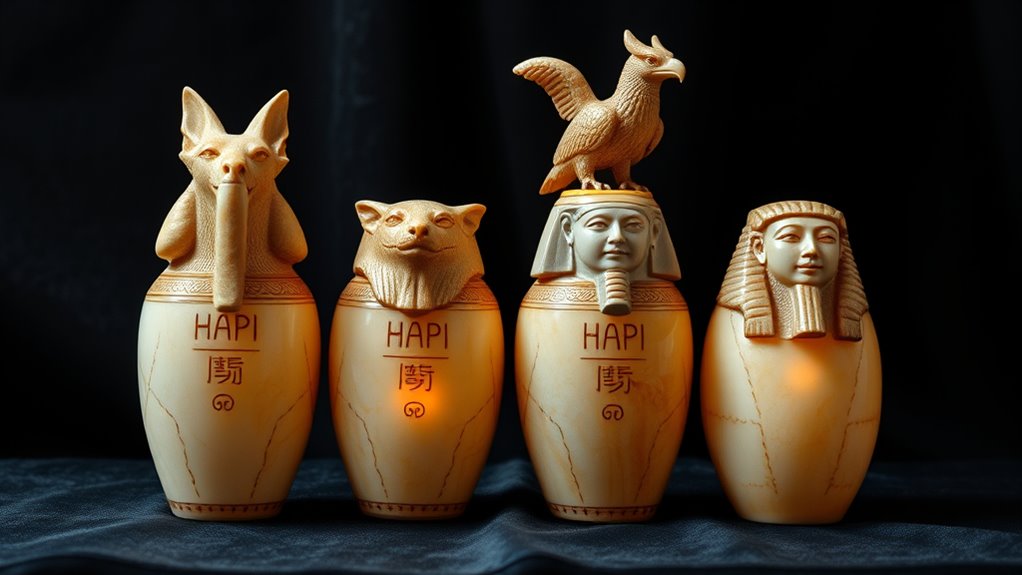
The four main canopic jars corresponded to the four sons of the god Horus, each guarding a different organ. The jar for the stomach was associated with Qebehsenuef, depicted as a falcon-headed figure. The intestines were stored in a jar linked to Hapi, who had a baboon head. The lungs found a home in a jar associated with Duamutef, represented with a jackal head. Finally, the liver was stored in a jar connected to Imsety, shown with a human head. Each deity was believed to possess specific powers to protect the organ they guarded, reinforcing the idea that these jars were more than just containers—they were sacred vessels imbued with divine protection.
The use of canopic jars reveals much about ancient Egyptian beliefs surrounding death and the afterlife. They viewed the preservation of organs as a critical part of ensuring a successful transition to eternity. The gods’ involvement in this process underscores the importance they placed on divine intervention and protection. These jars, often decorated with intricate carvings and inscriptions, served both functional and symbolic purposes, emphasizing the sacred nature of the mummification rituals.
In essence, canopic jars symbolize the blend of practical embalming techniques and profound spiritual beliefs that defined ancient Egyptian culture. They remind us how deeply intertwined their rituals were with their worldview—each jar representing a divine protector, each organ a essential piece of the eternal puzzle. Through these containers, the ancient Egyptians expressed their unwavering faith in divine guardianship and the hope of everlasting life.

Top Collection Ancient Egyptian Replica Canopic Jar – Decorative Anubis Canopic Jar in Premium Cold-Cast Bronze with Color Accents – 10-Inch Collectible Ancient Egyptian Figurine
- Exquisite craftsmanship: Premium cold-cast bronze with hand-painted accents
- Collector's size: 10 inches tall, 5 inches wide, 5 inches long
- Versatile display: Ideal for desks, bookshelves, or entry tables
As an affiliate, we earn on qualifying purchases.
As an affiliate, we earn on qualifying purchases.
Frequently Asked Questions
How Were Canopic Jars Made and Preserved?
You might wonder how canopic jars were made and preserved. Ancient craftsmen used skilled techniques to mold and carve materials like limestone, alabaster, or wood into these jars. They employed preservation techniques, coating the jars with resins and paints to prevent decay. The craftsmanship involved detailed work to guarantee durability, so the organs inside remained intact for eternity, reflecting the Egyptians’ deep respect for the afterlife and their mastery of ancient craftsmanship.
What Materials Were Commonly Used for Canopic Jars?
You might think canopic jars were simple containers, but they were crafted from ancient materials that have withstood millennia, showcasing incredible craftsmanship. They were often made from limestone, alabaster, or basalt, each chosen for its durability and beauty. Modern replicas use similar materials, but none match the authentic ancient stones’ mystique. These materials guaranteed the jars preserved the organs perfectly, turning ordinary stone into extraordinary vessels of ancient Egyptian devotion.
Did Canopic Jars Vary Across Different Ancient Egyptian Periods?
You’ll find that canopic jar variations do exist across different ancient Egyptian periods, reflecting regional differences and evolving religious practices. As you explore these jars, you notice changes in materials, shapes, and decorations over time. These regional differences highlight how local customs influenced the design and use of canopic jars, making each period unique in its approach to preserving organs for the afterlife.
Were Canopic Jars Used in Burial Practices Outside Egypt?
You might wonder if ancient burial customs outside Egypt included canopic jars. In some cultures, similar practices emerged, emphasizing the cultural significance of preserving organs or body parts for the afterlife. While not identical, these practices reflect a universal desire to honor the dead and ensure spiritual well-being. Canopic jars, specifically, symbolize the Egyptians’ unique approach to burial rituals and their deep spiritual beliefs about life after death.
How Did the Gods Associated With Each Organ Influence Burial Rituals?
Imagine each organ as a precious jewel, guarded by a divine protector. The gods’ divine influence on burial rituals gave these organs spiritual significance, ensuring they were preserved with care. Their divine roles symbolized protection, renewal, and rebirth, making each canopic jar more than storage—it’s a vessel of eternal life. These gods infused the rituals with sacred power, guiding the soul’s journey and emphasizing the profound ritual significance of preserving the body.
Conclusion
Did you know that ancient Egyptians believed each organ needed its own guardian god to ensure safe passage to the afterlife? Canopic jars, shaped like these deities, held the lungs, stomach, intestines, and liver—vital organs for rebirth. Remarkably, over 70% of mummies have been found with their jars intact, showing how important these protective containers were. So next time you see a canopic jar, remember it’s more than just a vessel—it’s a symbol of spiritual safeguarding.