
TL;DR

Get art and craft supplies delivered free with Prime
- Fast, free delivery on millions of items
- Prime Video, Amazon Music and more included
- Member-only deals all year
A Colossal report highlights murals by Amok Island, an artist born in Amsterdam and based in Fremantle, that depict plants and animals found in the places where the works appear. The report presents the murals as a way to draw attention to local biodiversity and conservation, but provides no new conservation findings or details about a newly announced project.
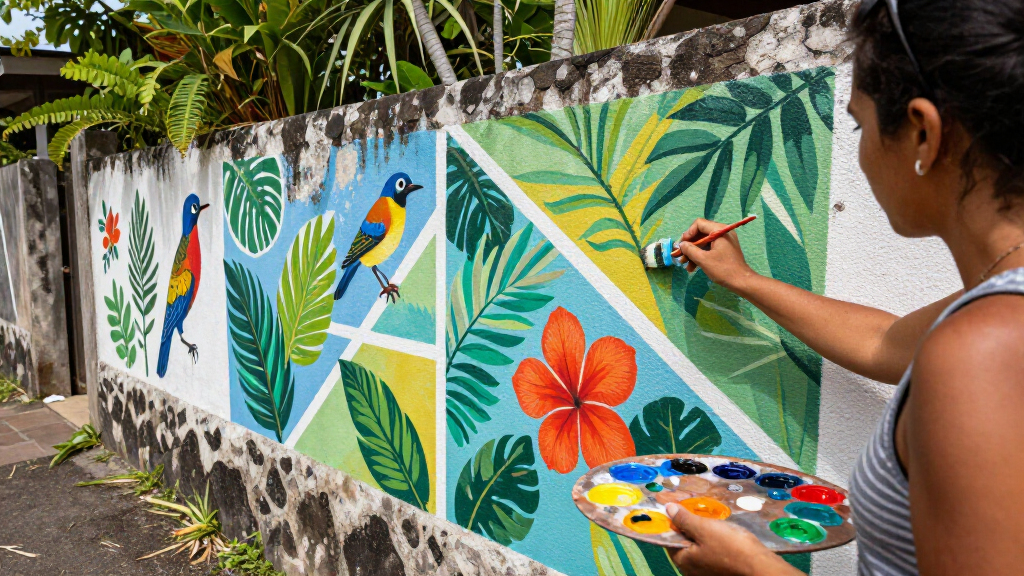
A Colossal report published in October 2026 highlights murals by Amok Island, an artist born in Amsterdam and based in Fremantle, Western Australia, whose large-scale works depict plants and animals associated with their locations. The report features projects made from 2020 to 2026, including a leopard cat mural in Hong Kong and works portraying birds, flowers and other local species in Western Australia.
The works use geometric forms and vivid colors to portray a range of subjects, including mammals, crustaceans, flowers, birds, butterflies and insects. Colossal describes the murals as appearing on different kinds of urban and community surfaces, with examples of birds crossing industrial infrastructure and flowers painted on community buildings. The report says the subjects reflect creatures and specimens found in the regions where the works are located.
Among the listed projects are “The Last Swans” (2020) in Northam, “The Honey Eaters” (2021) in Ravensthorpe, and “Grevillea bipinnatifida” (2021) in Dwellingup, all in Western Australia. Later works include “V. kershawi on E. websteriana” (2024) in Perth City and “Seagulls and Chip” (2024) in Fremantle. The report also names a 2026 South Perth mural, “The banning of Second-Generation Anticoagulant Rodenticides,” made for the NMBW Festival, and “Leopard Cat” (2026) in Hong Kong.
Colossal frames the work around the fragility of biodiversity and the role of habitat loss, pollution and climate change in accelerating species declines. That environmental framing is the publication’s context for the art; its report does not supply project-specific scientific data, conservation assessments or evidence that the murals have changed public behavior. It directs readers to the artist’s Instagram for more of the work.
Local Species on Public Walls
The murals bring regional wildlife and plant life into shared urban spaces, where residents and visitors can encounter species represented in their area. Colossal says this attention to nearby organisms is part of the work’s conservation focus. The approach can make local biodiversity visible through public art, though the source does not measure its educational or environmental effects.
The range of subjects and locations also gives the projects a place-specific character: a Western Australian flower or bird is not merely a decorative motif but a reference to the ecology around the mural. At a time when biodiversity is difficult to document fully and species loss is a concern, the report connects the works to a wider public conversation without claiming that the artworks themselves provide scientific evidence or protect habitats.
Popular right now

Dyson Cyclone V10 Origin Cordless Vacuum

Dyson Car+Boat Cordless Handheld Vacuum

Breville BES870XL Barista Express Espresso Machine, Brushed Stainless Steel
As an affiliate, we earn on qualifying purchases.
A Regional Focus Across Murals
Amok Island was born in Amsterdam and is based in Fremantle, according to Colossal. The report describes a practice extending across the artist’s home state and other locations, with subjects selected to reflect organisms found in each region. Its examples include public and community settings as well as murals in city spaces.
The article places the art alongside uncertainty about how many species exist and how many disappear each year. It mentions ongoing species-discovery work, including the Ocean Census, but does not provide a direct link between those scientific initiatives and Amok Island’s projects. The relevant connection is thematic: both the report and the murals draw attention to the diversity of living things and the difficulty of fully accounting for it.
Impact and Project Details
The source material does not identify a newly announced commission, exhibition or conservation campaign; it is a feature report presenting existing murals. It gives titles, dates and locations for selected works, but does not provide their dimensions, commissioning arrangements, materials, full project histories or details of public response.
It is also unclear whether any mural is tied to a formal conservation program, species-monitoring effort or measurable educational outcome. The report’s broader statements about biodiversity loss are not accompanied in the supplied material by named studies or estimates. Those claims should be understood as background framing rather than findings from the mural projects.
Where to Find More Work
Colossal directs readers to Amok Island’s Instagram to see more of the artist’s work. The report does not announce a forthcoming mural, exhibition or public event, so no next project or date is confirmed. Further information about commissions, locations and the artist’s plans would need to come from the artist, project organizers or venues.
Key Questions
Who is Amok Island?
Colossal identifies Amok Island as an artist born in Amsterdam and based in Fremantle, Western Australia. The report does not provide additional biographical details.
What do the murals depict?
The works depict regional plants and animals, including birds, mammals, crustaceans, flowers, butterflies and insects. Colossal says the subjects reflect organisms found in the places where the murals appear.
Where are the featured murals?
The report lists works in several Western Australian locations, including Northam, Ravensthorpe, Dwellingup, Perth City, Fremantle and South Perth, as well as a 2026 “Leopard Cat” mural in Hong Kong.
Are the murals part of a formal conservation program?
The supplied report does not say that the murals belong to a formal conservation program. It presents them as public art that draws attention to local biodiversity and conservation, without reporting measured outcomes.
What happens next?
No future mural or event is announced in the report. Colossal points readers to the artist’s Instagram for more examples of the work.
Source: rss