
TL;DR

Get art and craft supplies delivered free with Prime
- Fast, free delivery on millions of items
- Prime Video, Amazon Music and more included
- Member-only deals all year
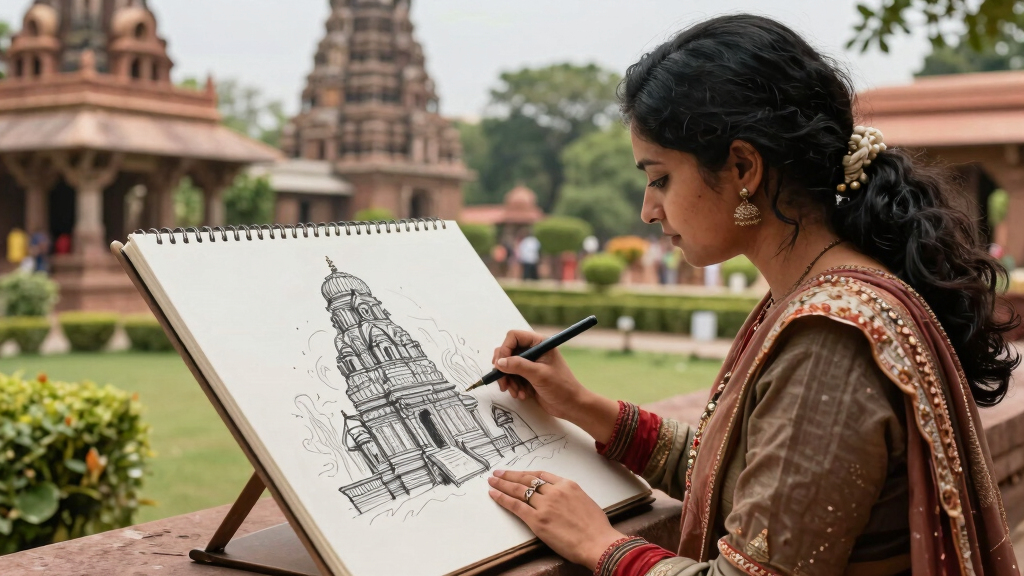
A collection of sketches by an Englishwoman from the 19th century has been uncovered, providing rare visual documentation of India before photography took hold. This discovery sheds light on early Western perceptions and artistic representations of India.
An early 19th-century collection of sketches by an Englishwoman has been uncovered, depicting scenes from India before photography became widespread. The sketches provide rare visual documentation of India during this period and are believed to be the work of Elizabeth Turner, a traveler and amateur artist. The discovery offers new insights into Western perceptions of India prior to the photographic era, which began to dominate visual representations in the mid-19th century.
The sketches, believed to have been created around 1820-1830, were found in an archive in the UK and are now being studied by historians and art experts. They depict various scenes, including rural landscapes, urban streets, and local inhabitants, captured through Turner’s pen and watercolor. Experts note that these drawings are among the earliest visual records made by a Western woman in India, predating the widespread use of photography by several decades.
According to Dr. James Harding, an art historian specializing in colonial-era sketches, “These drawings are invaluable because they offer a perspective that predates the camera’s influence, providing insights into how a Western woman perceived and interpreted Indian life and scenery during that period.” The sketches are also significant because they challenge some stereotypes by showing detailed, nuanced portrayals of local life, contrasting with more romanticized or orientalist depictions common in later photographs and paintings.
Why This Discovery Changes Our View of Colonial India
This discovery matters because it offers a rare, personal perspective on India before the influence of photography and mass media. The sketches provide a glimpse into how Western travelers and artists documented their experiences, which can influence current understanding of colonial perceptions. They also contribute to the broader history of art by highlighting the role of women artists in documenting colonial regions, an area often underrepresented in historical records.
Furthermore, these sketches may reshape narratives about early Western engagement with India, emphasizing individual artistic expression over commercial or academic motives. They also serve as a reminder of the importance of preserving and studying personal archives that can challenge or enrich existing historical narratives.
As an affiliate, we earn on qualifying purchases.
Early Western Artistic Documentation of India
Before the advent of photography, sketches and paintings were primary tools for documenting distant lands. During the late 18th and early 19th centuries, Western travelers, artists, and explorers created numerous visual records of India, often influenced by orientalist themes. However, most surviving works were produced by men, and few personal sketches by women have been identified or preserved. Elizabeth Turner’s sketches are among the earliest known examples of a Western woman’s visual documentation of India, dating from a period when travel was becoming more accessible but still challenging for women.
Historically, Western depictions of India during this era were often romanticized or exoticized, shaped by colonial attitudes. Turner’s sketches are notable for their apparent attention to detail and attempt at realistic portrayals, providing a different perspective from the more stylized or propagandistic images of the time. The discovery adds a new layer to the understanding of how India was viewed and represented by Western women in the pre-photography era.
“These sketches are invaluable because they offer a perspective that predates the camera’s influence, providing insights into how a Western woman perceived and interpreted Indian life and scenery during that period.”
— Dr. James Harding, art historian
Unanswered Questions About the Sketches’ Origins
While experts attribute the sketches to Elizabeth Turner based on archival evidence, definitive proof, such as signed works or contemporaneous documentation, is still pending. The full extent of Turner’s travels, her motivations, and whether she created other works in India remains unclear. Researchers are also investigating how these sketches compare with other contemporary representations and what influence they may have had on later art or perceptions.
Next Steps in Analyzing and Preserving the Collection
Researchers plan to conduct detailed art analysis, including dating and material examinations, to confirm the sketches’ origins and authenticity. They also aim to digitize the collection for broader scholarly access and to contextualize the works within colonial and artistic histories. Further archival research is underway to uncover more about Elizabeth Turner’s life and her time in India, which could shed additional light on her work and perspective.
Key Questions
Who was Elizabeth Turner?
Elizabeth Turner was an English traveler and amateur artist believed to have created the sketches during her visit to India in the early 19th century. Little is known about her life beyond her surviving drawings.
Why are these sketches significant?
They provide rare visual documentation of India from a Western woman’s perspective before photography became widespread, offering insights into early colonial perceptions and artistic representations.
How were the sketches discovered?
The collection was found in an archive in the UK during a routine cataloging process by archivists and art historians specializing in colonial-era materials.
What impact might this discovery have on historical studies?
It could challenge existing narratives about colonial perceptions of India, highlight the role of women artists, and deepen understanding of pre-photography visual documentation.
Source: hn
Halloween Picks
halloween
As an affiliate, we earn on qualifying purchases.