TL;DR
Artist Paul Pfeiffer discussed stadiums as sites where culture and world politics intersect in an interview with Hyperallergic. The conversation accompanies his current Perrotin exhibition in Los Angeles, which includes new works such as woodcarvings of Justin Bieber and a video imagining the Los Angeles Memorial Coliseum. Pfeiffer’s comments are interpretations, not evidence of a formal replacement for diplomatic institutions.
Artist Paul Pfeiffer told Hyperallergic that stadiums have become symbolic stages for politics as well as sport, describing them as potential gathering points in a period when he sees the United Nations as less effective. The interview accompanies his current exhibition at Galerie Perrotin in Los Angeles, which includes new sculptures and video works examining fame, mass culture and public spectacle.

Get art and craft supplies delivered free with Prime
- Fast, free delivery on millions of items
- Prime Video, Amazon Music and more included
- Member-only deals all year
Asked about the expansion of mass culture and its collective appeal, Pfeiffer pointed to the recurring global cycle of events such as the World Cup and Olympics, which move between cities and bring stadiums into view as political settings. He said these venues can host political pronouncements and operate as part of the soft power surrounding international sports. His suggestion that a stadium might replace the United Nations as a symbolic gathering point was offered as an interpretation, not a claim that the institution has literally been superseded.
The interview also considered the gap between public display and the activity behind it. In response to a question about Iranian athletes facing difficulties related to travel and accommodation during a World Cup, and delegates walking out during a speech by Israeli Prime Minister Benjamin Netanyahu, Pfeiffer described politics as a play between the visible and the invisible, or the official facade and the informal arrangements behind it. He called the delegates’ walkout heartening, saying it offered “a bit of agency when we needed it.”
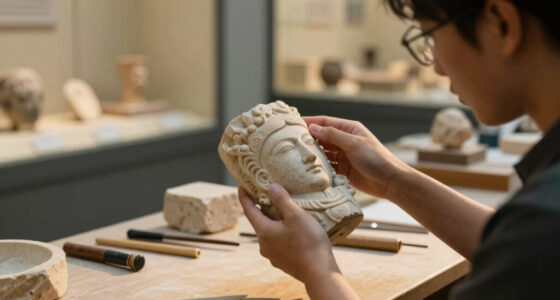
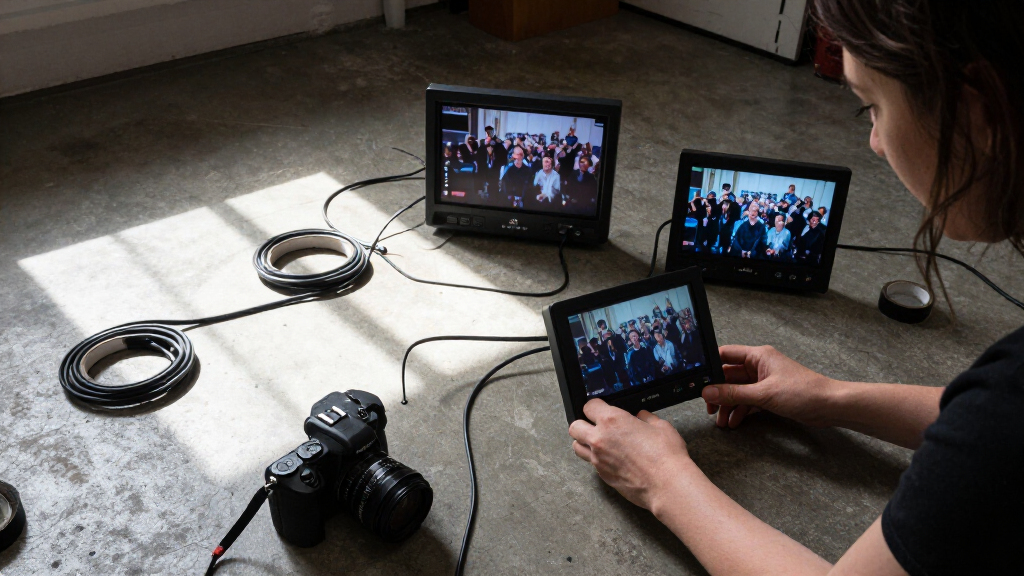
Works discussed in connection with the exhibition span sculpture, drawing and video. They include Vitruvian Figure (Los Angeles Memorial Coliseum) (2026), a silent digital video shown on a custom LED display, and cedar wood, paint and metal-armature carvings depicting singer Justin Bieber in crucifixion imagery. Pfeiffer’s earlier practice, which began in the early 1990s, has often altered found sports footage by removing people or objects, directing attention to how media constructs celebrity and collective attention.
Stadiums as Political Stages
Pfeiffer’s remarks frame sports arenas as more than venues for competition: they are places where national identity, entertainment and political messaging converge before large audiences. That perspective gives the exhibition’s stadium imagery a present-day political dimension, while keeping the focus on how spectacle is produced and what it conceals.
The conversation also links the artist’s visual work to questions about soft power and public agency. A televised event can make political gestures visible, but the conditions behind participation and access may be less visible. Pfeiffer’s comments invite attention to that contrast; they do not establish that sport has replaced diplomacy or that stadium events produce specific political outcomes.
Popular right now

KitchenAid Artisan 5-Quart Tilt-Head Stand Mixer with Flex Edge Beater

Ninja Creami Scoop & Swirl Ice Cream Maker – Bone & Champagne (Amazon Exclusive)

Vitamix VX1 Professional-Grade Blender, 64 oz, Black
As an affiliate, we earn on qualifying purchases.
From Edited Sports Footage to Stadiums
Pfeiffer began making interventions in found video in the early 1990s, frequently working with footage of celebrated basketball players and boxers. By digitally removing elements of the original scenes, he made the arena and the athletes’ movements feel unfamiliar, drawing attention to fame, spectatorship and the way media shapes public perception.
His work has also borrowed from art history. The source report cites his Fragment of a Crucifixion (after Francis Bacon) (1999) and the caryatids in his 2003–04 series. The current Perrotin presentation extends those concerns through imagined stadium plans and sculptural works. The Hyperallergic report identifies a Bieber carving titled Justin Bieber Legs Crucified (Seville) (2026), and also captions an image of Justin Bieber Ecce Homo I (Seville) (2026).
““Perhaps the stadium is actually the replacement for the UN as a symbolic gathering point to conduct world politics.””
— Paul Pfeiffer, speaking to Hyperallergic
Limits of the Political Claim
The interview does not provide evidence that stadiums have formally taken the place of the United Nations, nor does it measure how much political influence sporting events exert. Pfeiffer presented the comparison as a possibility and a way of thinking about symbolic gatherings.
The source report also gives limited detail about the exhibition’s schedule, full contents and public programming. It does not independently verify the circumstances described in the interviewer’s reference to Iranian athletes or provide further details about the delegates’ walkout. Those examples appear as parts of the interview conversation, rather than as a separate reported investigation.
Exhibition and Further Reporting
Pfeiffer’s works are on view in his current exhibition at Galerie Perrotin in Los Angeles, according to the Hyperallergic report. The supplied material does not state the exhibition’s closing date or identify upcoming public events. Readers seeking visit details will need to check the gallery’s current listing.
The interview itself leaves the discussion open: Pfeiffer’s work continues to examine how images of sport and celebrity carry political meaning, while the scale and consequences of that relationship remain matters for interpretation and further reporting.
Key Questions
What is the news about Paul Pfeiffer?
Hyperallergic published an interview in which Pfeiffer discussed stadiums as sites of political spectacle, alongside coverage of his current Perrotin exhibition in Los Angeles.
Did Pfeiffer say stadiums have replaced the United Nations?
No. He said a stadium might be a replacement for the UN as a symbolic gathering point. That was his interpretation, not a statement that the institution has been formally replaced.
What works are included in the exhibition?
The report mentions the 2026 video Vitruvian Figure (Los Angeles Memorial Coliseum) and woodcarvings depicting Justin Bieber in religious imagery, as well as other sculptural works.
How has Pfeiffer used sports footage in his art?
Since the early 1990s, Pfeiffer has altered found footage, often removing key elements from scenes of basketball and boxing. The edits draw attention to celebrity, media and spectatorship.
Source: hyperallergic.com