
TL;DR

Get art and craft supplies delivered free with Prime
- Fast, free delivery on millions of items
- Prime Video, Amazon Music and more included
- Member-only deals all year
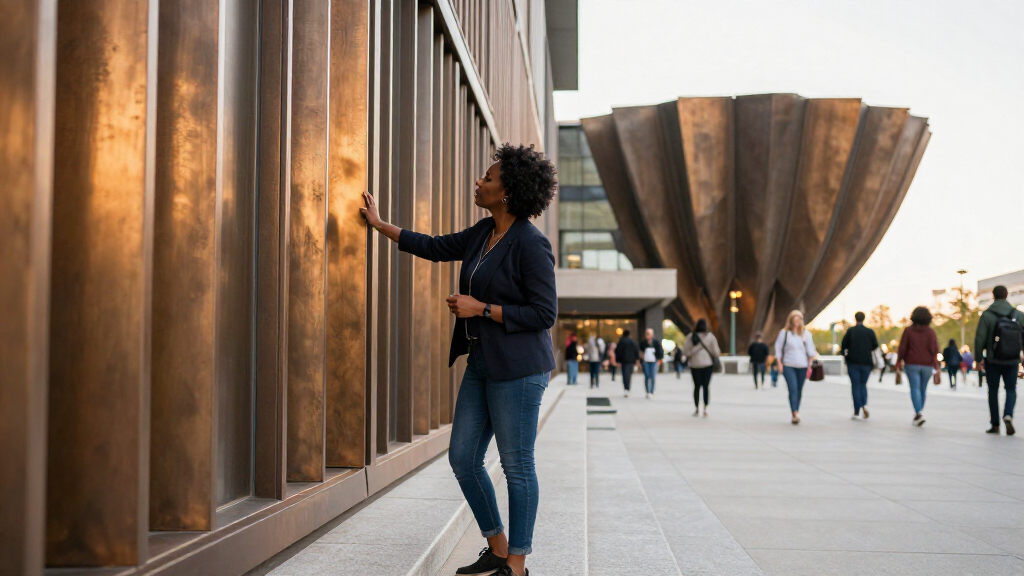
A Hyperallergic opinion essay argues that architect J. Max Bond Jr. deserves greater recognition for helping advance and design the National Museum of African American History and Culture. The essay, tied to the museum’s 10th anniversary and a newly published biography of Bond, emphasizes the collaborative work behind the building and Bond’s push for a museum dedicated to Black history.
A Hyperallergic opinion essay is making the case that architect J. Max Bond Jr. deserves wider recognition for helping push for and co-design the Smithsonian’s National Museum of African American History and Culture in Washington, DC. The essay appeared in connection with the museum’s 10th anniversary and the publication of a new biography, “Max Bond: The Life and Work of the People’s Architect.”
Bond was part of the team named as the museum’s design winner: Philip Freelon, J. Max Bond Jr. and David Adjaye, working as Freelon Adjaye Bond/SmithGroup. The museum opened in September 2016. The essay says Bond had advocated for the institution and contributed to its design, but public and media accounts of the building have often focused primarily on Adjaye, whose international profile grew after the competition.
Bond died of cancer in 2009, before his teammates won the competition, according to the essay. It presents his role as extending beyond the design team: Bond was an early advocate for a museum on the National Mall that would give Black history a permanent home. The essay’s author, who wrote the new biography, argues that the museum’s story should be understood as a collective effort rather than the achievement of one celebrated architect.
The essay also draws on Bond’s criticism of architecture’s “star system.” In an unpublished 1993 essay, Bond questioned whether the profession’s focus on star architects served architects as a group. He regarded buildings as the result of long collaboration and argued that their success depended on serving the people who used them, particularly communities that had been excluded from decisions about the built environment.
Why Bond’s Credit Matters
The argument reaches beyond how a single museum is credited. The National Museum of African American History and Culture is a major Smithsonian institution on the National Mall, and the way its authorship is described shapes public understanding of who helped make that landmark possible. Naming Bond alongside Freelon and Adjaye recognizes both his design contribution and his earlier advocacy for the museum.
The essay also challenges an established habit in architecture coverage: assigning a complex project to one prominent designer. A museum takes years of planning and depends on teams and institutions, not just an individual’s signature. Giving Bond more attention makes that process more visible and recognizes a Black architect whose career, as the essay describes it, took place in a field that was often hostile to Black professionals.
The anniversary gives the author a timely occasion to revisit those questions. The piece also situates the celebration amid a wider dispute over how American history is presented at Smithsonian institutions, though it does not provide specific details of policy actions in the supplied material. Its central point is that the museum’s public story, like its architecture, should reflect the many people and efforts behind it.
architectural design books Max Bond
As an affiliate, we earn on qualifying purchases.
As an affiliate, we earn on qualifying purchases.
How the Design Team Took Shape
The museum’s development culminated in a design competition won by Freelon Adjaye Bond/SmithGroup. A small concourse-level display called “A Century in the Making” recounts the institution’s long path to completion, including the competition and the building’s development. The Hyperallergic essay says visitors can easily miss the display while heading toward the elevators that begin the museum experience.
Since the museum opened in 2016, coverage has often described it through Adjaye’s name alone, the essay says, citing reviews and articles that referred to it as his building or design. The essay does not claim that Adjaye lacked a major role; instead, it argues that repeated emphasis on his individual authorship left Bond and Freelon less visible. Bond’s death in 2009 meant he did not live to see the team win the competition.
The essay’s discussion of Bond also appears alongside scrutiny of Adjaye. It notes that the Financial Times reported in July 2023 that three former employees accused him of serious sexual misconduct. Those accusations are allegations reported by the newspaper, not findings established by the supplied material. The essay says Adjaye withdrew from the spotlight afterward and uses the episode to question the broader tendency to elevate an architect as a solitary genius.
““We as architects should question whether or not the ‘Star System’ serves our interests as a group.””
— J. Max Bond Jr., in an unpublished 1993 essay, as quoted in the Hyperallergic article
What the Record Leaves Open
The supplied material does not detail the precise division of design work among Bond, Freelon and Adjaye, or quantify how much of the museum’s final design came from each architect. It identifies all three as members of the winning team and credits Bond with advocating for and co-designing the institution, but does not provide project records or interviews from the other team members to establish a fuller account of their respective contributions.
The essay is an opinion piece by the author of Bond’s biography, not an independent institutional review of the museum’s design history. Its contention that Bond has been overlooked is an argument supported by examples of media coverage, but the supplied source does not offer a systematic survey of press attention or public recognition. The allegations reported about Adjaye are also not adjudicated in the material provided.
How the Anniversary Reframes Credit
The immediate next step is public discussion prompted by the anniversary and the new biography, which asks readers to revisit Bond’s place in the museum’s history. The article does not announce a new Smithsonian exhibit, change to museum labels or institutional statement about authorship. Any further change in how the museum credits its designers remains unknown based on the supplied source.
Readers seeking a fuller account can turn to “Max Bond: The Life and Work of the People’s Architect,” the biography highlighted by the essay. More detailed conclusions about the team’s respective design roles would require additional documentation, including project archives, accounts from collaborators and the Smithsonian’s own historical materials.
Key Questions
Who was J. Max Bond Jr.?
J. Max Bond Jr. was a Black American architect who advocated for and helped design the National Museum of African American History and Culture. He died of cancer in 2009, before the design team won the museum competition.
Who designed the National Museum of African American History and Culture?
The winning team was Philip Freelon, J. Max Bond Jr. and David Adjaye, working as Freelon Adjaye Bond/SmithGroup. The museum opened in September 2016.
Why does the essay say Bond has been overlooked?
The Hyperallergic essay says media coverage often described the museum primarily as Adjaye’s building or design, giving less attention to Bond and Freelon. Its author argues that this framing obscures the collaborative work behind the museum.
What did Bond think about the architecture “star system”?
In an unpublished 1993 essay, Bond questioned whether the profession’s focus on celebrated individual architects benefited architects as a group. The Hyperallergic article portrays him as favoring collaborative design and architecture that serves its users.
Source: rss
Columbus Day / Indigenous Peoples' Day Picks
long weekend sales
As an affiliate, we earn on qualifying purchases.