
TL;DR

Get art and craft supplies delivered free with Prime
- Fast, free delivery on millions of items
- Prime Video, Amazon Music and more included
- Member-only deals all year
Sculptor Ursula von Rydingsvard died at her Manhattan home on October 27, aged 84. Across a career spanning more than five decades, she became known for monumental cedar works informed in part by memories of wartime and postwar displacement. Her studio manager attributed her death to Alzheimer’s disease, according to The New York Times.
Ursula von Rydingsvard, the sculptor known for monumental works carved from cedar, died at her Manhattan home on October 27, aged 84, Hyperallergic reported. Her studio manager, Courtney Childress, attributed the death to Alzheimer’s disease, according to The New York Times. Von Rydingsvard drew in part on memories of childhood displacement during and after World War II, developing a distinctive body of work over more than five decades.
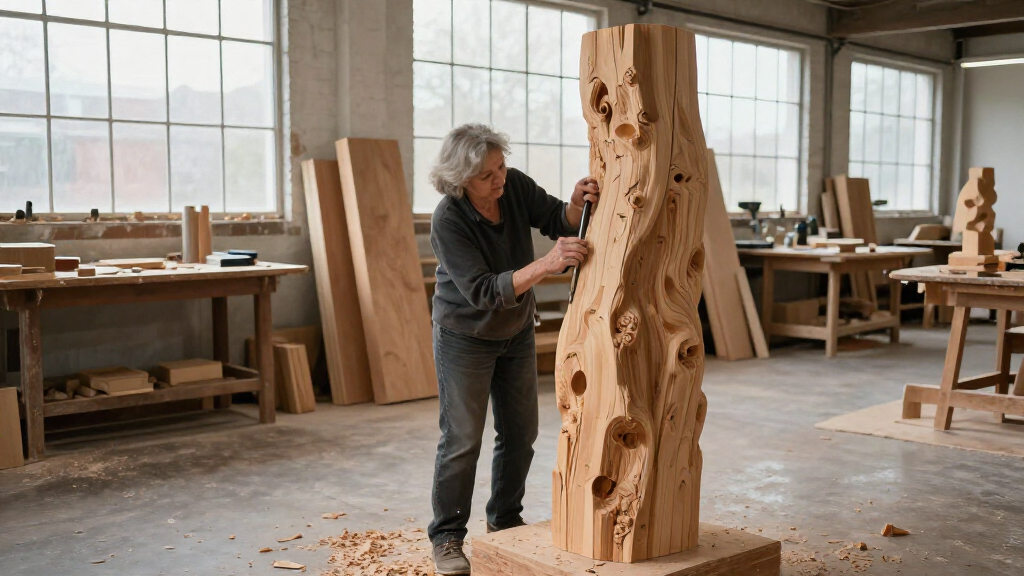
Von Rydingsvard worked by chipping and shaping large cedar beams into abstract forms. Her sculptures included arrangements of cones and a tornado-shaped work standing 17 feet tall and made from 15,000 pounds of wood, according to Hyperallergic. She also worked with bronze, textiles and animal intestines, among other materials.
Born in 1942 in Deensen, Germany, to a Polish mother and Ukrainian father, she was one of nine children. After the war ended in 1945, the family lived in eight Nazi slave-labor and postwar refugee camps before traveling to the United States aboard a military ship in 1950. Von Rydingsvard recounted that history in an interview with Art21.
She earned bachelor’s and master’s degrees from the University of Miami in 1965 and an MFA in studio art from Columbia University in 1975. Her honors included a Guggenheim Fellowship, a Joan Mitchell Fellowship and grants from the National Endowment for the Arts. Her work entered the permanent collections of the Metropolitan Museum of Art, the Museum of Modern Art and the Whitney Museum of American Art.
A Lasting Mark in Cedar
Von Rydingsvard’s death marks the loss of an artist whose large-scale sculptures brought tactile, worked surfaces and references to the body and domestic life into prominent museum and public settings. Her use of cedar was not simply a technical signature: she linked the material to memories of wooden barracks in the camps and to pre-industrial wooden houses in Poland, as she explained in an Art21 interview.
Her career also connected personal history to a broader audience without making her work a literal autobiography. Hyperallergic reported that she resisted autobiographical readings, while drawing on remembered sensations and forms. That tension helped distinguish her practice from the more aloof tendencies associated with 1970s minimalism, according to the report.
Her work was shown at institutions including the Philadelphia Museum of Art, the National Museum in Krakow and Yorkshire Sculpture Park in the United Kingdom. Its presence in major collections means her sculptures will remain accessible to museum visitors after her death.
Popular right now

De'Longhi Linea Classic Espresso Machine with Adjustable Milk Frother

Shark Rocket Pet Plus Corded Stick Vacuum, Bordeaux, HV322

iRobot Roomba Max 715 Pet Robot Vacuum with AutoEmpty Dock
As an affiliate, we earn on qualifying purchases.
From Displacement to Cedar
Von Rydingsvard’s early life included repeated movement through wartime and postwar camps before her family immigrated to the United States. In her Art21 interview, she described the visual influence of wooden structures she encountered in the camps and in Poland. She also recalled sensory memories, including the feel of a linen nightgown and sunlight warming her body, as sources for her work.
Over a career of more than 50 years, she developed large forms that evoked visual cues from human anatomy, the environment and household vessels. Hyperallergic described this approach as a departure from the detached character of 1970s minimalism. Her sculptures’ scale and carved construction made the labor and material visible while allowing the forms to remain abstract.
““She moved through the studio like her hair was on fire, and could never slow down.””
— Courtney Childress, speaking to Hyperallergic
Details of Her Final Years
The source report does not give further details about von Rydingsvard’s final days, funeral arrangements or plans for her studio and unfinished work. The cause of death is attributed to Alzheimer’s disease by her studio manager, as reported by The New York Times; Hyperallergic does not provide additional medical details.
The available report also does not say whether any memorial events or new exhibitions will be announced. Those details remain unconfirmed.
Memorials and Work Ahead
No memorial schedule or studio plans were included in the report. Further announcements from von Rydingsvard’s representatives, galleries or the museums that hold her work could clarify how her estate and archive will be handled and whether public tributes are planned.
Her sculptures remain in institutional collections, including the Metropolitan Museum of Art, MoMA and the Whitney. Those holdings provide an ongoing public record of a career shaped by wood, monumental scale and memories of displacement.
Key Questions
How old was Ursula von Rydingsvard when she died?
She was 84, according to Hyperallergic’s report.When and where did she die?
Von Rydingsvard died at her Manhattan home on October 27, the report said.What was Ursula von Rydingsvard known for?
She was known for monumental abstract sculptures, especially works made by carving and shaping cedar beams. She also used materials including bronze, textiles and animal intestines.What inspired her cedar sculptures?
She linked her interest in cedar to memories of wooden barracks in wartime and postwar camps and to traditional wooden homes in Poland, as described in an interview with Art21. She also drew on sensory memories and forms from the body, environment and household objects.What was reported as the cause of death?
Her studio manager attributed her death to Alzheimer’s disease, according to The New York Times, as cited by Hyperallergic. Further medical details were not included in the report.Source: rss