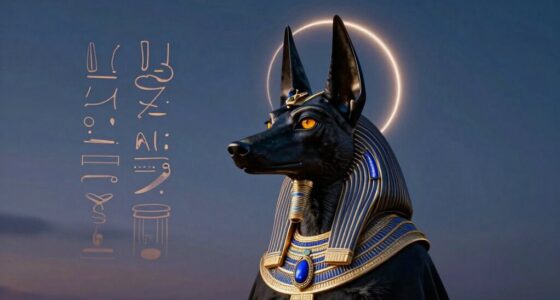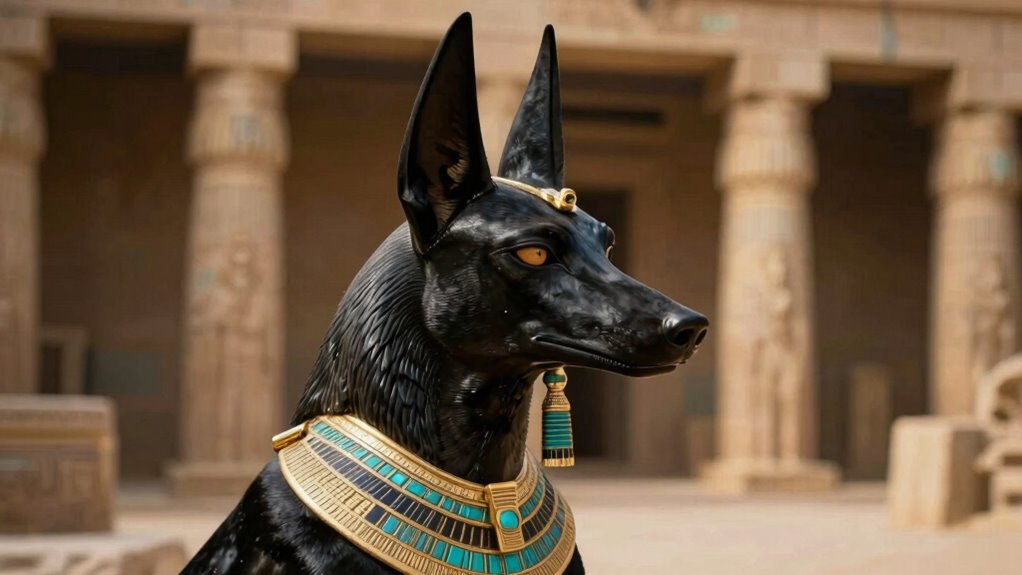

You might think Anubis is just a god of death, but he’s actually much more. He’s a protector of the dead, overseeing funerary practices and ensuring the moral order through divine judgment. Anubis also symbolizes rebirth and transformation, guiding souls through the afterlife and emphasizing renewal. His role reflects protection, justice, and cosmic harmony, making him a complex divine figure. Continue exploring to discover how his symbolism influences beliefs about life, death, and beyond.

Get art and craft supplies delivered free with Prime
- Fast, free delivery on millions of items
- Prime Video, Amazon Music and more included
- Member-only deals all year
Key Takeaways
- Anubis embodies protection, moral order, and justice, extending his role beyond mere death to maintaining cosmic harmony.
- He presides over mummification and funeral rituals, emphasizing transformation and spiritual rebirth.
- His symbolism reflects safety and divine guardianship, influencing Egyptian cultural practices and beliefs.
- Anubis is involved in divine judgment, weighing hearts against Ma’at’s feather, ensuring moral balance.
- His influence signifies protection, renewal, and moral enforcement, making him a guardian of life’s moral and spiritual cycle.
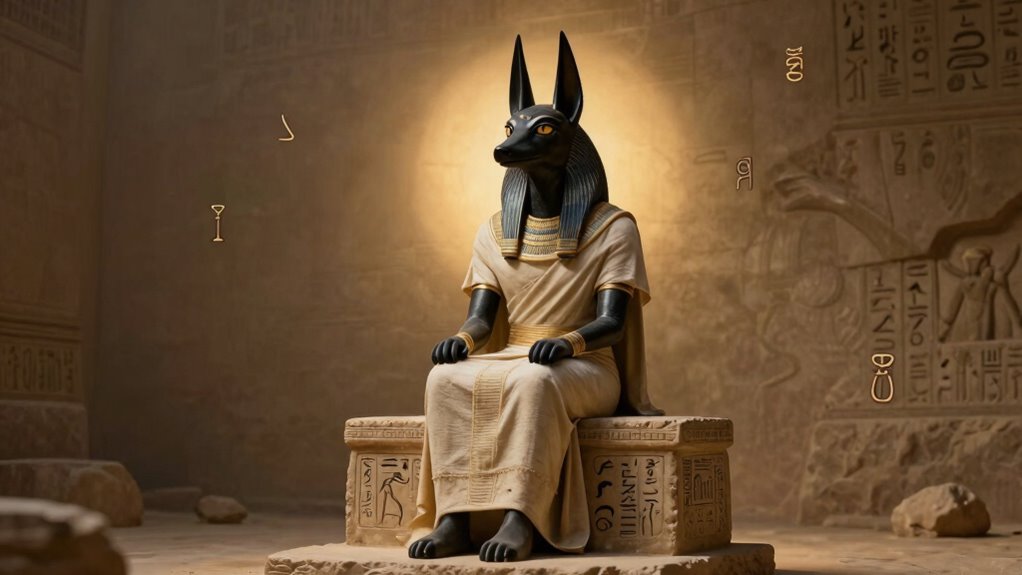
Few ancient deities are as multifaceted as Anubis, the Egyptian god traditionally known as the guardian of the dead. You might think of him solely as the protector of souls in the afterlife, but his role extends far beyond that narrow view. Anubis embodies ancient symbolism that reflects core Egyptian beliefs about death, transformation, and divine justice. His jackal-headed figure isn’t just a fearsome image; it symbolizes protection against chaos and evil, serving as a guardian during vulnerable moments in the journey to the afterlife. This symbolism underscores his broader influence in Egyptian culture, where gods are not limited to single functions but embody complex aspects of life, death, and morality.
Anubis, the jackal-headed guardian, symbolizes protection, death, and moral order in ancient Egyptian beliefs.
The mythological influence of Anubis stretches deep into Egyptian stories and religious practices. As a figure who presides over mummification and funeral rites, he shapes how Egyptians understood the cycle of life and death. But his presence is also woven into stories about divine judgment, where he plays a key role in weighing the heart of the deceased against Ma’at’s feather of truth. This act isn’t just about overseeing death; it’s about ensuring moral order, justice, and balance in the universe. Such responsibilities reveal a divine influence that extends into the moral fabric of Egyptian society, positioning Anubis as a protector of cosmic harmony, not merely a grim reaper.
You might also notice that Anubis’s mythological influence influenced other deities and cultural practices. His association with mummification and funerary rituals set standards that permeated Egyptian religious life. The rituals he oversaw weren’t just about death but about preparing the soul for rebirth, connecting him to themes of renewal and transformation. The iconography surrounding Anubis, with his black jackal head, symbolizes rebirth, the afterlife, and the endless cycle of existence. This early symbolism has resonated through centuries, shaping how civilizations perceive death’s role in human experience.
In essence, Anubis isn’t just a god of death; he’s a symbol of protection, moral order, and transformation. His mythological influence pervades Egyptian religious thought, and his ancient symbolism continues to evoke notions of safety and rebirth. Recognizing this broader significance helps you see him not as a simple figure of fear but as a complex divine force that guides, protects, and upholds the eternal balance of life and death.
Egyptian Anubis statue for home decor
As an affiliate, we earn on qualifying purchases.
As an affiliate, we earn on qualifying purchases.
Frequently Asked Questions
What Symbols Are Associated With Anubis Besides Jackals?
Besides jackals, you’ll find Anubis associated with the ankh, symbolizing life, and the scepter, representing authority in ancient symbolisms. These mythological representations highlight his roles beyond death, such as guiding souls and overseeing funerary practices. You might also see him depicted with a weighing scale in the judgment scene, emphasizing his part in moral judgment. These symbols reveal his deeper significance in Egyptian mythology, embodying life, power, and spiritual guidance.
How Did Anubis Influence Ancient Egyptian Funerary Practices?
You might think Anubis only oversees death, but he shaped Egyptian funerary rituals as a divine protector. His influence guaranteed proper embalming and burial practices, guiding souls safely through the afterlife. As a guardian of sacred rites, he helped maintain spiritual order and comforted mourners. Anubis’s role extended beyond death, embodying the hope for eternal life and reinforcing the sacredness of the journey beyond mortality.
Are There Any Modern Depictions of Anubis in Pop Culture?
You’ll find Anubis appearing in modern pop culture, from video games to movies, as a symbol rooted in ancient mythology. He often represents death, protection, or mystery, reflecting his cultural symbolism. You might see him in comics, TV shows, or artwork, showcasing how ancient Egyptian beliefs still influence contemporary storytelling. These depictions highlight his enduring legacy, blending myth with modern media to keep his story alive today.
Was Anubis Worshipped Outside Egypt?
You might be surprised to learn that Anubis was worshipped beyond Egypt, with some ancient Greek and Roman communities embracing his mythological origins. While Egyptian rituals focused on his role in death and afterlife, outsiders saw him as a symbol of protection and mystery. These influences spread through trade and conquest, making Anubis a figure of fascination and reverence far beyond his original homeland—an enduring proof to his mythic power.
How Does Anubis Compare to Death Gods in Other Cultures?
You’ll find that Anubis, in mythology, differs from death gods in other cultures because he’s more than just a guide to the afterlife. Unlike the grim reaper or Hades, Anubis and Osiris represent judgment, protection, and the soul’s journey. His role emphasizes transformation and balance, making him a compassionate protector rather than solely a god of death. This complexity sets Anubis apart from many death gods in other mythologies.
Conclusion
You might not realize it, but Anubis’s influence goes beyond death—he symbolizes protection, guidance, and the eternal journey of the soul. Did you know that ancient Egyptians believed over 70% of their religious rituals involved Anubis? That shows how deeply he was woven into their lives, offering comfort and trust in the face of the unknown. Recognizing this makes you see him not just as a god of death, but as a guardian of life’s most profound passages.
Fall Picks
fall essentials
As an affiliate, we earn on qualifying purchases.