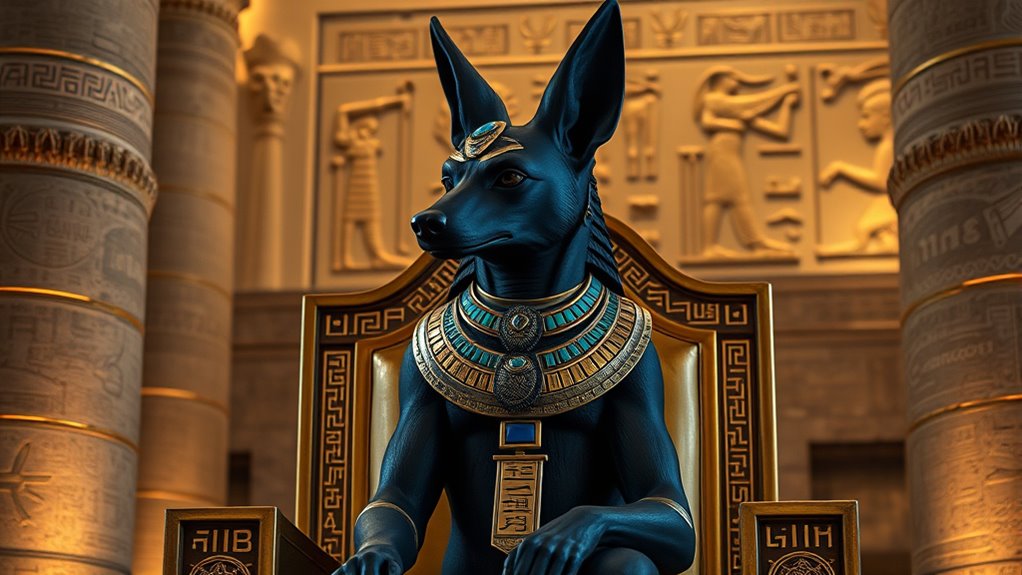

Anubis, the jackal-headed god of mummification and the afterlife, plays a key role in safeguarding and guiding souls through ancient Egyptian rituals. He oversees embalming, guarantees proper burial practices, and weighs hearts against Ma’at’s feather to judge morality. Symbolizing protection and spiritual journey, Anubis emphasizes the importance of living justly. If you explore further, you’ll uncover more about how he shaped beliefs surrounding death and moral integrity in ancient Egypt.
Key Takeaways
- Anubis is the ancient Egyptian god associated with mummification, protecting the dead, and guiding souls in the afterlife.
- Depicted as a jackal-headed deity, symbolizing protection and connection to cemeteries.
- He oversees funeral rituals, including embalming and weighing the heart against Ma’at’s feather for judgment.
- Anubis ensures the safe passage of souls and upholds moral judgment in the afterlife.
- His role emphasizes the importance of proper burial practices and living a righteous life.
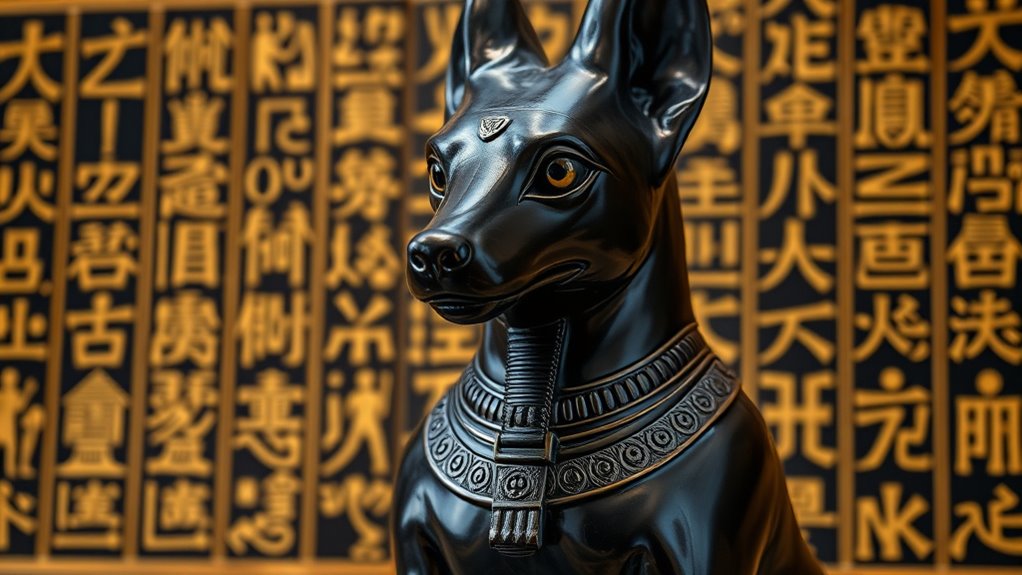
Anubis, the ancient Egyptian god associated with mummification and the afterlife, plays a essential role in guiding souls through the journey beyond death. In ancient Egyptian mythology, he’s seen as a protector of the dead and a key figure in funeral rituals. When preparing for the afterlife, Egyptians believe Anubis oversees the process, ensuring the transition is smooth and safe. You might picture him as a jackal-headed deity, symbolizing both protection and the connection to cemeteries and the night. His presence is deeply woven into the rituals performed to honor the dead, emphasizing the importance of proper burial practices. Additionally, the significance of funeral rituals highlights the Egyptians’ reverence for the afterlife and the gods that oversee it. During ancient Egyptian funeral rituals, Anubis’s role is central. After a body is laid to rest, priests perform elaborate rites to invoke his protection. These rituals often include the embalming process, where they carefully remove internal organs and wrap the body in linen. Anubis is believed to weigh the heart of the deceased against the feather of Ma’at, the goddess of truth and justice. This weighing determines whether the soul is pure enough to enter the afterlife. If the heart is found heavy with sin, the god’s judgment could result in the soul’s destruction. If it’s balanced, the soul is granted passage into the eternal world, guided by Anubis’s watchful gaze. In ancient Egyptian mythology, Anubis’s influence extends beyond just protecting the dead. He’s also associated with guiding souls through the perilous underworld, helping them navigate the challenges they face. His role underscores the Egyptians’ deep belief in the importance of moral integrity and proper conduct in life. You can think of him as a vigilant guardian, ensuring that only those who have lived justly reach the afterlife. The mythological stories portray him as compassionate yet strict, emphasizing the significance of living a righteous life.

Pyramids Dig Kit, Ancient Egyptian Civilization Civilization Excavation Set Including Mummy Case Sun God Great Sphinx and More, STEM Science Educational Toys Archaeology Gifts for Boys & Girls
💡Explore The History Of Ancient Egypytian Civilization: Travel to ancient the Egypt to learn everything about its amazing…
As an affiliate, we earn on qualifying purchases.
As an affiliate, we earn on qualifying purchases.
Frequently Asked Questions
How Was Anubis Originally Depicted in Ancient Egyptian Art?
In ancient Egyptian art, you’ll see Anubis originally depicted with a human body and a jackal head, fitting into ancient funerary art themes. His depictions of jackals symbolize his role in guiding and protecting the dead. These images often show him overseeing mummification processes, emphasizing his connection to the afterlife. You’ll find him standing or kneeling, always with a regal and protective presence, highlighting his importance in Egyptian burial customs.
Did Anubis Have Any Specific Rituals or Festivals Dedicated to Him?
You’re swept into grand funeral rituals and festival celebrations that honor Anubis, the mighty protector of souls. These rituals, like the “Opening of the Mouth” ceremony, are performed with reverence, believing they reveal the secrets of the afterlife. During festivals, priests and worshippers unite in elaborate offerings and processions, demonstrating their devotion to Anubis. Your participation feels like touching the divine, connecting you directly to ancient Egypt’s mystical spiritual domain.
Are There Any Known Ancient Texts That Mention Anubis by Name?
You’ll find Anubis mentioned in several ancient texts, including the Pyramid Texts and the Book of the Dead, where mythological references highlight his role in mummification and the afterlife. These ancient texts name him explicitly, emphasizing his importance in Egyptian religion. His depiction in these writings shows his connection to funerary rituals and his function as a protector of the dead, making him a key figure in mythological stories.
How Did Anubis’s Role Differ From Other Egyptian Deities of the Afterlife?
You see, Anubis’s role differs from other Egyptian deities because he primarily oversees mummification and guides souls, holding a unique position in the deity hierarchy. Unlike Osiris, who rules the afterlife, Anubis’s mythological origins trace back to earlier deities associated with embalming. His duties focus on preparing the dead for judgment, making him an essential protector in the journey through the afterlife.
Was Anubis Worshipped Outside of Egypt or in Other Ancient Cultures?
You might find it surprising, but Anubis wasn’t widely worshipped outside Egypt. While cross-cultural worship of similar deities occurred, mythological comparisons show other cultures had their own gods of death and mummification. You could say he was a local hero rather than a universal one. Though some artifacts suggest limited recognition, his primary worship remained concentrated within Egyptian borders, making him a regional figure rather than an international deity.
OIDEA Masquerade Masks for Men: Vintage Ancient Greek Egyptian Roman Sun God Half Face Mask Halloween Party Carnival Venetian Mardi Gras Mask, Black Gold
【Ancient Roman Sun God Masquerade Mask】Ancient Roman Greek mythology style men's mask takes you back to the Middle…
As an affiliate, we earn on qualifying purchases.
As an affiliate, we earn on qualifying purchases.
Conclusion
Imagine yourself as a traveler crossing a dark, endless desert, guided by the watchful gaze of Anubis, the jackal god. He’s the steadfast guardian guarding the doorway between life and eternity, ensuring your journey remains safe. Just as the stars light the night, Anubis illuminates the path to the afterlife, offering hope and protection. Embrace his wisdom, and you’ll find that no matter how vast the desert, you’re never truly alone in the journey beyond.

Ankh Cross Eye of Horus Gemstone Earrings Key of Life Scarab Egyptian Goddess Isis Earrings Ancient Egyptian Protection Amulet Religious Jewelry for Women (gold)
Goddess Isis Horus Ankh Earrings – The Eye of Horus is a symbol of protection, good fortune, health,…
As an affiliate, we earn on qualifying purchases.
As an affiliate, we earn on qualifying purchases.
mummification ritual props
As an affiliate, we earn on qualifying purchases.
As an affiliate, we earn on qualifying purchases.