In ancient Egyptian beliefs, your soul has two main parts: the Ka and the Ba. The Ka is your essential essence that needs offerings like food and incense to stay alive and strong in the afterlife. The Ba represents your personality and can move between worlds, helping you connect with loved ones and divine beings. Proper rituals guarantee both parts are cared for, securing your journey beyond death. Keep exploring to uncover more about these fascinating soul components.
Key Takeaways
- The Ka is the vital life force that requires offerings and rituals to sustain it after death.
- The Ba symbolizes personality and helps the soul recognize loved ones in the afterlife.
- Proper care of both the Ba and Ka ensures the soul’s successful journey and eternal life.
- Rituals nourish the Ka and safeguard the Ba’s ability to find its way in the afterlife.
- The Ba and Ka are essential components reflecting the soul’s complex nature in ancient Egyptian belief.
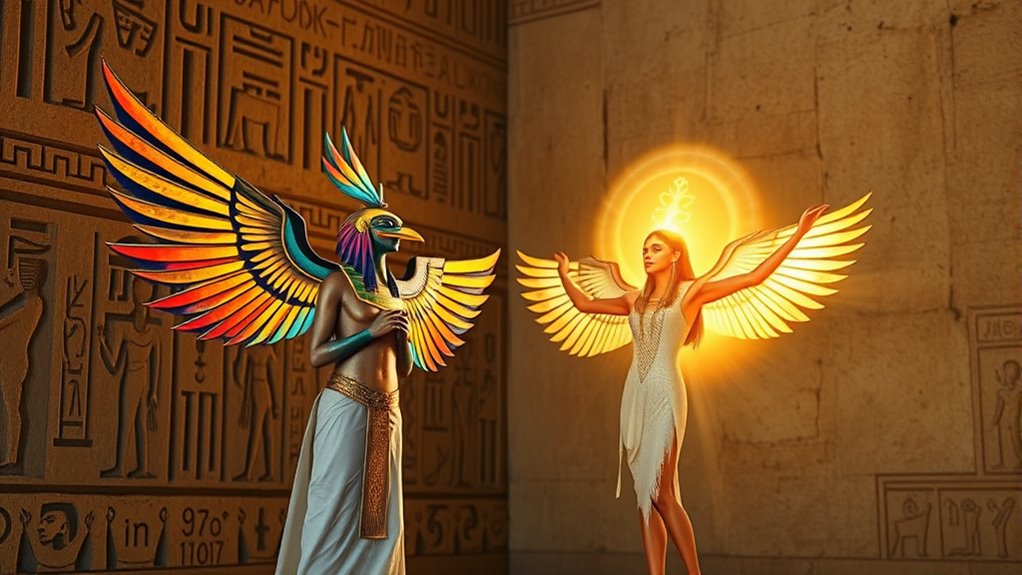
In ancient Egyptian belief, the soul is a complex entity composed of multiple components that together define a person’s true essence. Among these components, the Ba and Ka stand out as central to understanding how Egyptians viewed life, death, and the afterlife. When you consider the afterlife journeys, you realize that these two aspects of the soul play essential roles in ensuring your continued existence beyond physical death. The Ba and Ka are not just abstract ideas; they are active forces that influence your fate, your experiences after death, and your ability to interact with the living world.
The Ka is often seen as your life force or vital essence, something you are born with and that sustains you. It’s like a double of yourself, an eternal aspect that needs to be fed and respected to maintain balance. The Egyptians believed that the Ka required offerings—such as food, drink, and incense—to thrive. When you die, your Ka continues to exist, and it’s essential for the rituals performed during burial and funerary rites. These rituals hold significant ritual importance because they serve to nourish and appease the Ka, ensuring it remains strong and capable of supporting your spirit in the afterlife. Without proper offerings, your Ka risked fading away or becoming restless, which could jeopardize your journey in the afterlife.
The Ka, your vital essence, needs offerings to thrive and support your spirit in the afterlife.
The Ba, on the other hand, is more like your personality or individuality. It’s often depicted as a bird with a human head, symbolizing your ability to move freely between the worlds of the living and the dead. Your Ba is what allows you to think, remember, and communicate after death. It’s essential during your afterlife journeys, as it helps you recognize your loved ones and the divine, guiding you through the various realms you encounter. Ritual significance here is immense because the Egyptians believed that without proper rites, your Ba might become lost or unable to find its way back to your body in the tomb. Proper funerary practices, including prayers and offerings, aimed to secure your Ba’s safe passage, ensuring it could reunite with your physical form in the afterlife or remain connected to it. Additionally, the concept of eternal life was deeply intertwined with the proper care of these soul components, highlighting their importance.
In essence, both the Ba and Ka are indispensable for a successful afterlife journey. Rituals and offerings weren’t merely traditions—they were essential acts to preserve and empower these components of your soul. They symbolized respect for the divine aspects within you and helped guarantee your continued existence in the eternal realm. Understanding their roles reveals why ancient Egyptians invested so much effort in funerary rites: they believed that nurturing these soul components was key to achieving eternal life and harmony beyond death.
Frequently Asked Questions
How Did the Concepts of Ba and Ka Influence Egyptian Funeral Practices?
You see, the concepts of ba and ka deeply shaped Egyptian funerary rites, ensuring soul preservation. You would perform specific rituals, like offering food, drinks, and prayers, to nourish both aspects of the soul. Temples and tombs were designed to care for the ka and ba, allowing the soul to recognize its resting place. These practices aimed to keep the soul alive and connected to the living world.
Are Ba and Ka Unique to Egyptian Religion or Shared With Other Cultures?
Imagine you’re exploring comparative spiritual concepts across cultures—you’ll find that the ideas of ba and ka aren’t unique to Egypt; many cultures share similar beliefs. These cross-cultural beliefs reflect the universal desire to understand the soul’s journey after death. While the specifics differ, the core idea of separate spiritual components exists worldwide, showing that ancient Egyptian concepts like ba and ka are part of a broader human quest to comprehend life after death.
How Did Egyptians Believe the Ba and Ka Interacted After Death?
You should know that ancient Egyptians believed the ba and ka interacted closely after death to guarantee the soul’s posthumous existence. The ka, representing life force, stayed with the body and received offerings, while the ba, symbolizing personality, traveled between the tomb and the living world. Together, they maintained the person’s essence, allowing their soul to live on, thrive, and be remembered in the afterlife.
What Symbols Represented the Ba and Ka in Egyptian Art?
A picture is worth a thousand words, and in Egyptian art, symbolic representations capture the essence of the ba and ka. You’ll see the ba depicted as a bird with a human head, often shown flying above the tomb, symbolizing the soul’s freedom. The ka is represented by two upraised arms, conveying its ongoing connection to the living world. These artistic depictions vividly express their essential spiritual roles.
Did the Ba and Ka Have Any Equivalents in Modern Spiritual Beliefs?
Yes, the concepts of the ba and ka have modern equivalents in spiritual beliefs. You might see these ideas reflected in notions of spiritual essence or life force, which suggest an inner energy that persists beyond physical death. Many cultures believe in an ongoing spirit or crucial life energy, similar to how the ancient Egyptians viewed the ba and ka as essential parts of your eternal existence and connection to the universe.
Conclusion
As you walk through ancient Egypt’s sacred halls, imagine the Ba and Ka gracefully dancing like flickering flames and gentle breezes, forever linked to your spirit. Their delicate balance keeps your essence alive, guiding and protecting you through eternity. Feel the warm sun on your face and the cool shadows around you, knowing these soul components are forever woven into the fabric of your being, bridging the mortal and divine in a timeless embrace.