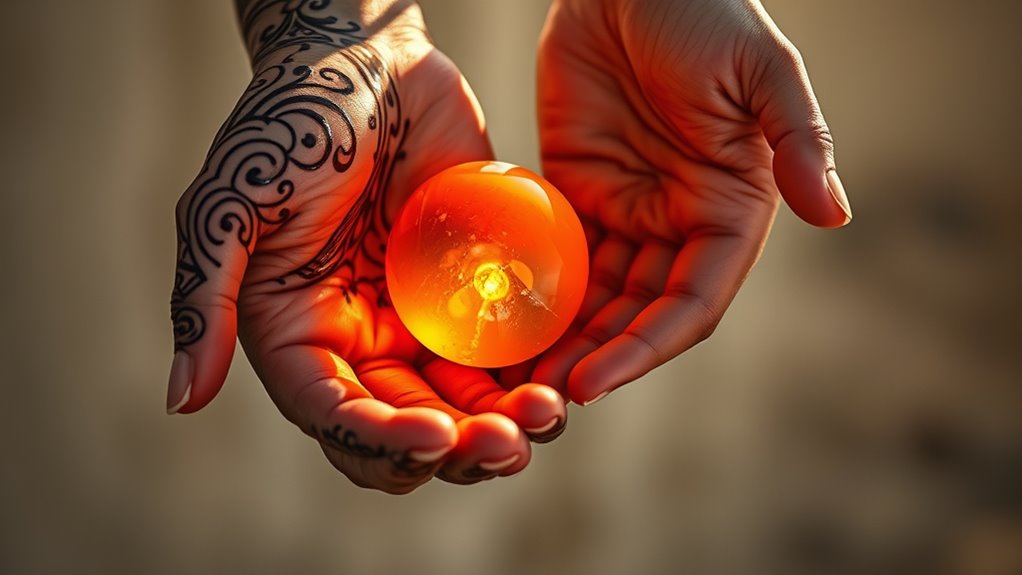

Hands symbolize a lot beyond their practical use. They represent creativity through art and craft, and the power to influence or command respect in gestures like a raised fist or open palm. Hands also carry blessings, used in religious rituals or acts of healing that express goodwill and spiritual connection. Recognizing these symbols helps you understand how different cultures communicate silently and deeply… if you keep exploring, you’ll discover even more about this fascinating aspect of human expression.

Get art and craft supplies delivered free with Prime
- Fast, free delivery on millions of items
- Prime Video, Amazon Music and more included
- Member-only deals all year
Key Takeaways
- Hands symbolize creative expression through art, craft, and communication, reflecting human ingenuity and cultural identity.
- Raised fists and open palms represent power, authority, defiance, or peace in social and political contexts.
- Hand gestures like blessings or mudras invoke divine presence, convey goodwill, and serve as physical acts of healing.
- The universal language of hands communicates emotions, intentions, and social messages beyond spoken words.
- Hands embody a connection to spirituality, offering blessings, protection, and nurturing energy across diverse traditions.
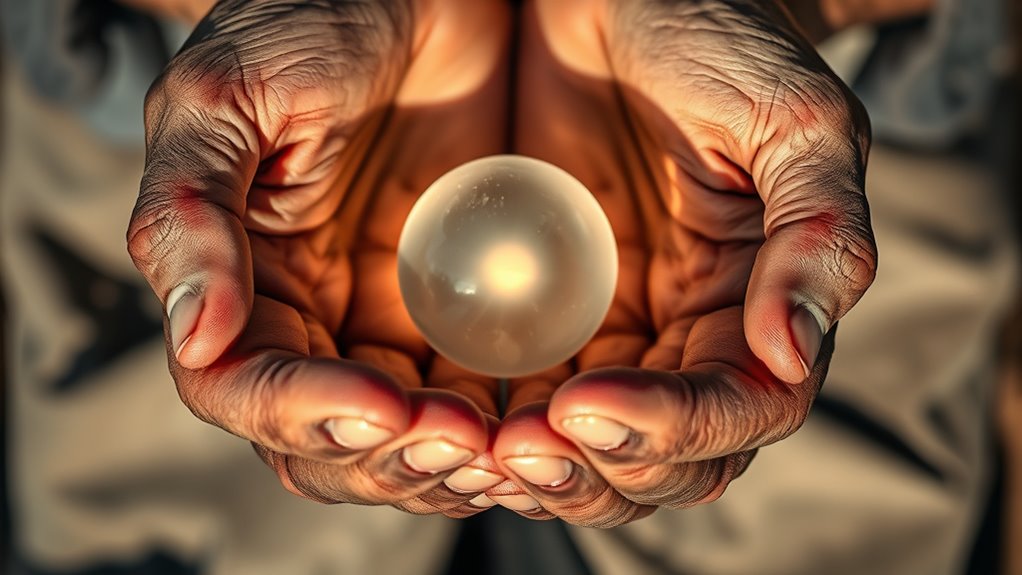
Have you ever wondered what hands can tell us beyond their everyday use? Hands are more than tools for grasping, holding, or pointing—they’re powerful symbols loaded with meaning. When you observe gestures, you’re tapping into a language that transcends words, revealing emotions, intentions, and cultural values. Gesture meanings can vary widely across different societies. For example, a simple thumbs-up can signify approval in many places, but in some cultures, it’s considered offensive. Similarly, the peace sign is recognized globally as a symbol of harmony, yet in others, it might carry different connotations depending on how it’s presented. These cultural hand signs serve as silent communicators that carry complex messages, often rooted in history, tradition, or social norms. Recognizing these nuances is essential to understanding the deeper significance behind what might seem like trivial gestures.
Your hands also symbolize power and authority. Think about the act of raising a fist—it’s a universal sign of defiance or solidarity, often used during protests to demonstrate strength and unity. Conversely, an open palm facing outward can be a gesture of peace or surrender, signaling a desire for calm and non-aggression. When you extend your hand for a handshake, you’re not just greeting someone; you’re establishing trust, equality, and mutual respect. These physical actions, rooted in cultural practices, embody authority, influence, and the capacity to command attention or convey respect. Your hands can project confidence or humility, depending on how you use them, making them powerful tools in social interactions.
Hands also carry a blessing or healing symbolism that’s deeply embedded in many traditions. In religious contexts, raised hands or specific mudras are used to invoke divine presence or convey blessings. In some cultures, touching or placing hands on someone’s head or shoulders is seen as a gesture of healing or protection. These acts of hand gestures symbolize goodwill, compassion, and a desire to nurture or uplift others. They serve as physical manifestations of care, connecting spiritual or emotional intentions to tangible actions. Whether in rituals, ceremonies, or everyday moments, the symbolism of hands as agents of blessing reminds us of our capacity to convey kindness and positive energy through simple gestures. Additionally, the act of using hands to create art or craft signifies the innate human drive for creative expression, further emphasizing their role in communication and personal identity.
Ultimately, your hands are a universal language that speaks volumes without uttering a single word. They embody creativity, power, and blessing in ways that words often can’t capture. By understanding gesture meanings and cultural hand signs, you gain insight into the subtle messages woven into daily interactions. Recognizing the symbolism behind these gestures enriches your appreciation of human connection and the profound ways we communicate beyond spoken language. Hands hold not only the power to create and influence but also to bless and uplift, making them one of our most expressive and meaningful tools.
As an affiliate, we earn on qualifying purchases.
Frequently Asked Questions
How Do Different Cultures Interpret Hand Gestures Uniquely?
You’ll notice that different cultures interpret hand gestures uniquely, with gesture meanings varying widely. For example, a thumbs-up signals approval in many places but can be offensive elsewhere. Recognizing cultural hand signs helps you avoid misunderstandings and shows respect. By understanding these differences, you can communicate more effectively and appreciate the diverse symbolism behind gestures, which often reflect a culture’s values, beliefs, and social norms.
What Psychological Effects Do Hand Movements Have During Communication?
When you use hand movements during communication, you enhance gesture clarity and emotional expression, making your message more impactful. These gestures can help convey your feelings, influence how others perceive your confidence, and foster connection. By intentionally incorporating expressive hand motions, you not only clarify your ideas but also emotionally engage your audience, leaving a lasting impression. So, your hands are powerful tools that shape how effectively your message is received.
Can Hand Symbolism Influence Personal Identity and Self-Perception?
Yes, hand symbolism can influence your personal identity and self-perception. Your body language, especially hand gestures, reveals confidence and openness, shaping how others see you. As you become more aware of your hand movements, you gain better self-awareness, which boosts your self-esteem and authenticity. Using meaningful gestures intentionally helps you project a stronger, more positive self-image, reinforcing your sense of identity and empowering your communication.
How Do Artists Incorporate Hand Symbolism Into Visual Art?
You incorporate hand symbolism into visual art by using gesture language to convey emotions and ideas, making your artwork more expressive. Artists often emphasize hand positions, movements, or gestures to symbolize concepts like power, blessing, or creativity. Through detailed depiction or abstract forms, you enhance artistic expression, allowing viewers to interpret the deeper meanings behind the hands. This approach deepens engagement and adds layers of symbolism to your work.
What Role Do Hands Play in Spiritual and Religious Rituals Worldwide?
Hands play a essential role in spiritual and religious rituals worldwide, serving as gesture language to convey spiritual signification. You might see them raised for blessings, folded in prayer, or performing sacred gestures that symbolize connection with the divine. These hand movements communicate reverence, protection, and unity, acting as physical expressions of spiritual beliefs. By using gestures, you actively participate in rituals that deepen your spiritual experience and connect you to a higher power.
Conclusion
Your hands are more than tools—they’re symbols of your creativity, strength, and blessings. When you raise them, you hold the power to inspire and heal. Each gesture paints a story, revealing hidden potential within. Trust in the symbolism of your hands to guide you through challenges and celebrate triumphs. Remember, with every touch, you weave a tapestry of meaning, making your actions a lasting affirmation to the profound artistry of your spirit.
Halloween Picks
halloween
As an affiliate, we earn on qualifying purchases.